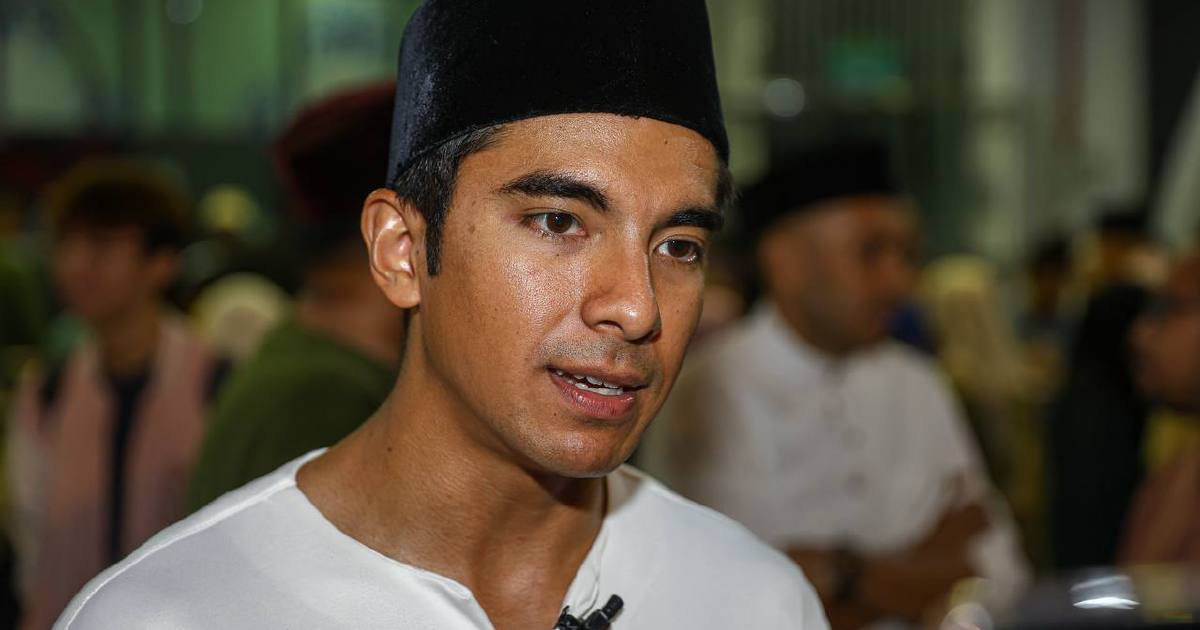
Youth and Sports Minister Syed Saddiq Abdul Rahman has adopted a contemplative posture as Malaysia's highest court approaches a critical decision that could reshape his political trajectory. In remarks reflecting both resignation and spiritual conviction, the 34-year-old politician indicated he has relinquished control over the impending judgment, choosing instead to place his confidence in a higher power. The statement underscores the gravity of the proceedings and the considerable uncertainty surrounding their outcome.
The Federal Court's forthcoming ruling represents a pivotal juncture not merely for Syed Saddiq himself but also for the broader Malaysian political landscape. As a prominent figure within the ruling coalition and a minister responsible for youth engagement and athletic development, any adverse judgment could trigger substantial repercussions across government formations and the nation's sporting establishment. The case has attracted considerable public attention, particularly among younger voters who regard Syed Saddiq as a representative of a new generation of Malaysian leadership.
Syed Saddiq's invocation of divine providence, while characteristic of how many Malaysian public figures communicate during periods of legal vulnerability, also reflects the serious jeopardy he faces. By publicly stating his acceptance of God's will, he appears to be preparing both himself and his supporters for multiple possible outcomes without conceding ground on the substantive legal or political dimensions of his position. This rhetorical strategy allows him to maintain dignity regardless of which direction the court's decision ultimately takes.
The timing of this announcement carries significance within Malaysia's current political climate. The nation remains navigating complex internal dynamics within its ruling Pakatan Harapan coalition, with several senior figures simultaneously contending with legal challenges that touch upon questions of financial propriety, administrative conduct, and constitutional authority. Syed Saddiq's case exists within this broader context of institutional scrutiny and political accountability debates.
For the Ministry of Youth and Sports specifically, the uncertainty surrounding the minister's position has created operational challenges. Government departments functioning under ministerial oversight typically require clear leadership continuity to implement long-term strategic initiatives, particularly concerning youth development programmes and preparations for forthcoming sporting competitions. A protracted legal process that leaves the minister's future indeterminate can hinder departmental effectiveness and create vacuum spaces where critical decisions become delayed.
The Federal Court's impending judgment will also serve as an important indicator of Malaysia's judicial independence and institutional robustness. Malaysian citizens across the political spectrum remain concerned about ensuring that the country's legal system applies consistent standards regardless of a defendant's political affiliation or prominence. The court's reasoning and conclusion will inevitably be scrutinised through this lens by domestic observers, legal professionals, and international analysts monitoring Malaysian governance.
Syed Saddiq's background as a former leader of the Malaysian United Democratic Alliance (Bersatu) youth wing and his current ministerial position have shaped him into a recognisable public personality. Many younger Malaysians view him as emblematic of fresh political alternatives to the established generational hierarchies that have dominated the country's power structures. Consequently, the outcome of this Federal Court proceeding will likely influence broader perceptions regarding whether the Malaysian political system genuinely facilitates advancement for political newcomers or whether traditional power consolidation ultimately prevails.
The minister's philosophical stance in facing this uncertainty also reflects cultural and religious values deeply embedded within Malaysian society. Islam, practised by the overwhelming majority of Malaysian citizens, emphasises resignation to divine will (tawakkal) as a virtue during periods of trial and difficulty. Syed Saddiq's public expression of this sentiment resonates with mainstream Malaysian values while simultaneously demonstrating his personal resolve to weather whatever consequences the court may impose.
Observers have noted that his restraint in commenting extensively upon the proceedings themselves demonstrates tactical political acumen. By avoiding detailed rebuttals or attempts to influence public opinion through media commentary, Syed Saddiq preserves his credibility regardless of outcome and prevents statements that hostile politicians might weaponise during future political confrontations. This measured approach contrasts with the combative postures sometimes adopted by other politicians facing legal challenges.
The Federal Court's responsibility in this matter extends beyond the individual case to encompass broader implications for ministerial accountability and constitutional governance. If the judgment holds ministers to particular standards of conduct, whether strict or permissive, the decision will establish precedents that shape how the government and public evaluate ministerial performance in future contexts.
As the ruling approaches, political observers across Malaysia await clarification on the specific charges and arguments that have animated this case. The court's decision will likely clarify important questions regarding ministerial powers, administrative responsibilities, and the boundaries between legitimate political activity and conduct that breaches formal or constitutional requirements. The judgment will therefore carry significance well beyond Syed Saddiq's individual fortunes, influencing how future administrations understand and execute ministerial functions.
Meanwhile, government operations continue amid this uncertainty. Syed Saddiq maintains his ministerial responsibilities while awaiting judgment, exemplifying the pragmatic necessity that Malaysian governance often demands: the simultaneous execution of present duties whilst confronting future institutional verdicts. The coming weeks will reveal whether his faith-based approach to uncertainty reflects genuine equanimity or represents the calm demeanour that political professionalism requires regardless of internal emotional turbulence.

