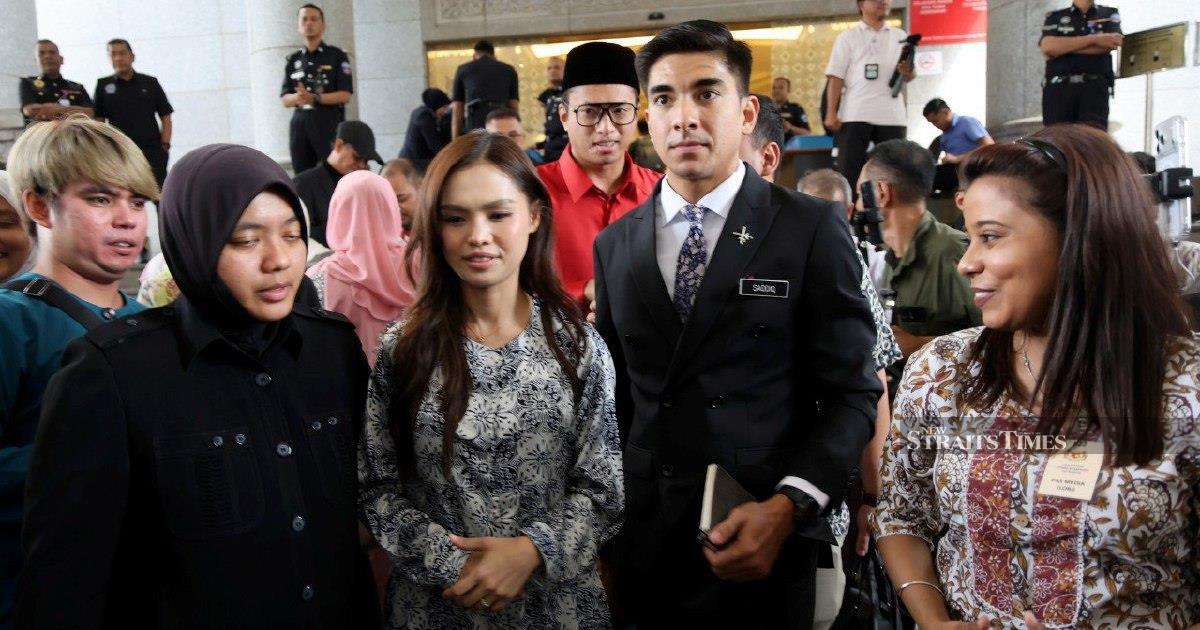
Syed Saddiq Syed Abdul Rahman, the Muar member of parliament, has signalled that reclaiming the helm of Muda remains a distant consideration, with the seasoned politician indicating he intends to prioritise his impending marriage in the immediate term. The statement comes in the aftermath of his recent court acquittal, which removes a significant legal obstacle that had shadowed his political trajectory in recent years. Speaking in his Muar constituency, the 35-year-old legislator made clear that personal commitments will take precedence over any strategic repositioning within the party he established.
The timeline of Syed Saddiq's legal troubles has stretched across multiple years, with various charges and proceedings consuming considerable political attention and media scrutiny. His recent acquittal represents a watershed moment for the politician, effectively clearing his name and potentially reopening avenues for political advancement that were previously constrained by the judicial process. However, rather than immediately leveraging this legal victory for a power consolidation within Muda, he has chosen to signal a more measured and personal-focused approach to his immediate future.
Muda, formally registered as the Malaysian United Democratic Alliance, has evolved significantly since its establishment as a platform for younger voters and progressive political engagement. The party, which attempted to position itself as an alternative voice within Malaysia's complex political landscape, has undergone leadership transitions and strategic recalibrations in recent years. The absence of Syed Saddiq from an active leadership role during his legal proceedings created a leadership vacuum that other party figures have sought to fill, developing their own power bases and policy directions within the organisation.
The question of his return to Muda leadership carries substantial implications for the party's trajectory and positioning. Syed Saddiq's founding role and established profile within the organisation mean that a potential return would inevitably trigger realignments within party structures and potentially influence the party's strategic direction. Current Muda leadership figures may view his potential comeback with a combination of anticipation and apprehension, depending on their own ambitions and visions for the party's future path.
For Malaysian political observers, Syed Saddiq's measured approach to his post-acquittal period reflects a broader maturation within the nation's opposition politics. Rather than immediately capitalising on legal vindication through aggressive power consolidation, he appears to be adopting a longer-term perspective that integrates personal stability with political considerations. This stance differs markedly from the intensive period when legal proceedings dominated his public profile and political capacity.
The timing of his announcement carries significance within Malaysia's current political environment. With federal and state-level politics in a state of recalibration following recent electoral dynamics and coalition adjustments, the positioning of key parliamentary figures like Syed Saddiq holds implications for broader opposition strategy and alignment. His decision to focus on personal matters rather than immediate political manoeuvres suggests a confidence in his political position that does not require urgent consolidation.
Muda's evolution as a political entity has been shaped by various factors, including youth engagement trends, evolving voter preferences, and the broader competitive landscape within Malaysia's opposition politics. The party's ability to maintain relevance and organisational coherence without its founder actively leading has been tested over recent years. Should Syed Saddiq eventually determine that Muda leadership represents an attractive prospect, the party would need to navigate questions about transitioning back to his formal authority while maintaining continuity in whatever directions current leadership has pursued.
Syed Saddiq's parliamentary representation of Muar provides him with a substantial political platform independent of any party leadership position. The constituency has demonstrated loyalty to his representation across recent electoral cycles, granting him a degree of political security that permits him to make strategic decisions based on personal preference rather than political necessity. This independence of his electoral position adds another dimension to his decision-making regarding party leadership.
The broader context of Malaysian political dynamics suggests that the opposition landscape continues to experience significant evolution. Muda's positioning within this landscape, whether as a distinct youth-oriented force or as part of broader coalition arrangements, remains a matter of strategic importance. Syed Saddiq's eventual decisions regarding his party role will likely reflect not only his personal circumstances but also his assessment of where Muda's interests lie within the evolving opposition configuration.
For Muda members and observers, the period ahead represents an interim phase in which the party operates without its founder actively driving strategic direction. This interval permits the organisation to develop institutional depth and leadership capacity beyond its founding figures. Whether this period ultimately strengthens Muda's institutional resilience or creates space for alternative power centres to entrench themselves will partly depend on how deliberately the party manages its organisational development during this transition period.
Syed Saddiq's articulation of his current priorities—focusing on marriage before revisiting the question of party leadership—reflects a deliberate compartmentalisation of his life phases. This approach suggests he views his personal consolidation and his political positioning as separate endeavours requiring sequential rather than simultaneous attention. For a politician who has experienced the intersection of personal stability and public scrutiny through his legal proceedings, this preference for sequencing appears thoughtful and strategic.
Looking forward, the Malaysian political landscape will likely continue watching Syed Saddiq's trajectory with interest. His eventual decision regarding Muda leadership will carry implications extending beyond the party itself, potentially influencing how opposition politics organises itself more broadly. For now, however, he appears content to let the question remain open while directing his immediate focus toward the personal milestone he has identified as his priority.

