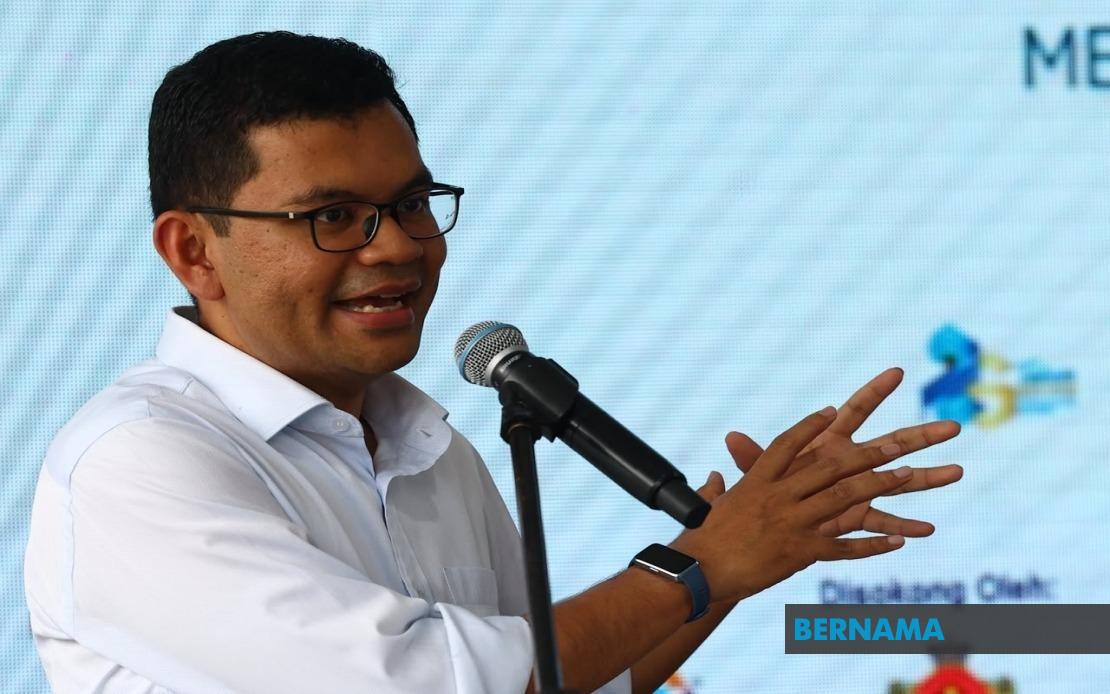
Economy Minister Akmal Nasrullah Mohd Nasir has sounded fresh alarm over the deteriorating state of government project stewardship, arguing that a entrenched culture of complacency and weak accountability mechanisms continues to drain billions in taxpayers' money across the country. Speaking in Alor Setar on August 6, the minister underscored a troubling paradox: despite Malaysia having governed itself for nearly seven decades and witnessed multiple transitions of political power, the same fundamental failures in project execution persist with little structural improvement.
The minister's intervention reflects mounting frustration within the federal government over the repeated cycle of poorly managed infrastructure ventures. Akmal Nasrullah pointed specifically to complications surrounding the Kedah water treatment plant project, which has become emblematic of broader systemic dysfunction. Rather than laying blame at the feet of any single political faction or administrative tier, he framed his critique as a necessary call to elevate professional standards across the entire public sector machinery.
Acknowledging that his public comments on the Kedah initiative have attracted criticism from various quarters, Akmal Nasrullah defended his decision to spotlight project mismanagement as both legitimate and necessary. Some observers questioned whether project-level scrutiny fell within his ministerial remit, suggesting his role should confine itself to policy architecture rather than operational oversight. The minister rejected this narrow interpretation outright, insisting that accountability for public resource deployment transcends conventional departmental boundaries.
The Kedah water treatment plant saga illustrates how warning signals often go unheeded until cascading failures become irreversible. Akmal Nasrullah disclosed that he has personally tracked the project's evolution since its initial placement under the Energy Transition and Water Transformation Ministry, through to its subsequent coordination under the Economy Ministry portfolio. Throughout this extended period, he identified multiple concerning patterns and raised them through appropriate channels, yet witnessed minimal corrective action until problems he had predicted eventually materialised on the ground.
What distinguishes Akmal Nasrullah's intervention is his diagnosis that the core malady extends beyond mere policy formulation or technical competence. Government policies, he reasoned, naturally evolve to reflect shifting societal demands and technological possibilities. The deeper impediment, he contended, stems from institutional attitudes and deeply ingrained mindsets that resist reform and accountability. This analysis suggests that structural reorganisation alone cannot remedy dysfunction without simultaneous cultural transformation within the bureaucracy.
The minister's emphasis on the gap between warnings issued and actions implemented underscores a recurrent phenomenon in Malaysian governance: the existence of early warning systems that fail to trigger institutional response mechanisms. Akmal Nasrullah suggested that despite having exhausted his available influence to advocate for necessary improvements, the administrative machinery lacked sufficient agility or responsiveness to prevent anticipated difficulties from taking root. This dynamic reveals vulnerabilities not merely in individual project management but in hierarchical communication and decision-making architecture across government.
For Malaysian citizens and taxpayers, the implications are substantial. Public infrastructure projects funded through the national budget represent direct investments of household tax contributions, utility payments, and indirect fiscal obligations. When these ventures suffer from poor governance, cost overruns, technical deficiencies, or abandonment, the burden ultimately falls on the population least responsible for managerial lapses. The Kedah water treatment plant case, whatever its specific technical dimensions, exemplifies this transfer of risk and loss from administrators to the general public.
The broader Southeast Asian context renders Akmal Nasrullah's concerns particularly salient. Across the region, government project management quality functions as a proxy for institutional maturity and economic competitiveness. Countries perceived as capable of delivering infrastructure on schedule and within budget attract investment capital, foster business confidence, and enhance their standing as reliable partners in international economic frameworks. Conversely, nations plagued by project delays, cost explosions, and quality deficiencies face reputational damage that reverberates through investment decisions and trade relationships.
Akmal Nasrullah's statement appears designed to signal a harder line on accountability without necessarily calling for punitive measures against individuals. His framing emphasises systematic reform and attitudinal change rather than blame assignment, suggesting an effort to build consensus for strengthening oversight mechanisms. The minister's willingness to speak publicly on a specific project under his ministry's purview also signals that at least some elements within the federal government recognise the political and economic costs of continuing current trajectories.
The absence of meaningful improvement despite longstanding awareness of problems points to deeper institutional obstacles. Whether these involve insufficient budgetary allocation for proper project management, inadequate technical expertise, political interference in operational decisions, or insufficient penalties for poor performance remains partially obscured. Akmal Nasrullah's comments suggest awareness of these fault lines without necessarily prescribing detailed remedies, indicating that solutions likely require whole-of-government commitment beyond any single ministry's capacity.
Moving forward, the minister's public intervention creates political space for advocates of stronger project governance frameworks to advance their agendas. Civil society organisations, professional bodies, and opposition politicians may leverage his comments to press for legislative or administrative reforms aimed at enhancing transparency, strengthening performance monitoring, and establishing clearer accountability pathways. Whether such pressure translates into substantive institutional change depends significantly on the political will of senior government leadership to prioritise governance reform over other competing priorities.

