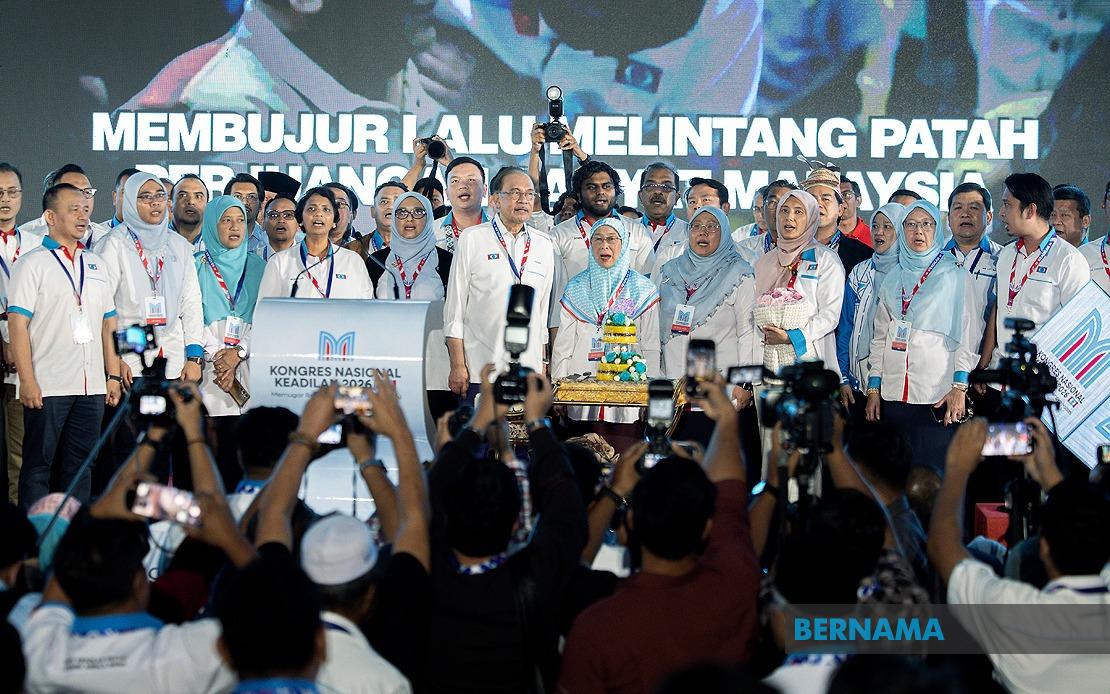
Prime Minister Datuk Seri Anwar Ibrahim has declared that his government will undertake a comprehensive amendment of the Tabung Haji Act 1995 to restore and maintain the confidence of the Muslim community in the institution. Speaking in his dual capacity as Finance Minister and PKR president, Anwar positioned the legislative overhaul as a cornerstone of the MADANI Government's broader commitment to institutional strengthening and governance reform, signalling that no organisation—regardless of its cultural or religious significance—will be exempted from scrutiny and improvement.
The decision to revisit the Tabung Haji Act reflects growing concerns about institutional resilience and public confidence in entities entrusted with community assets. Tabung Haji, as the hajj savings fund, holds profound importance for Malaysian Muslims seeking to undertake the pilgrimage to Mecca, and the trust placed in its management directly affects millions of depositors and their families. Any perceived weakness in governance, financial management, or administrative oversight can undermine confidence in the institution. By committing to legislative amendments, Anwar has acknowledged that existing safeguards may require modernisation to address contemporary governance challenges and restore stakeholder faith.
Beyond Tabung Haji, Anwar issued a separate declaration of intent regarding the Universities and University Colleges Act 1971, announcing that the government would seek its complete repeal. Notably, he stated that no replacement legislation should be introduced, effectively rejecting any attempt to perpetuate restrictions on student expression and activism through alternative legal frameworks. This dual-pronged approach—repairing trust in one institution while dismantling restrictions in another—reveals a governing philosophy centred on institutional accountability and individual freedoms. The AUKU, a long-standing point of contention among student activists and civil liberties advocates, has historically been criticised for constraining student voices and limiting democratic participation within campus environments.
Anwar framed these institutional reforms as integral to the MADANI Government's overarching agenda of strengthening governance structures across the public sector. He emphasised that institutional weaknesses must be identified and addressed decisively, not merely tolerated or allowed to persist. This commitment carries particular weight given Malaysia's historical experiences with institutional failures and governance lapses. By positioning governance strengthening as a non-negotiable priority, Anwar seeks to differentiate his administration's approach from predecessors, signalling that institutional reform will not be sidelined for political expediency or deferred indefinitely.
During the PKR National Congress held in Kuala Lumpur, which concluded on the day of Anwar's announcement, the Prime Minister articulated a vision of political leadership grounded in principles rather than power consolidation. He cautioned against weaponising political strength to enrich individuals, families, or connected elites, instead redefining strength as a public trust to be exercised in service of justice, human dignity, and the broader national interest. This philosophical stance, while rhetorically powerful, carries implications for how his government applies these institutional reforms. If institutional amendments are pursued inconsistently or selectively, the credibility of these commitments may diminish significantly.
Anwar's insistence that the MADANI Government's benefits must extend to all Malaysians—irrespective of political affiliation, religious identity, or state of residence—introduces an important dimension to the institutional reform agenda. Opposition-led states, he noted, deserve equitable treatment and resource allocation, a principle that, if applied consistently, could reshape federal-state dynamics and resource distribution mechanisms. This rhetoric of inclusive governance, however, requires institutional structures capable of delivering impartial public services without political discrimination. The Tabung Haji amendments and AUKU repeal, therefore, should be understood not merely as isolated policy changes but as components of a larger institutional reconfiguration designed to ensure equitable treatment across demographic and geographic boundaries.
The timing of these announcements—coinciding with the PKR National Congress—suggests that institutional reform represents a strategic priority for the ruling coalition. PKR's positioning as a reformist party, emphasising justice, principles, and anti-corruption measures, aligns naturally with institutional strengthening initiatives. However, opposition figures and civil society organisations may scrutinise the implementation of these reforms, monitoring whether amendments to Tabung Haji genuinely enhance accountability or merely reposition political control within the institution. Similarly, the complete repeal of AUKU will be closely watched to assess whether student freedoms genuinely expand or whether informal restrictions persist through other regulatory mechanisms.
For Malaysian Muslims specifically, the Tabung Haji amendments carry immediate relevance and emotional resonance. The hajj is a cornerstone of Islamic faith, and the savings mechanism enables millions of Malaysians of modest means to fulfil this religious obligation. Any institutional failures or governance lapses affecting Tabung Haji directly threaten this fundamental religious practice. By committing to legislative amendment, Anwar addresses anxieties within this community and demonstrates responsiveness to their concerns. The credibility of this commitment will ultimately depend on the substantive content of the amendments and their demonstrable effect on institutional performance and transparency.
Regionally, Malaysia's approach to institutional reform may serve as an instructive case study for other Southeast Asian democracies grappling with similar governance challenges. Many nations in the region maintain state-managed religious institutions, student restriction laws, and legacy governance frameworks inherited from earlier periods. The success or failure of Malaysia's institutional reform agenda could influence policy discourse and reform efforts elsewhere in Southeast Asia, particularly regarding the balance between institutional stability and democratic accountability.
Looking forward, the substance of the Tabung Haji amendments remains to be clarified through detailed legislative proposals and parliamentary debate. Questions regarding the scope of reforms, implementation timelines, and mechanisms for public accountability during the amendment process will require transparent communication from the government. Similarly, the complete repeal of AUKU and the absence of replacement legislation represent a significant policy departure that will necessitate careful transition planning to prevent governance vacuums in university administration. These institutional reforms, collectively, suggest that governance strengthening will remain a defining feature of the MADANI Government's legislative agenda in coming months.

