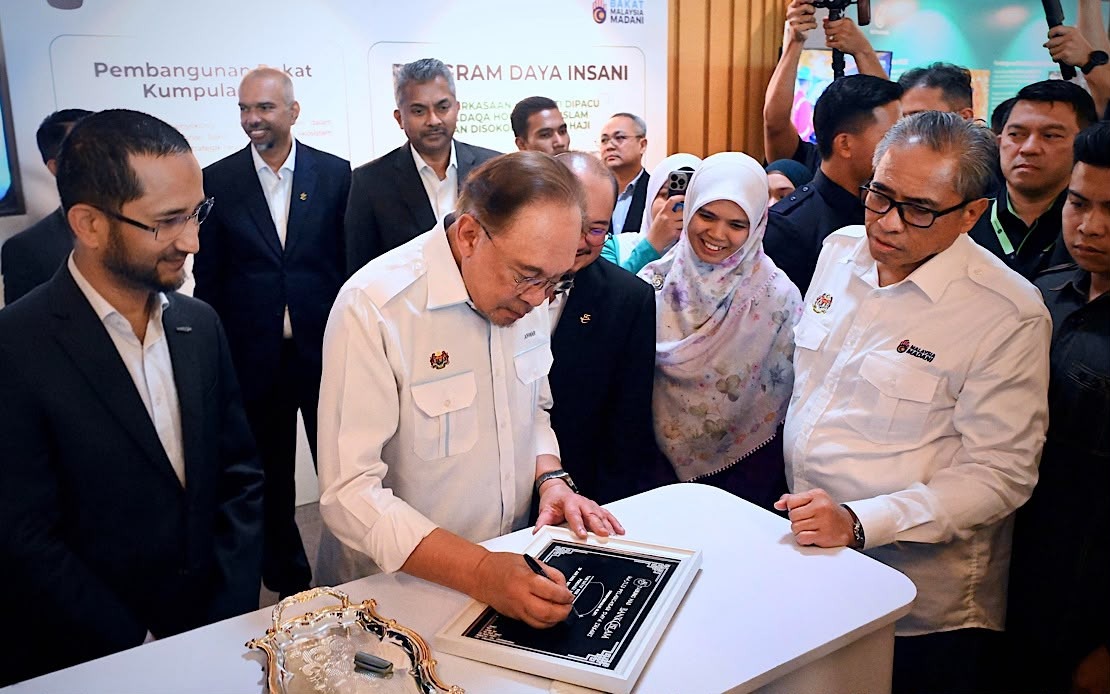
Tabung Haji and Bank Islam Malaysia Berhad have unveiled an ambitious initiative designed to transform economic prospects for disadvantaged young Malaysians. The Asnaf Youth Development Programme for Inclusive and Sustainable Empowerment, branded as DAYA INSANI, comes with an initial RM1 million commitment and represents a coordinated push by two major Islamic financial institutions to address skills gaps among vulnerable populations. The programme was formally announced following Prime Minister Datuk Seri Anwar Ibrahim's launch of the broader MADANI Talent initiative in Sendayan, Negeri Sembilan, positioning it as a key component of the government's human capital development strategy.
The core premise underlying DAYA INSANI reflects a recognition that asnaf communities—those eligible for zakat assistance—often lack access to quality vocational training and professional networks necessary for meaningful employment. By funnelling resources through Bank Islam's social finance arm, Sadaqa House, the two organisations are attempting to create structured pathways from poverty to gainful employment. The initiative targets more than 100 young people and orphans over its initial phase, operating on the principle that targeted investment in human development generates stronger returns for both individuals and the broader economy than conventional welfare approaches.
What distinguishes DAYA INSANI from conventional job training schemes is its emphasis on integrated skill development combined with direct industry partnerships. Rather than operating in isolation, the programme coordinates with established technical and professional institutions across multiple sectors. Collaboration with Kulim Hi-Tech Park Skills Centre positions participants for careers in advanced manufacturing and technology, sectors experiencing acute skills shortages in Malaysia's industrial heartland. Simultaneously, partnerships with Kolej Universiti Bestari and Kumpulan Medic Iman Sdn Bhd create pathways into healthcare professions, where demographic shifts are creating sustained demand for skilled nursing personnel. The involvement of the Malaysian Professional Accountancy Centre introduces accounting certifications within reach of youth who might otherwise lack the financial means to pursue such qualifications.
The programme demonstrates measurable progress even before its formal launch. A nursing diploma initiative, already operational since 2024, has enrolled 19 students with one graduate having successfully transitioned into employment—concrete evidence that the model functions beyond theoretical promise. Technical training at Kulim, which commenced in June, has already engaged 13 participants with expansion targets to 100 trainees. These early cohorts serve as proof points for the wider initiative and provide valuable data about programme effectiveness, dropout rates, and employment outcomes. For Malaysian policymakers and investors monitoring alternative poverty-reduction mechanisms, these real-world results carry more weight than projections alone.
The strategic involvement of multiple institutions reflects an understanding that sustainable youth empowerment requires ecosystem coordination. Financial institutions cannot solve employment challenges unilaterally; they require buy-in from educational providers and corporate employers willing to hire graduates. Tabung Haji's additional collaboration with INCEIF University and the Malaysian Professional Accountancy Centre to produce Islamic finance professionals signals an attempt to create specialised talent pools aligned with Malaysia's financial services expansion. This approach differs from generic skills training by identifying specific sectoral bottlenecks and channelling resources accordingly.
For Malaysian readers, the programme carries particular relevance given ongoing regional competition for skilled labour and the persistent challenge of youth unemployment among disadvantaged communities. Neighbouring countries in Southeast Asia face similar demographic pressures and skills mismatches. By demonstrating that targeted, partnership-based interventions can successfully transition vulnerable youth into formal employment, Malaysia potentially develops a model with broader regional applicability. The involvement of Islamic finance institutions also highlights how Shariah-compliant funding mechanisms can address social development imperatives alongside commercial objectives.
The funding structure, which opens contributions to corporate companies, institutions and individuals, transforms DAYA INSANI into a vehicle for channelling corporate social responsibility and philanthropic capital toward measurable outcomes. This public-private collaboration model has become increasingly popular across Asia-Pacific development initiatives, reflecting recognition that government budgets alone cannot address all social challenges. Malaysian corporations seeking authentic engagement with community development have a structured mechanism here, with transparency regarding how funds translate into employment outcomes for beneficiaries.
Tabung Haji Group Managing Director Mustakim Mohamad framed the initiative within the broader Islamic principle that human capital investment represents the highest form of ummah development. This philosophical positioning carries weight among stakeholders within Malaysia's Islamic institutional ecosystem and signals that DAYA INSANI transcends conventional corporate welfare to embody religious and ethical commitments. Bank Islam's Chief Executive Officer Raja Datin Paduka Teh Maimunah Raja Abdul Aziz similarly emphasised the institution's conviction that potential exists within all individuals when proper support systems activate it—a statement that, while laudable, ultimately requires validation through sustained employment outcomes and income mobility measurements.
The programme's emphasis on industry exposure alongside skills training reflects labour market realities that technical competence alone insufficient without understanding workplace culture, professional expectations and career progression pathways. By embedding exposure to actual working environments within the training framework, DAYA INSANI addresses a gap that sometimes emerges in traditional vocational programmes. Graduates enter employment with realistic expectations and existing familiarity with industry standards, potentially reducing early-career attrition and accelerating productivity gains.
Success metrics for DAYA INSANI will ultimately depend on outcomes rarely highlighted in launch announcements: sustained employment beyond initial placement, income progression over three to five-year windows, and broader economic mobility for participants and their dependents. Malaysian policymakers and development observers should track whether programme graduates maintain employment, advance into supervisory or technical specialist roles, and whether their children access higher education opportunities at improved rates. These longitudinal measures, rather than initial enrolment figures, will determine whether DAYA INSANI genuinely transforms life trajectories or simply cycles vulnerable youth through training with minimal lasting impact.
Looking forward, the architecture of DAYA INSANI offers lessons applicable across Malaysia's development agenda. Partnership between Islamic financial institutions, education providers, and corporate employers can mobilise resources and expertise more effectively than siloed institutional approaches. The Asnaf Youth Development Programme demonstrates recognition that sustainable poverty reduction requires simultaneous attention to skills, employment access, and professional ecosystem integration. For regional observers tracking Malaysia's social policy evolution and innovative approaches to youth unemployment, DAYA INSANI merits close monitoring as a potential template for complementary initiatives addressing similar challenges elsewhere across Southeast Asia.

