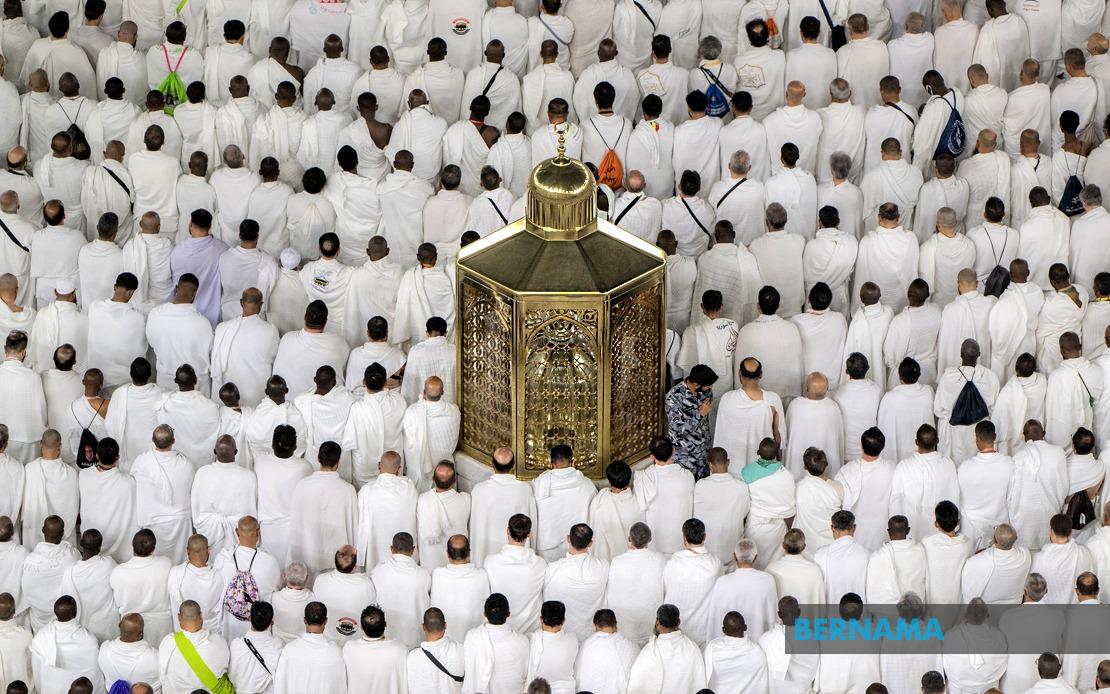
Tabung Haji has reaffirmed its commitment to allocating Haj pilgrimage opportunities through a strictly sequential system that treats all depositors equally, rejecting proposals to create expedited pathways for specific groups such as retiring workers. The religious investment institution maintains that preserving the queue-based allocation model serves the broader interest of fairness and transparency, protecting the accumulated waiting rights of hundreds of thousands of Malaysians who have patiently saved for their pilgrimage over many years.
The stance was articulated by Marhamah Rosli, Deputy Minister in the Prime Minister's Department (Religious Affairs), during parliamentary proceedings on July 13. Her clarification came in response to a legislative proposal that would have granted retiring government employees receiving gratuity payments a faster pathway to the Haj, despite their potentially stronger financial position. The suggestion reflected a genuine tension within Malaysian society: those with windfall payments from retirement packages do possess enhanced capacity to perform the pilgrimage immediately, yet bypassing thousands of existing queue positions would fundamentally compromise the principle of sequential fairness that underpins the system.
The deputy minister articulated a crucial principle that extends beyond administrative convenience—introducing preferential categories would inevitably disrupt the existing queue structure and create measurable disadvantage for those who have already waited years for their turn. This reasoning acknowledges that Haj allocation, while ostensibly a religious matter, functions as a valuable public resource in Malaysia, where demand substantially exceeds the annual quota. Each position allocated represents not merely a pilgrimage opportunity but recognition of prior commitment and sacrifice, elements that would lose moral weight if the queue could be circumvented through financial windfalls unrelated to pilgrimage preparation.
Tabung Haji's approach emphasises advance notice and preparation time. The institution provides depositors with estimated years indicating when they might expect an offer letter, enabling pilgrims to arrange finances, obtain necessary health certifications, and acquire Islamic knowledge about ritual requirements well before their turn arrives. This forward-planning dimension distinguishes the system from first-come-first-served retail allocation; prospective pilgrims receive months or years of warning to prepare comprehensively for one of Islam's most important obligations.
Starting with the current Haj season, Tabung Haji has implemented a financial threshold requiring depositors to maintain a minimum savings balance of RM15,000 before an offer letter can be issued. This requirement operates independently of the first-registered-first-served sequencing, ensuring that those offered a pilgrimage slot possess sufficient resources beyond the minimum RM33,300 actual cost. The additional buffer helps screen for financial readiness and reduces post-offer dropout rates caused by inability to complete payment, thereby maximizing utilization of Malaysia's limited Haj quota.
The deputy minister acknowledged that depositors not yet due for allocation may petition for exceptional consideration through appeal mechanisms embedded within Tabung Haji's administration. These appeals are evaluated individually against established criteria rather than automatically granted, preserving the general principle while allowing for documented hardship or compelling circumstances. This hybrid approach accommodates genuine exceptions without creating categorical exemptions that would systematically advantage particular groups.
Malaysia's annual Haj quota of 31,600 pilgrims for the current season remains substantially below aggregate demand from the nation's Muslim population. The significant shortfall between available slots and applicants intensifies the importance of allocation fairness; every position represents a meaningful opportunity cost. Marhamah confirmed that quota allocation remains entirely within Saudi Arabian government discretion, meaning Malaysia cannot unilaterally increase its allocation regardless of domestic demand pressures. The Saudi authorities consider various factors including national Muslim populations, historical participation rates, and diplomatic considerations when distributing approximately two million annual Haj slots among roughly eighty countries.
Tabung Haji will continue pursuing supplementary quota allocations through official channels annually, recognising that demand from Malaysian pilgrims continues escalating as the Muslim population grows and household incomes rise. However, incremental quota increases will not materially relieve the gap between supply and demand in the medium term, sustaining the requirement for orderly, transparent allocation mechanisms. This structural constraint means that maintaining queue integrity becomes increasingly critical rather than less so.
The institution attributed the absence of reported fraud cases during the 1447 Hijrah Haj season to strengthened enforcement procedures and the effectiveness of awareness campaigns supporting Saudi Arabia's permit requirements. The "No Visa, No Haj" messaging specifically cautions Malaysians against informal arrangements or unofficial Haj package providers, directing pilgrims toward legitimate Tabung Haji channels. This anti-fraud focus complements the allocation system by ensuring that legitimately-obtained Haj quotas are not circumvented through unofficial pathways that would further distort fairness.
The queue system reflects a specific Malaysian institutional choice: treating Haj allocation as a temporal queuing problem rather than a capacity allocation system stratified by wealth, employment status, or other socioeconomic variables. This approach resonates with Islamic principles emphasizing equality before God and with Malaysian values emphasizing equitable treatment regardless of economic circumstances. A retiree with substantial gratuity payments and a long-service worker with modest savings occupy equivalent positions in the allocation sequence, a symbolic and practical commitment to democratic resource distribution.
For Malaysian pilgrims, the decision confirms continuity of the existing system and establishes realistic expectations about timing. Those advancing through the queue will experience their designated years with certainty, while others contemplating early retirement or major life changes should incorporate current queue position into such calculations. The system's stability, while occasionally frustrating to those proposing alternative models, provides the predictability necessary for comprehensive pilgrimage preparation across financial, logistical, and spiritual dimensions.
The broader regional context shows that Malaysia's first-registered-first-served model differs from some other Muslim-majority nations employing lottery, ballot, or preference systems. The choice reflects institutional philosophy and reflects confidence that transparency and sequential fairness generate greater public legitimacy than alternative allocation mechanisms, even when they might theoretically serve specific groups more generously. This institutional stance ultimately protects the pilgrimage opportunity as a collective national resource rather than converting it into a market or patronage commodity.

