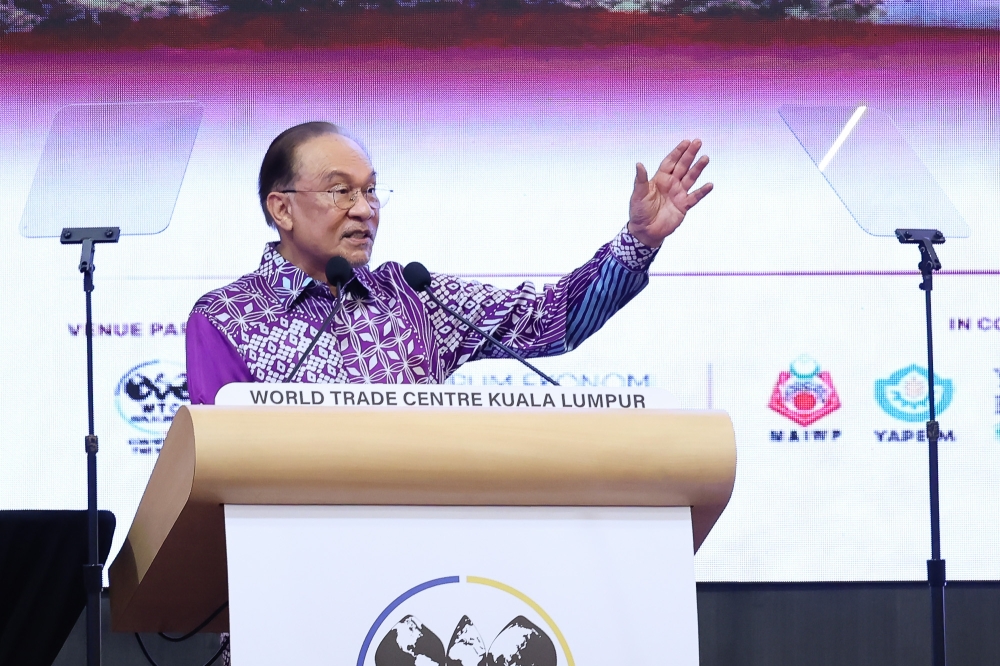
Prime Minister Datuk Seri Anwar Ibrahim declared today that Tabung Haji, the government's pilgrimage management agency, has consolidated its financial position and operational stability after undergoing extensive restructuring measures. Speaking in Kuala Lumpur, he indicated that a forthcoming Royal Commission of Inquiry report would provide a comprehensive account of the institutional challenges that necessitated the reform programme.
The Prime Minister's remarks mark an important checkpoint in the government's efforts to restore public confidence in an agency that manages the savings of hundreds of thousands of Malaysian Muslims preparing for the Hajj pilgrimage. The timing of his statement, coupled with the promised release of the RCI findings, signals that policymakers are moving toward closure on a chapter marked by management failures and accumulated losses that had drawn intense public scrutiny in recent years.
Anwar's acknowledgment that the previous administration had deliberately postponed action on Tabung Haji's structural weaknesses provides crucial context for understanding why the incumbent government accelerated reform initiatives upon taking office. This deliberate deferral, according to the Prime Minister, represented a conscious choice to avoid addressing deeply rooted institutional problems that had accumulated over an extended period. Such delays inevitably compounded the financial and operational challenges facing the organisation, requiring more radical interventions than might have been necessary with earlier corrective measures.
The Royal Commission of Inquiry, whose report preparation has been closely monitored by stakeholders and media observers, represents an official investigation into the circumstances and decisions that culminated in significant erosion of the fund's asset base. For Malaysian Muslims who have entrusted their Hajj savings to Tabung Haji—often representing years of accumulated contributions—understanding precisely what transpired has become a matter of considerable concern. The forthcoming report will likely itemise governance lapses, investment decisions that proved detrimental, and oversight failures that allowed problems to escalate unchecked.
The reforms implemented across Tabung Haji encompass structural reorganisation, enhanced regulatory oversight, and revised management protocols designed to prevent recurrence of past difficulties. These measures reflect lessons learned from the agency's troubled recent history and represent a comprehensive attempt to rebuild the operational framework from foundational principles of prudent financial stewardship and transparent governance. The strengthening that Anwar referenced today would logically emerge from such multifaceted intervention across the organisation's systems and procedures.
For the broader Malaysian political and financial landscape, Tabung Haji's trajectory carries significance extending beyond the pilgrims it directly serves. The agency manages resources accumulated from a substantial cross-section of the Malaysian Muslim population, making its institutional health a barometer of government competence in managing public finances. Successful reform and recovery would demonstrate the current administration's capacity to confront inherited problems directly rather than perpetuate cycles of neglect that characterised earlier approaches.
The promised release of the RCI report represents a commitment to transparency that responds to legitimate public demand for accountability. Citizens contributing to Tabung Haji deserve to comprehend the precise nature of lapses that necessitated governmental intervention and reform. A detailed, publicly accessible report fulfills an obligation to explain institutional failings in terms accessible to stakeholders who have been materially affected by past mismanagement. This transparency also serves as a foundation for rebuilding institutional trust, which inevitably suffered following years of financial deterioration.
The timing of Anwar's announcement, confirming both Tabung Haji's improved position and the imminent report release, suggests that government officials have reached a point where they can present reform outcomes with confidence. Rather than continuing to defer public reckoning, the administration appears positioned to demonstrate that corrective action has produced tangible improvement. This represents a strategic departure from the previous government's approach of managing the issue through avoidance and postponement of difficult conversations.
For Malaysian pilgrims, the strengthening of Tabung Haji carries direct practical implications. An agency with firmer finances and improved governance can more reliably manage the complex logistics of organising pilgrimages for tens of thousands of Malaysian Muslims annually. Enhanced operational capacity translates to better customer service, more reliable payment processing, and reduced vulnerability to the kind of systemic failures that characterised earlier periods. These improvements ultimately serve Malaysia's Muslim population through more professional and secure facilitation of one of Islam's Five Pillars.
The regional dimension should not be overlooked either. Neighbouring Southeast Asian nations with significant Muslim populations also manage pilgrimage funds and institutions, often observing Malaysia's experiences as instructive examples. How effectively Malaysia rehabilitates Tabung Haji and communicates reform outcomes to affected communities provides relevant experience for other governments managing similar challenges. The approach taken—combining transparent investigation, comprehensive structural reform, and public communication—offers a model that other jurisdictions may reference when confronting comparable institutional difficulties.
Looking ahead, the release of the RCI report will furnish a detailed historical record that should inform future governance frameworks both within Tabung Haji and across other government agencies managing public finances. By documenting specifically what went wrong and how problems developed, the report contributes to institutional learning that strengthens government capacity generally. This investigative closure, combined with demonstrable operational improvement, positions Tabung Haji for a more stable trajectory than appeared possible when the current reform programme commenced.

