Tabung Haji is stepping up its campaign to recover the bulk of a substantial arbitration award from Al-Rawda Real Estates Development & Project Management Co Ltd, a Saudi Arabia-based property developer, after the company made only a partial payment and subsequently breached a settlement accord. The Islamic pilgrimage fund has deployed sophisticated asset tracing techniques and terminated its November 2024 settlement agreement with the firm, signalling a harder line in what has become a protracted and costly dispute spanning several years.
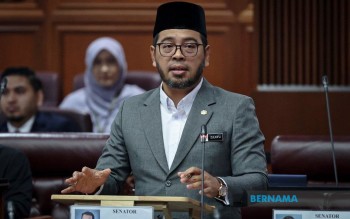
According to Minister in the Prime Minister's Department (Religious Affairs) Dr Zulkifli Hasan, Al-Rawda has paid merely 14.9 million Saudi riyal of the 899 million Saudi riyal arbitration award granted to Tabung Haji by an international tribunal in April 2023. This leaves an outstanding balance of 884.1 million Saudi riyal—equivalent to roughly RM964 million at current exchange rates—still unrecovered. The minister disclosed that despite Tabung Haji exhausting conventional enforcement remedies against the company, Al-Rawda has demonstrated insufficient financial capacity to satisfy the full judgment, necessitating alternative recovery strategies.
The transaction that precipitated this dispute represents one of the most significant investments in Tabung Haji's portfolio to go awry. Between 2015 and 2017, the fund leased four hotels located in the holy cities of Makkah and Madinah from Al-Rawda, disbursing approximately RM1.55 billion upfront to secure a lease spanning between ten and eighteen years. This extraordinary commitment of capital, which Dr Zulkifli characterised as exceptionally unusual rather than a standard commercial arrangement, underscored Tabung Haji's ambitious expansion into hospitality infrastructure serving pilgrims. The fund simultaneously appointed Al-Rawda as the operational manager of these properties, establishing a Management and Operation Agreement that entitled Tabung Haji to receive 2.49 billion Saudi riyal in lease rental income, ostensibly generating substantial returns on its initial investment.
The structural fragility of this arrangement became apparent when Al-Rawda ceased remitting rental payments to Tabung Haji from March 2019 onwards. Rather than secured conventional collateral, Tabung Haji's only recourse was a personal promissory note guaranteed by Al-Rawda's proprietor, Dr Mashhoor Ali Omar Almadoodi—a security measure that proved inadequate when the company's liquidity deteriorated. This payment default triggered legal proceedings in Saudi Arabia, ultimately resulting in the International Chamber of Commerce arbitration that ruled decisively in Tabung Haji's favour in April 2023, mandating Al-Rawda's payment of 899 million Saudi riyal as compensation for accumulated breaches and losses.
Yet the arbitration victory has proven pyrrhic. When Al-Rawda remitted only a fraction of the ordered sum, Tabung Haji attempted a negotiated resolution through the November 2024 settlement agreement, apparently hoping to recover at least a portion of its losses through structured payments. The company's subsequent default on this agreement, however, persuaded Tabung Haji's leadership to terminate negotiations and pursue more aggressive asset recovery tactics. The fund has now engaged external consulting specialists to conduct detailed asset tracing operations, a sophisticated investigative approach designed to identify and locate Al-Rawda's undisclosed assets in Saudi Arabia and potentially elsewhere, which could then be seized to satisfy the judgment.
This dispute represents merely one facet of Tabung Haji's broader portfolio crisis, as identified by the Royal Commission of Inquiry into the institution. The RCI has identified Al-Rawda among fourteen problematic investments that collectively generated losses amounting to several billion ringgit, exposing severe governance failures and inadequate due diligence across Tabung Haji's investment operations. The public release of the comprehensive 211-page RCI report in late July laid bare the institutional weaknesses in management and operational oversight that characterised the period between 2014 and 2020, a decade when Tabung Haji's leadership prioritised aggressive expansion and revenue generation over prudent risk management.
For Malaysian pilgrims and stakeholders, the Al-Rawda situation carries particular resonance given Tabung Haji's central role in facilitating the hajj pilgrimage for hundreds of thousands of Malaysians annually. The fund's financial distress, evident from the accumulated losses documented in the RCI findings, has raised concerns about its capacity to continue providing competitive hajj packages and maintaining the quality of accommodation and services for pilgrims in Saudi Arabia. The four hotels at the centre of this dispute were specifically intended to enhance the pilgrimage experience for Malaysian Muslims, making the investment failure not merely a financial misstep but a strategic setback affecting the institution's core mission.
The governance dimensions of this case extend beyond mere commercial negligence. The decision to commit RM1.55 billion upfront for a decade-long lease, coupled with reliance on a personal guarantee rather than robust security mechanisms, suggests significant governance lapses in Tabung Haji's investment committee structures. The RCI's subsequent recommendations for institutional reform, of which Tabung Haji has already implemented approximately 75 per cent as of late July, emphasise the need for strengthened investment oversight, diversification protocols, and enhanced risk assessment procedures. These measures are intended to prevent recurrence of similar high-stakes ventures characterised by inadequate due diligence and excessive concentration of capital.
The regional dimensions of this dispute merit consideration as well. Saudi Arabia's property sector experienced considerable volatility during the period when Tabung Haji made its investments, and the timing of Tabung Haji's major hotel acquisitions coincided with broader economic adjustments in the kingdom. The subsequent payment default by Al-Rawda may reflect broader liquidity pressures within the Saudi real estate and hospitality sector rather than isolated mismanagement by the firm. Nevertheless, this context does not diminish Tabung Haji's losses or excuse the fund's inadequate assessment of counterparty creditworthiness and contractual risk when committing such substantial capital.
Moving forward, Tabung Haji's asset tracing initiative represents a realistic acknowledgment that conventional enforcement mechanisms have reached their practical limits. The consulting company engaged for this purpose will likely pursue investigation of Al-Rawda's ownership structures, corporate transactions, and potential asset transfers that may have occurred following the 2023 arbitration award. Such investigations frequently uncover hidden assets held through subsidiary entities or transferred to related parties, providing potential leverage for negotiated recovery or bases for expanded enforcement actions in multiple jurisdictions. The success of this approach, however, remains uncertain and may consume considerable additional time and resources before yielding meaningful recovery.
For Tabung Haji's recovery efforts, the broader institutional reform programme initiated in response to the RCI findings represents a parallel and equally important initiative. Strengthened governance structures, enhanced due diligence protocols, and more conservative investment strategies should progressively reduce the likelihood of future investments deteriorating into litigation and protracted recovery campaigns. The Al-Rawda dispute, whilst a significant and frustrating loss, may ultimately prove instructive in catalysing the institutional transformation necessary to restore Tabung Haji's financial stability and credibility with Malaysian pilgrims dependent upon its services.

