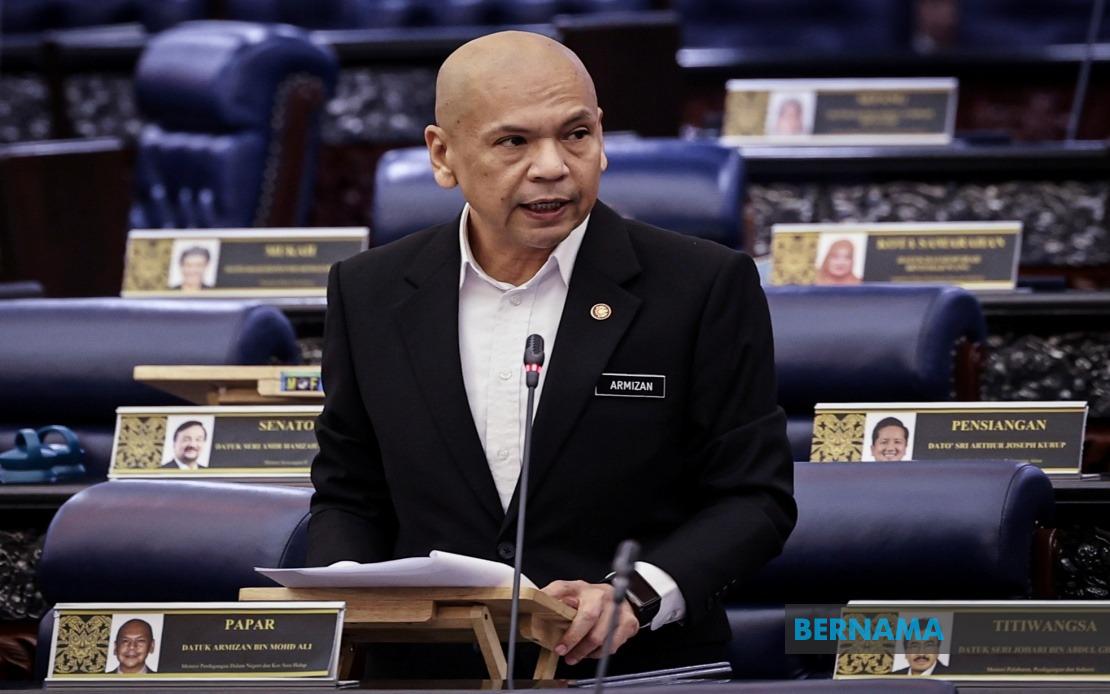
Parliamentarians have united in demanding that any investigation stemming from the Royal Commission of Inquiry report on Tabung Haji be conducted with complete transparency and independence to protect the interests of depositors and the broader Malaysian public. Speaking during a special Dewan Rakyat sitting dedicated to examining the RCI findings, lawmakers emphasised that such investigations must be carried out with professional rigour, grounded in factual assessment and legal principles rather than speculation or accusation.
The RCI report, released to the public on July 29 following government approval, contains findings regarding governance shortcomings at the Islamic pilgrimage fund between 2014 and 2020. The document also proposes 25 recommendations for institutional improvement, with Tabung Haji having already implemented approximately three-quarters of these suggestions by late July. The public disclosure of the report's contents has intensified scrutiny of the fund's operations during the period in question, prompting renewed calls for rigorous action.
Datak Armizan Mohd Ali, Minister of Domestic Trade and Cost of Living and MP for Papar, highlighted the confusion and polarisation that has emerged in public discourse surrounding Tabung Haji's troubles. He observed that the issue has become caught in a web of competing narratives, with various stakeholders making accusations and counter-accusations of slander and defamation. This adversarial environment has obscured rather than clarified the fundamental questions of culpability and institutional failure, leaving many Malaysians uncertain about what actually occurred and who bears responsibility.
Armizan stressed that enforcement agencies stepping in to conduct investigations at the appropriate level would be a welcome development, provided such investigations maintain professional standards and focus on establishing facts rather than perpetuating the blame game that has characterised public debate. He argued that beyond investigating the RCI's findings and taking action on them, the government must also thoroughly examine each of the 25 improvement recommendations to ensure they address root causes and strengthen Tabung Haji's governance and strategic direction going forward.
The minister acknowledged the recovery efforts undertaken by Tabung Haji's current administration, which have enabled the fund to return to financial health despite the challenges identified in the RCI report. These operational improvements provide a foundation upon which stronger institutional practices can be built, but the government recognises that systemic governance changes are equally essential to prevent recurrence of the problems documented during the 2014-2020 period.
Datak Seri Nancy Shukri, Minister of Women, Family and Community Development, contributed a separate perspective on governance reform, particularly regarding the institutional arrangements for managing Tabung Haji. She affirmed her support for maintaining oversight of haj affairs under the Minister in the Prime Minister's Department (Religious Affairs), while suggesting that financial and investment functions should remain within the Finance Ministry's remit. This division of responsibilities, she contended, reflects appropriate specialisation based on distinct areas of expertise and prevents the duplication of effort that can arise when multiple agencies share overlapping jurisdictions.
Nancy's intervention also addressed a sensitive political question: whether political appointees should sit on the boards of statutory bodies such as Tabung Haji. Rather than arguing for an outright ban on political appointees, she posed a more nuanced position, suggesting that the critical consideration should not be whether a board member has a political background, but rather whether that individual possesses the necessary integrity, qualifications, professional experience, and demonstrable capability to discharge their fiduciary duties effectively. According to this framework, a politically connected appointee with genuine expertise and proven competence ought to receive equal recognition for their contributions as any other board member.
However, Nancy cautioned against allowing political affiliation or standing to substitute for proper merit-based selection. She advocated instead for establishing clear criteria for board appointments, transparent selection methodologies, and explicit specifications of required areas of expertise. Such formal structures would ensure that appointment decisions are primarily driven by considerations of merit and suitability for the specific responsibilities involved, thereby reducing the risk that positions become sinecures for political favourites regardless of their actual qualifications.
The special Dewan Rakyat sitting in which these exchanges occurred represents one element of Parliament's broader oversight role in relation to Tabung Haji's governance crisis. Legislators have seized the opportunity to examine the RCI report comprehensively and to signal their expectations regarding government follow-up actions. The emphasis on transparency and professional investigation reflects legitimate public concern that the handling of the Tabung Haji matter must be seen to be fair, competent, and genuinely aimed at protecting the interests of the millions of Malaysian Muslims who rely on the fund for their haj financing.
The underlying governance issues that the RCI identified extend beyond the 2014-2020 period and touch on fundamental questions about how Malaysia manages large public trusts, particularly those entrusted with managing the religious obligations and savings of its Muslim citizens. The demand for transparent investigation and systematic implementation of the commission's recommendations reflects both immediate accountability concerns and longer-term institutional reform aspirations. For Malaysian depositors and the broader public, these parliamentary interventions signal that lawmakers are attentive to the governance failures documented in the RCI report and expect concrete action rather than mere acceptance of findings.
The pathway forward outlined by parliamentary speakers involves complementary but distinct processes: enforcement investigations into potential misconduct during the period under scrutiny, implementation of the RCI's 25 improvement recommendations, and a formal review of board appointment procedures and governance structures. These parallel initiatives, if executed with genuine rigour and transparency, could help restore public confidence in Tabung Haji's stewardship of Muslim pilgrims' savings and demonstrate that Malaysia's institutional accountability mechanisms can effectively address governance failures in statutory bodies.

