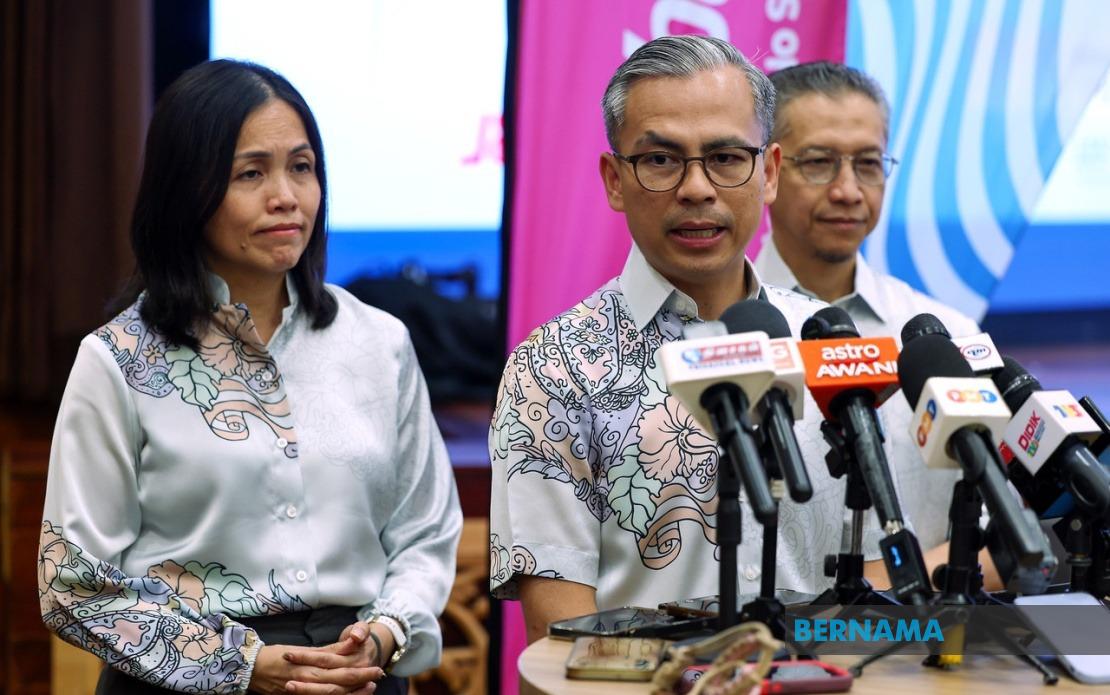
The Royal Commission of Inquiry report examining Lembaga Tabung Haji's governance failures will proceed to multiple enforcement agencies for comprehensive criminal and financial investigation, Communications Minister Datuk Seri Fahmi Fadzil confirmed in Putrajaya on August 12. The referral marks the formal transition of the RCI findings from the inquiry stage into active law enforcement channels, potentially paving the way for prosecutions should evidence of wrongdoing emerge during police and anti-corruption examinations.
The investigation will be conducted across several institutions with distinct mandates and investigative powers. The Royal Malaysia Police will lead criminal inquiries, while the Malaysian Anti-Corruption Commission focuses on graft-related offenses. Separately, agencies enforcing the Anti-Money Laundering, Anti-Terrorism Financing and Proceeds of Unlawful Activities Act will scrutinise financial flows, Bank Negara Malaysia will examine banking violations, and the Inland Revenue Board will assess tax compliance issues. This multi-agency approach reflects the complexity of the alleged irregularities documented in the RCI report, which likely span criminal conduct, corruption, money laundering risks, and taxation matters.
Fahmi outlined that the referral encompasses not merely the published RCI findings but also supplementary information presented during a special parliamentary sitting held the previous day. Finance Minister II Datuk Seri Amir Hamzah Azizan and Minister in the Prime Minister's Department (Religious Affairs) Dr Zulkifli Hasan provided additional context and evidence to parliament, expanding the investigative foundation beyond the formal RCI conclusions. This parliamentary briefing process has broadened the evidentiary base available to prosecutors and investigators, potentially uncovering additional leads or documentation that individual agencies can pursue independently.
The RCI report, released publicly on July 29, documented systemic management and operational shortcomings at Tabung Haji spanning 2014 to 2020—a critical period when the pilgrim fund faced significant operational and financial challenges. The inquiry produced 25 recommendations aimed at remedying governance gaps and strengthening institutional controls. As of late July this year, Tabung Haji had implemented three-quarters of these recommendations, suggesting the fund's leadership has begun addressing compliance deficiencies identified during the inquiry, though some structural reforms may remain incomplete pending the investigation outcomes.
Parliamentary opposition figures from both Barisan Nasional and Pakatan Harapan have called for the government to establish an additional RCI specifically examining Tabung Haji's operations during the 2021-2025 period. However, Fahmi stressed that creating a new commission would require Cabinet approval and royal consent from the Yang di-Pertuan Agong. The constitutional and procedural requirements for establishing a Royal Commission of Inquiry remain substantial, preventing ad hoc extensions or successive inquiries without formal governmental processes. This institutional constraint suggests that any expansion of the RCI mandate would face bureaucratic and constitutional delays.
The political dimensions of the RCI and its aftermath remain contested. Fahmi commended Parti Pribumi Bersatu Malaysia MPs for attending the previous day's parliamentary debate on the RCI findings, characterizing their participation as demonstrating political maturity and engagement with governance accountability. In contrast, opposition MPs from Perikatan Nasional, including members of PAS, boycotted the parliamentary session entirely. Fahmi pointedly noted the irony that PAS members and current opposition leader Datuk Seri Hamzah Zainudin held cabinet positions in 2021 when the RCI was initially established, yet declined to participate in parliamentary scrutiny of the completed inquiry.
The boycott by Perikatan Nasional opposition MPs underscores deeper partisan fractures within Malaysia's parliament. Some opposition lawmakers staged a walkout from the Dewan Rakyat in objection to Speaker Tan Sri Johari Abdul's decision to proceed with the ministerial briefing and debate without Prime Minister Datuk Seri Anwar Ibrahim present in the chamber. This procedural dispute reflected broader tensions over parliamentary decorum, speaker discretion, and the appropriate protocols for government accountability debates. Thirty-nine MPs ultimately participated in the RCI debate before the walkouts and boycotts disrupted proceedings.
For Malaysian investors and pilgrims, the referral of RCI findings to law enforcement agencies signals potential accountability mechanisms despite the complexity of prosecuting high-level officials implicated in governance failures. Tabung Haji manages approximately RM85 billion in assets held in trust for over 32 million pilgrims, making institutional integrity and management transparency paramount. The investigation outcomes could determine whether civil or criminal remedies are available to individuals whose financial interests were affected by alleged mismanagement during the 2014-2020 period under examination.
The investigation will unfold amid broader regional scrutiny of pilgrim fund governance and Islamic financial institution management. Southeast Asian governments manage substantial haj and umrah pilgrim funds, and Malaysia's experience with Tabung Haji's governance failures provides cautionary precedent for neighbouring countries managing similar trust arrangements. The investigation's progress and eventual findings will likely influence how other regional islamic financial institutions strengthen their internal controls and governance frameworks.
The timeline for investigation completion remains uncertain. Criminal investigations typically require months to establish culpability and gather prosecutorial evidence, particularly when examining complex institutional conduct spanning multiple financial years. Bank Negara Malaysia and the IRB may complete their examinations on different schedules depending on the scope of suspected violations. Malaysian observers will be monitoring whether agencies move swiftly to conclude investigations or whether bureaucratic delays extend the inquiry period indefinitely, potentially limiting accountability and public closure on the Tabung Haji governance crisis.
The referral also carries implications for future RCI processes in Malaysia. If the Tabung Haji investigation demonstrates effective inter-agency coordination and leads to successful prosecutions, it may encourage policymakers to utilise RCIs more routinely for examining institutional failures. Conversely, if investigations stall or produce minimal accountability, political confidence in the RCI mechanism as a governance tool may diminish, potentially limiting parliament's willingness to recommend inquiries in future cases of institutional malfeasance. The Tabung Haji investigation will thus function as a bellwether for the Malaysian state's capacity to translate inquiry findings into enforceable legal consequences.

