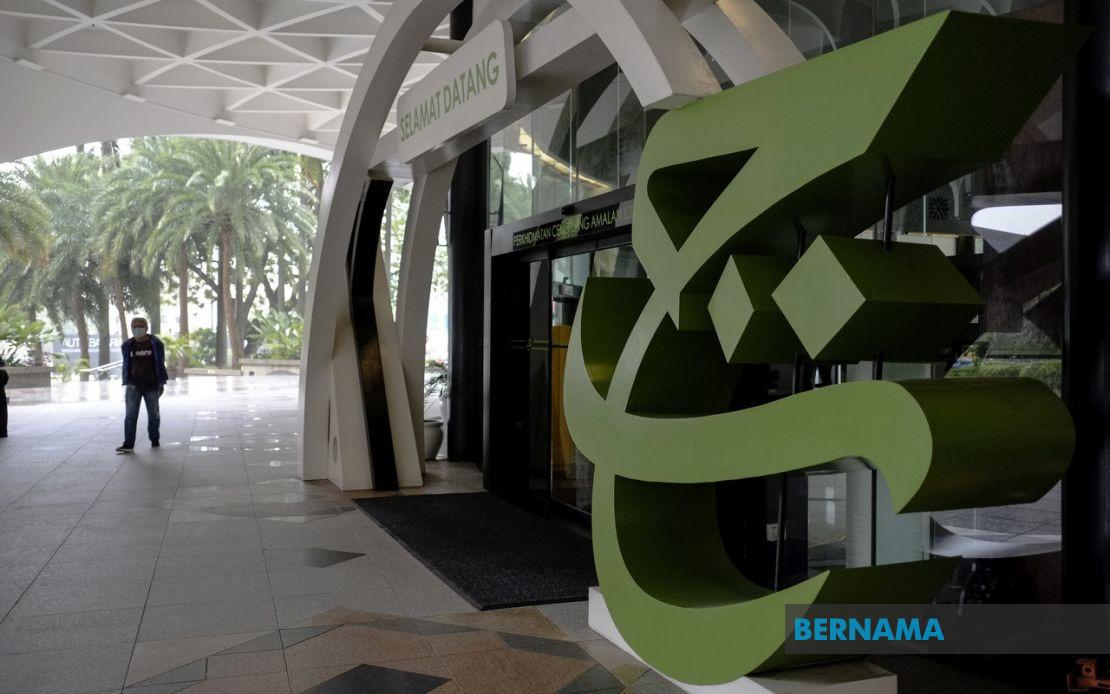
Malaysia's Tabung Haji has substantially recovered its financial footing following a comprehensive restructuring and recovery plan that addressed RM12.6 billion in accumulated investment losses, according to findings released by the Royal Commission of Inquiry. The fully declassified RCI report validates the government's 2018 intervention strategy, though it carries an important caveat: the stabilisation achieved must be followed by sustained institutional reforms to prevent future crises. The report's conclusion reflects guarded optimism about TH's turnaround whilst highlighting vulnerabilities that persist within an institution managing pilgrimage savings for over 1.7 million Malaysian depositors.
The recovery involved a two-phase resolution of TH's mounting losses. The 2018 Recovery Plan addressed RM10 billion of the total, while the remaining RM2.6 billion was tackled progressively through the end of 2025. This phased approach allowed TH to stabilise operations without triggering immediate liquidity shocks that could have disrupted dividend payments to account holders. The RCI found that government and TH management had implemented 75 per cent of the commission's recommendations, with authorities pledging to complete the outstanding 25 per cent as part of an expanded governance and risk management framework. The progress demonstrates political commitment to institutional reform, though the incomplete implementation suggests ongoing bureaucratic or technical constraints.
Financial metrics underpin the recovery narrative. TH's investment income reached RM4.64 billion in 2024, marking the highest annual performance since 2018 and signalling restored earning capacity across the institution's diversified portfolio. More significantly, annual profit distributions to depositors have risen from just 1.25 per cent in 2018 to 3.5 per cent in 2025, approaching pre-crisis levels and restoring confidence among account holders. These figures matter considerably for Malaysian Muslims planning to perform the hajj, as TH typically funds pilgrimage trips from accumulated savings combined with annual dividends. The improved returns suggest the institution's core mandate of supporting hajj financing is increasingly sustainable.
The centrepiece of the recovery plan was an asset transfer mechanism that remains contentious and requires scrutiny. TH transferred RM19.9 billion in underperforming assets to Urusharta Jamaah Sdn Bhd, a government-owned special purpose vehicle created specifically to absorb these holdings. Critically, the transfer price of RM19.9 billion substantially exceeded the assets' market valuation of RM9.7 billion at the time, creating a RM10.2 billion premium that effectively represented a government subsidy of TH's balance sheet. The RCI concluded this transfer preserved TH's financial standing and allowed the institution to refocus on pilgrimage management rather than navigating a portfolio of illiquid and underperforming investments. However, this mechanism raises questions about moral hazard and whether it encourages future institutional imprudence by signalling that government will absorb investment failures.
UJSB's role in the recovery extends beyond merely warehousing bad assets. The special purpose vehicle financed the asset purchase through two sukuk issuances backed by government letters of support, carrying annual profit rates of 4.05 per cent and 4.10 per cent respectively. This structure places responsibility for servicing the sukuk debt ultimately with the government, creating a contingent liability that could strain public finances if investment returns falter. The RCI specifically warned that the government's ability to redeem UJSB sukuk and maintain promised annual cash allocations remains uncertain, potentially leaving TH unable to fund dividend distributions without adequate underlying cash flow. This vulnerability reflects a broader tension: TH's recovery depends partly on governmental support that may not be indefinitely sustainable, especially during economic downturns when both government revenues and investment returns decline simultaneously.
Interestingly, TH has begun selectively repurchasing some assets from UJSB, suggesting improved financial health and changed market conditions. In 2025, TH repurchased the Tun Razak Exchange land for RM270 million, representing a RM130 million gain compared to the original RM400 million transfer price. Similarly, the institution reacquired the UJ Estates oil palm plantation for RM695 million, RM105 million below its RM800 million transfer cost. These buybacks indicate that underlying asset values have recovered or that TH's investment criteria have shifted to favour reacquisition. They also suggest UJSB may have managed these holdings productively, either improving their performance or positioning them advantageously for resale. For Malaysian depositors, asset recovery hints at substantive value restoration rather than mere accounting manoeuvres.
Despite evident financial progress, the RCI's cautionary language about structural vulnerabilities deserves serious attention. The commission explicitly rejected characterising the recovery plan as a long-term solution, instead identifying several critical unresolved issues requiring immediate policy attention. These include overhauling corporate governance arrangements, comprehensively reviewing the Tabung Haji Act 1995 to modernise regulatory provisions, implementing enhanced risk management and cost control mechanisms, and establishing a robust regulatory framework to ensure institutional resilience. The RCI's concerns suggest that financial stabilisation alone is insufficient; TH requires systemic institutional reforms addressing how it operates, takes investment decisions, manages risks, and interfaces with government oversight bodies.
Corporate governance deficiencies feature prominently in the RCI's assessment of TH's underlying weaknesses. The institution's previous investment losses, which accumulated over years, suggest inadequate board oversight, insufficient investment discipline, and perhaps misaligned incentive structures that encouraged excessive risk-taking. Strengthening governance would involve clarifying board roles and responsibilities, implementing more rigorous investment approval procedures, establishing independent audit and compliance functions, and creating meaningful accountability mechanisms for senior management. For Malaysian stakeholders, improved governance directly translates to greater confidence that TH will not repeat the miscalculations that necessitated the 2018 bailout.
The Tabung Haji Act 1995 review represents another crucial reform avenue. The existing legislation predates significant changes in financial regulation, investment markets, and macroeconomic conditions. Updating the act would allow TH to adopt modern governance standards, clarify its regulatory status relative to Bank Negara Malaysia and the Securities Commission Malaysia, define clearer parameters for investment activities, and establish transparent mechanisms for government support or intervention. A modernised legislative framework would also better protect depositor interests whilst maintaining TH's institutional autonomy. This is particularly important for Malaysian Muslims who rely on TH's competence and stability to safeguard their hajj savings over potentially decades of accumulation.
Risk management enhancement deserves emphasis given TH's history of investment losses. The institution must implement comprehensive risk frameworks addressing credit risk, market risk, liquidity risk, and operational risk across its expanded portfolio. Cost controls are equally vital; TH's administrative expenses should align with international benchmarks for similar institutions to ensure maximum funds reach depositors rather than supporting bloated bureaucracies. The RCI's emphasis on these technical dimensions suggests the recovery's architects recognised that financial losses reflected not merely unfortunate market timing but deficient institutional processes.
Regulatory framework development presents a strategic challenge requiring careful interagency coordination. TH operates in a grey zone between Islamic financial institutions regulated by Bank Negara Malaysia and investment-focused entities overseen by the Securities Commission. Establishing a clear regulatory framework would clarify which authority bears primary responsibility for TH's prudential oversight, investment activities, and depositor protection. This clarity would facilitate more effective regulatory supervision and reduce the likelihood of regulatory arbitrage where TH exploits gaps in oversight. It also affects TH's international positioning, as clearer regulation would enhance credibility with foreign investment partners and sukuk investors.
For Malaysian readers, TH's recovery and the RCI's findings carry immediate relevance. The institution manages hajj savings for a substantial portion of Muslim Malaysians, making its financial health a personal concern for account holders. The recovery validates government intervention during acute crises whilst the RCI's cautionary notes caution against complacency. The rising dividend distributions reflect genuine improvement, though the dependence on government support for sukuk redemption and cash allocations introduces uncertainty. Depositors should monitor TH's progress on implementing the remaining 25 per cent of RCI recommendations, as completion would substantially strengthen the institution's long-term prospects.
Broader institutional implications extend beyond TH itself. The experience demonstrates risks inherent in concentrating substantial public assets within single institutions lacking robust governance frameworks, particularly where those institutions manage citizen savings. The recovery's structure, whereby government absorbed investment losses through UJSB, raises important questions about moral hazard and whether similar arrangements elsewhere inadvertently encourage institutional imprudence. It also highlights the critical importance of independent royal commissions in investigating institutional failures, as the RCI's declassified report provides unprecedented transparency regarding TH's crisis and recovery.
Looking forward, TH's consolidation of gains whilst implementing structural reforms will determine whether the institution achieves lasting resilience or merely temporary stabilisation. The RCI's measured assessment—acknowledging recovery whilst insisting on continued reform—appropriately captures this transitional status. Malaysian depositors and policymakers should ensure that immediate financial progress does not displace longer-term institutional development. The commission's recommendations, when fully implemented, should transform TH into a model Islamic financial institution characterised by transparent governance, disciplined investment practices, and institutional independence. Only then can the 2018 recovery plan be definitively characterised as success rather than provisional stabilisation.

