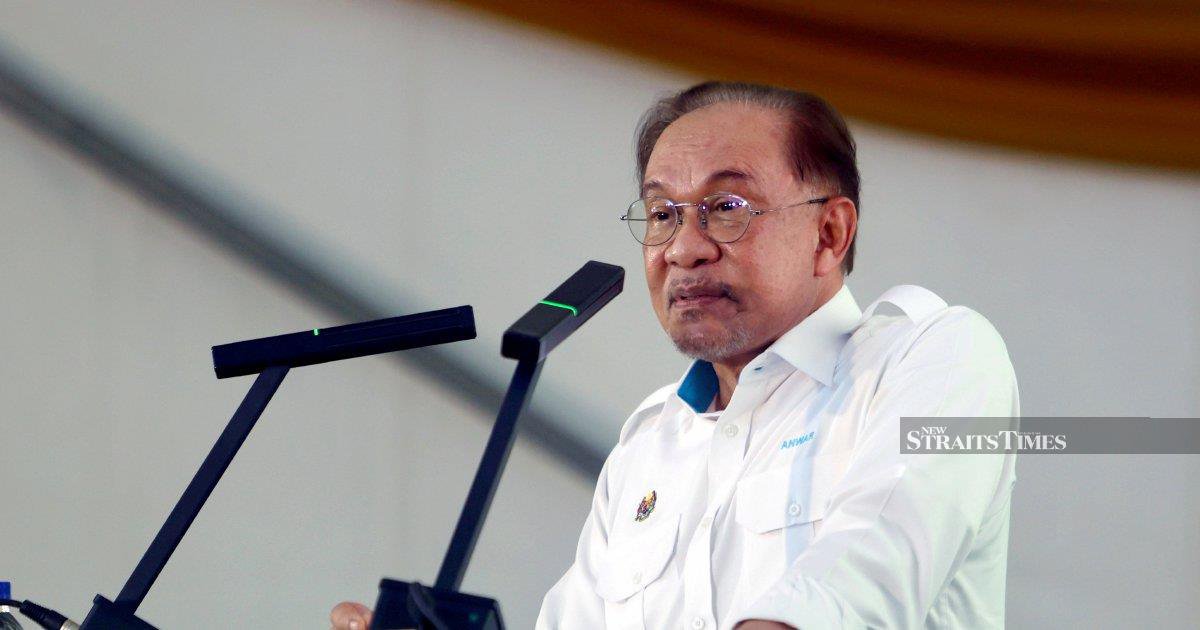
The Taiwan Chamber of Commerce & Industry in Malaysia has registered significant alarm over Prime Minister Datuk Seri Anwar Ibrahim's recent public statement describing Taiwan as "part of China", alerting Malaysian policymakers that such pronouncements risk undermining the country's attractiveness as a destination for semiconductor and technology investment.
The chamber's intervention represents a notable moment in Malaysia's delicate balancing act between its diplomatic relationships and economic interests. Taiwan remains a major source of foreign direct investment in Malaysia's technology sector, with significant manufacturing facilities and research operations concentrated in the semiconductor and electronics industries. The business community's concern suggests that foreign investors monitor not only formal government policy but the political rhetoric emanating from senior leaders, viewing such statements as potential signals of shifting political orientation or future policy direction.
Malaysia's relationship with Taiwan has historically been complicated by its recognition of the People's Republic of China and its adherence to the One-China policy, a cornerstone of Malaysian foreign diplomacy. However, this formal diplomatic stance has rarely prevented substantive economic engagement with Taiwan. The semiconductor industry, in particular, has flourished in Malaysia through Taiwanese investment, contributing billions of ringgit to the economy and creating tens of thousands of high-skilled jobs across states like Penang, Selangor, and Johor. The chamber's public warning suggests that investors are now questioning whether Malaysia's political environment remains conducive to continued confidence in bilateral economic relationships.
The timing of these comments carries strategic significance within the broader regional context. Southeast Asia has become increasingly important to semiconductor supply chains, particularly as geopolitical tensions between Washington and Beijing have prompted manufacturers to diversify away from China. Malaysia, alongside Vietnam and Thailand, has positioned itself as a neutral ground offering political stability and strategic location benefits. Any perception that Malaysia is tilting toward Beijing in ways that might disadvantage Taiwanese investors could encourage companies to reassess their regional presence and future investment plans.
Taiwan's investment footprint in Malaysia extends beyond semiconductors into electronics manufacturing, precision engineering, and emerging technologies. The chamber's expression of concern likely reflects conversations among member companies about how political rhetoric translates into business risk. Foreign investors assess stability not only through macroeconomic indicators but through the consistency and predictability of government messaging regarding key economic partners. Statements that appear to elevate political ideology over pragmatic economic engagement can trigger internal reviews of investment commitments and expansion plans.
The broader implication for Malaysia is that navigating between traditional diplomatic alignments and modern economic interdependencies requires calibrated communication. Countries that successfully attract substantial foreign technology investment typically maintain what might be termed "political discretion"—careful avoidance of unnecessary statements that complicate business relationships with major investor nations. Prime Minister Anwar's comments, regardless of their intended diplomatic emphasis, have evidently triggered concern among Taiwanese business stakeholders about how Malaysia's government categorizes their home economy's political status.
From an economic development perspective, Malaysia faces a critical juncture in leveraging regional geopolitical competition for technology investment. The United States and its allies are actively encouraging semiconductor manufacturers to establish production beyond China's reach, while China simultaneously seeks to reduce its technology dependence on Taiwan. Malaysia, positioned between these forces, has the potential to benefit substantially from this realignment—but only if foreign investors maintain confidence that political considerations will not impinge on their ability to operate efficiently. The chamber's warning suggests that confidence has been shaken, at least temporarily.
The diplomatic dimensions of the PM's remarks reflect Malaysia's historical commitment to the One-China principle and the government's sensitivity to Beijing's preferences. However, such political statements can create friction with economic actors from Taiwan who view Malaysia as a crucial part of their regional strategy. This tension between formal diplomatic positions and commercial reality has long characterized Malaysia's approach to Taiwan, but public statements elevating the political dimension risk tipping the balance toward caution among Taiwanese investors.
Regional observers will likely monitor whether Malaysian officials issue clarifying statements emphasizing the government's continued commitment to welcoming technology investment from all sources, including Taiwan. The semiconductor and electronics industries represent crucial components of Malaysia's ambitions to upgrade its economic structure and develop higher-value manufacturing capabilities. Losing investor confidence or seeing planned investments delayed or relocated to competing nations would represent a significant setback to these goals.
The chamber's intervention also reflects broader industry concerns about supply chain stability and partner reliability. Taiwanese manufacturers in Malaysia operate as critical nodes in complex regional and global supply networks. Their confidence in Malaysia as a stable, politically neutral operating environment directly affects not only their own expansion decisions but the viability of contracts and relationships with their own international clients. When political rhetoric creates uncertainty, entire investment ecosystems come under review.
Looking forward, this episode underscores a fundamental challenge for middle-power nations in the Indo-Pacific: balancing historical diplomatic commitments with contemporary economic realities. Malaysia's success will depend partly on its ability to maintain Taiwan's investor confidence while respecting its diplomatic relationship with China. The Taiwan Chamber of Commerce's public statement serves as a marker of that delicate balance having shifted, at least in business perception, warranting careful management by Malaysian policymakers.

