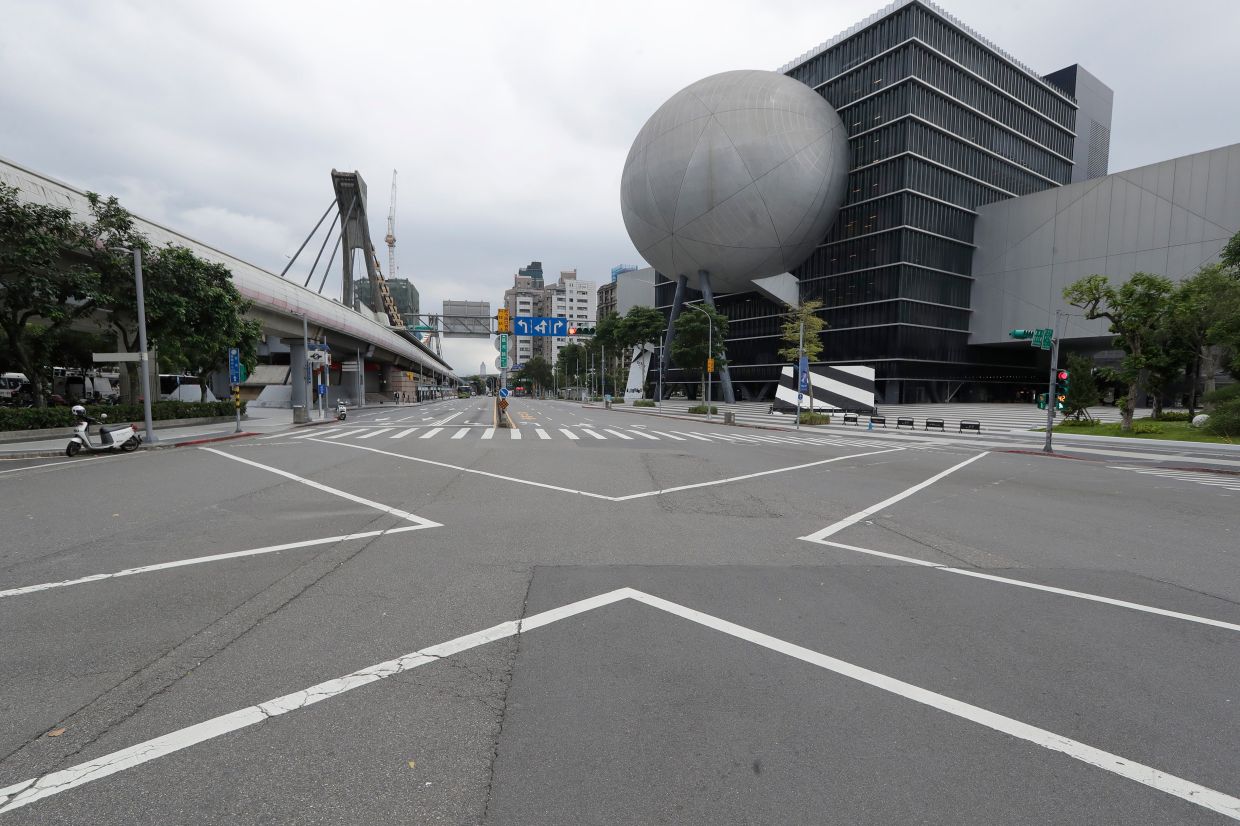
Taiwan's government orchestrated a deliberate slowdown of mobile internet services across its capital and six surrounding cities on August 13, restricting data speeds to just 256 Kbps as part of the island's largest annual military exercises. The measure represented a significant escalation in how Taiwan approaches civil defence drills, moving from largely invisible urban exercises to highly disruptive demonstrations of wartime conditions that affected millions of residents in real time.
The internet throttling formed the centrepiece of the final phase of Taiwan's Han Kuang drills, which had commenced the previous week as a comprehensive test of military readiness and civilian preparedness. By reducing mobile data to text-only capability—a stark contrast to the 5G speeds routinely available in Taipei and other major urban centres—telecommunications operators effectively demonstrated how communication infrastructure might degrade during a military crisis. The restriction forced residents to confront concrete limitations on their daily digital routines, creating a visceral understanding of wartime conditions that theoretical briefings cannot replicate.
President Lai Ching-te acknowledged the disruption caused by the exercises, issuing a public apology while framing the measure as essential national preparation. "We ask for your understanding and support, as this is a necessary drill," Lai stated, attempting to balance legitimate public frustration against the government's security imperatives. His willingness to absorb criticism rather than conduct the exercises quietly signals a strategic decision to prioritise civilian awareness over convenience—a notable shift in Taiwan's approach to emergency preparedness.
The transformation in Taiwan's drill methodology reflects deepening anxiety about its security environment. Traditional urban resilience exercises had generated minimal public engagement because they operated beneath the threshold of civilian inconvenience. Air raid simulations in Taipei's metro system, for instance, proceeded with minimal disruption as passenger flow continued uninterrupted, reducing their educational impact. By contrast, this year's Han Kuang exercises explicitly incorporated broader civilian participation and coordinated extensively with local government authorities, creating exercises that genuinely disrupted daily life rather than merely rehearsing procedures.
The expanded scope of civilian involvement represents a strategic recalibration of Taiwan's defence doctrine. Rather than confining emergency preparedness to military personnel and designated officials, the government has determined that realistic population-wide drills—complete with genuine inconvenience—better prepare society for potential military contingencies. This approach acknowledges that in any armed conflict, civilians would face far more severe disruptions than temporary internet slowdowns, making advance psychological preparation a legitimate defence objective.
At Taipei's metro stations, the exercises manifested in tangible ways that tested both infrastructure and public patience. Station gates remained sealed during the afternoon of August 13, forcing passengers to remain in place for approximately thirty minutes while air raid simulation procedures were conducted. For most commuters, this represented an unwelcome interruption of routine; for the government, it demonstrated whether crowd management protocols could function under pressure and whether civilians would comply with emergency procedures.
The exercises generated mixed reactions that reveal complex attitudes toward Taiwan's security preparations among both residents and visitors. Allen Hsieh, a tourist from Hong Kong, found himself among passengers detained at a metro station during the drill. Rather than expressing frustration, Hsieh articulated understanding of Taiwan's security imperatives while expressing surprise at the drill's realism. "I know that Taiwan needs to conduct exercises, given the current situation. I can understand that," he observed. His comment reflected the broader regional awareness of Taiwan's precarious strategic position and the legitimacy of comprehensive defence preparations.
Hsieh's reaction also highlighted an important psychological dimension of the drills. He had anticipated receiving only text messages but witnessed an exercise of considerably greater sophistication and coordination. This disconnect between expectations and reality underscores how thoroughly the government integrated multiple systems—telecommunications, transportation, public safety agencies, and medical facilities—into a comprehensive simulation. The exercise thus communicated implicitly that Taiwan's preparedness extends across multiple domains rather than existing as an isolated military concern.
During the same exercise period, President Lai visited a hospital participating in the drills, observing procedures designed to relocate critical medical operations to underground facilities. This hospital component addressed a crucial but often overlooked dimension of civil defence: medical system continuity during armed conflict. By demonstrating relocation of intensive care and surgical capabilities to protected underground locations, the exercise conveyed that Taiwan's defence preparations encompassed not merely military response but comprehensive state function preservation under wartime conditions.
The hospital procedures revealed how extensively Taiwan has conceptualised its response to potential conflict scenarios. Maintaining medical capabilities during bombardment or missile attacks represents a sophistication of planning that extends well beyond basic air raid preparedness. Underground facility utilisation suggests that Taiwan's defence authorities have conducted detailed analysis of how existing infrastructure might be converted to protective purposes, a level of strategic thinking that reflects both resources and considerable institutional commitment.
For Malaysia and other Southeast Asian nations, Taiwan's intensive civil defence preparations offer instructive lessons about comprehensive security planning. As regional tensions persist and military uncertainties increase, Taiwan's approach demonstrates that civilian preparedness requires genuine inconvenience rather than merely theoretical exercises. The willingness of Taiwan's government to disrupt millions of residents' daily routines—and the general acceptance of this disruption—reflects a society that has internalised strategic vulnerability as a permanent feature of its operating environment.
Taiwan's evolving drill methodology also indicates how advanced democracies navigate the tension between security requirements and individual convenience. Rather than imposing martial restrictions or suppressing information about exercises, Taiwan's government conducted its drill publicly, apologised for disruption, and communicated the security rationale to the population. This transparency, combined with demonstrated commitment to realistic preparedness, appears to have generated broad acceptance despite genuine inconvenience. For policymakers throughout Southeast Asia grappling with their own security challenges, Taiwan's approach offers a model for integrating civilian populations into defence preparation without sacrificing democratic principles or public trust.

