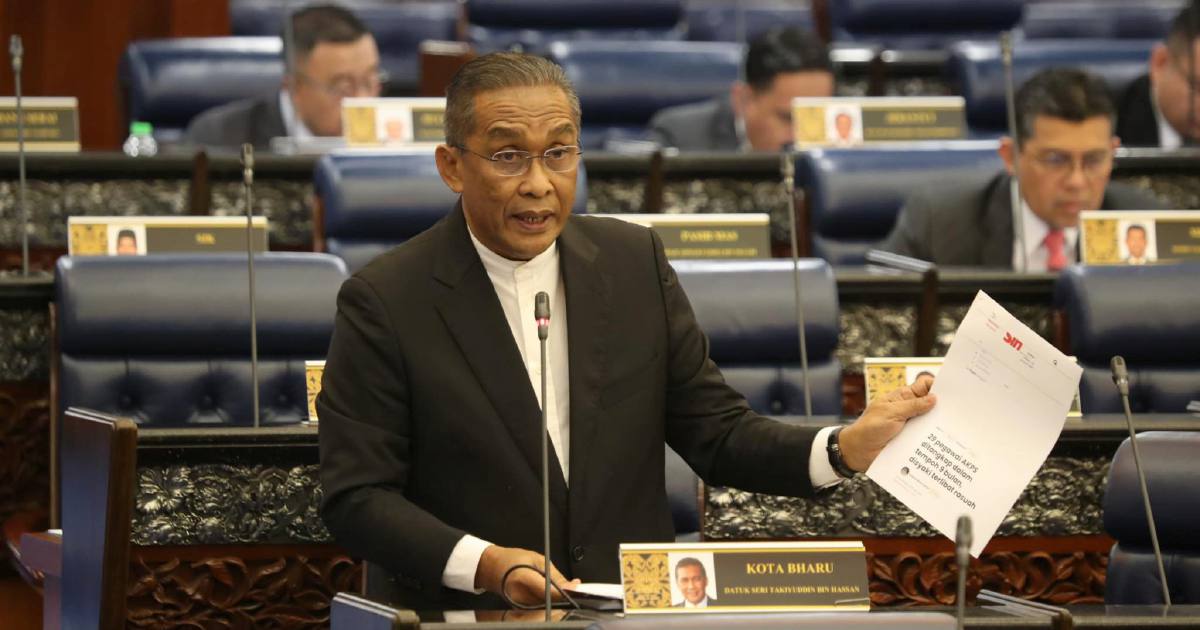
The opposition's parliamentary leadership has sought to delay a crucial legislative session examining the Royal Commission of Inquiry report on Tabung Haji, arguing that the debate should take place only after Prime Minister Datuk Seri Anwar Ibrahim resumes his seat in the Dewan Rakyat. Datuk Seri Takiyuddin Hassan, serving as Opposition Chief Whip, made the request for the special sitting to be rescheduled, signalling a shift in parliamentary dynamics as lawmakers await the Prime Minister's return to active legislative participation.
The call for postponement reflects broader considerations within Parliament regarding the appropriate timing and context for scrutinising a sensitive policy matter affecting millions of Malaysian pilgrims. Tabung Haji, the nation's pilgrimage fund which manages savings for hajj-bound Muslims, has been subject to intense scrutiny following allegations of financial mismanagement and governance lapses. The Royal Commission of Inquiry was established to investigate these concerns comprehensively, and its eventual findings carry significant implications for fund management, stakeholder accountability, and public trust in Islamic financial institutions.
Anwar's temporary absence from Parliament stems from his medical obligations, with the Prime Minister undergoing necessary health procedures that require his focused attention. The parliamentary calendar frequently accommodates such legitimate absences, particularly when senior leadership requires medical intervention. However, the timing of parliamentary business—especially matters of national importance—often becomes a negotiation point between government and opposition blocs, each seeking to advance their strategic interests or substantive concerns.
Takiyuddin's intervention underscores the significance opposition members attach to the Tabung Haji RCI discussion. By requesting postponement until the Prime Minister is present, the opposition may be signalling that the debate warrants leadership engagement at the highest levels, or conversely, positioning itself to ensure robust parliamentary scrutiny when all major political players are available. The move reflects parliamentary protocol considerations where contentious investigations merit full attendance and engagement from senior decision-makers.
The Tabung Haji issue carries considerable weight within Malaysian political discourse, given its direct impact on Muslim pilgrims across the country. The fund's governance challenges have resonated across demographic and political lines, with concerns raised about safeguarding contributors' savings. An RCI investigation into such matters typically culminates in findings that may recommend institutional reforms, personnel accountability, or systemic improvements. Parliamentary debate on these findings represents a crucial moment for legislators to either endorse recommendations, propose amendments, or articulate alternative policy directions.
Opposition parties have traditionally leveraged their parliamentary presence to hold government institutions accountable, and the Tabung Haji RCI discussion presents such an opportunity. By seeking postponement rather than proceeding without the Prime Minister, Takiyuddin's approach suggests the opposition wishes to ensure the highest level of governmental representation and response capacity during the debate. This tactic also allows opposition members additional preparation time and strengthens their negotiating position regarding parliamentary scheduling.
The special sitting arrangement itself indicates that standard parliamentary business has been set aside to accommodate what is deemed an urgent or important matter requiring dedicated legislative attention. Such arrangements are typically reserved for issues of significant national concern, underscoring how seriously lawmakers regard the Tabung Haji findings. The parliamentary opposition's willingness to defer rather than press ahead demonstrates a degree of institutional cooperation, even as political parties remain fundamentally divergent on policy and governance matters.
For Malaysian pilgrims and ordinary Tabung Haji contributors, the timing of parliamentary debate carries practical implications. Many individuals have long-standing relationships with the fund, having contributed portions of their salaries or savings across years or decades. The RCI report and subsequent parliamentary discussion may influence future fund management practices, regulatory oversight, or compensation mechanisms for those affected by alleged mismanagement. Consequently, the debate's outcomes will likely shape how Tabung Haji operates and how it restores public confidence.
The postponement request also reflects Malaysian parliamentary conventions where government-opposition negotiations occur behind the scenes regarding legislative scheduling. Opposition chief whips maintain formal channels for coordinating with government counterparts, and such requests for rescheduling are typically negotiated rather than unilaterally imposed. Takiyuddin's public articulation of the request suggests either that preliminary discussions with government whips have failed to reach agreement, or that the opposition wishes to frame the matter publicly for strategic reasons.
Regionally, Malaysia's parliamentary approach to investigating and debating sensitive institutional matters carries broader significance. Other Southeast Asian nations observe how democratic legislatures handle such investigations, particularly regarding Islamic financial institutions and governance accountability. The manner in which Malaysian Parliament addresses the Tabung Haji RCI findings may influence perceptions of the country's commitment to institutional transparency and legislative oversight.
The eventual scheduling of the special sitting will depend on government acceptance of the postponement request and coordination between parliamentary leadership offices. Anwar's expected return to Parliament will create the window that Takiyuddin seeks, allowing the full complement of senior legislators to participate in what promises to be a substantive and politically charged discussion regarding Tabung Haji's future direction and accountability mechanisms.

