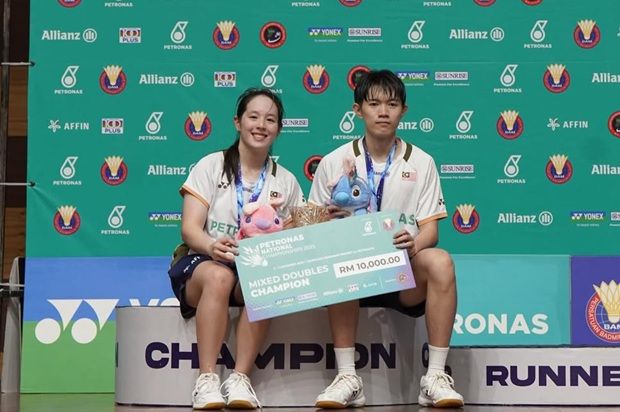
Clarissa San is preparing for the biggest tournament of her badminton career with counsel from her new mixed doubles partner Chen Tang Jie, who has assumed the role of mentor and guide as she makes her debut at the Japan Open. The 20-year-old Malaysian shuttler was thrust into an unexpected opportunity when Toh Ee Wei suffered an anterior cruciate ligament injury, creating an opening for San to step into the world's elite mixed doubles competition. With Ee Wei currently undergoing rehabilitation in Melbourne, San finds herself preparing for one of the Badminton World Federation's most prestigious events on the international calendar.
The pairing of Tang Jie and San carries particular significance given the circumstances of their formation and the stature of the tournament. Rather than approaching the sudden call-up with trepidation, San has embraced the chance to compete at this level, recognising that few players receive such opportunities so early in their careers. The Japan Open represents a significant leap in competition from her previous tournament schedule, placing her among the world's best mixed doubles combinations. Her willingness to seize this moment reflects both her competitive ambition and her confidence in her partnership with Tang Jie.
Tang Jie's role extends beyond the court, as he has deliberately positioned himself as both a senior partner and supportive figure to help San navigate the pressures of competing at this level. Mixed doubles head coach Nova Widianto has reinforced this supportive environment, with both coaching staff and partner consistently encouraging San to manage her emotional state during matches. The emphasis on remaining calm and enjoying the experience stems from a recognition that first-time competitors at major tournaments often struggle with anxiety and self-doubt, which can undermine technical performance. By creating this emotionally supportive framework, the coaching team aims to allow San's natural abilities to flourish without the burden of excessive pressure.
San's own perspective on the tournament reveals a refreshingly grounded approach to competition. She has deliberately avoided setting unrealistic expectations that might create additional stress, instead focusing on translating her training work into match situations. This philosophy acknowledges that the Japan Open will serve as a learning experience regardless of results, with each match offering valuable insights into how her game compares against elite international opposition. Her readiness to extract maximum benefit from the tournament, whether through wins or defeats, demonstrates a professional maturity that should serve her well throughout her career.
The tangible support from Tang Jie extends to practical on-court guidance, with San noting that her partner corrects her mistakes immediately and helps her understand the tactical requirements of mixed doubles at the highest level. This mentorship dynamic transforms what could have been an intimidating situation into a developmental opportunity. In mixed doubles, the partnership between players is crucial not only for tactical execution but also for emotional support during tense moments in matches. Having a partner who actively invests in his teammate's development creates a stronger foundation for success than a purely transactional playing relationship would provide.
San's debut pairing will face Taiwan's Yang Po-hsuan and Hu Ling-fang in their opening match, representing a significant test against established international competitors. This opening round encounter will provide an early indication of how well San has adapted to the pace and intensity of world-class mixed doubles. Taiwan's mixed doubles players have historically performed strongly at major tournaments, meaning San and Tang Jie will need to execute their game plan with precision from the outset.
Looking beyond the Japan Open, San and Tang Jie have committed to competing together in three or four additional tournaments following this event, suggesting a genuine intention to develop their partnership further. This extended window of collaboration provides continuity that will accelerate their understanding of each other's playing styles, tendencies, and tactical preferences. For San, this extended commitment reduces the pressure of performing immediately and instead frames the Japan Open as the beginning of a longer development journey.
Malaysian badminton will have multiple entries competing at the Japan Open across several categories. Jimmy Wong and Cheng Su Yin will compete in the mixed doubles draw, facing Japan's Yuichi Shimogami and Sayaka Hobara. Additionally, independent pair Goh Soon Huat and Shevon Lai Jemie will contest the men's doubles competition against American opponents Chen Zhi Yi and Francesca Corbett, while Wong Tien Ci and Lim Chiew Sien face fifth-seeded Chinese pair Guo Xinwa and Chen Fanghui in what looms as a particularly demanding first-round matchup.
The convergence of these Malaysian entries at the Japan Open underscores the tournament's significance within the regional badminton calendar. Multiple pairings competing simultaneously provides opportunities for internal learning as players observe how their compatriots manage the tournament environment. For San, witnessing the preparations and match strategies of more experienced Malaysian pairs offers additional insights that complement the direct mentorship she receives from Tang Jie. The collective Malaysian presence at the Japan Open reflects the country's continued investment in developing competitive badminton talent across multiple categories and generational cohorts.

