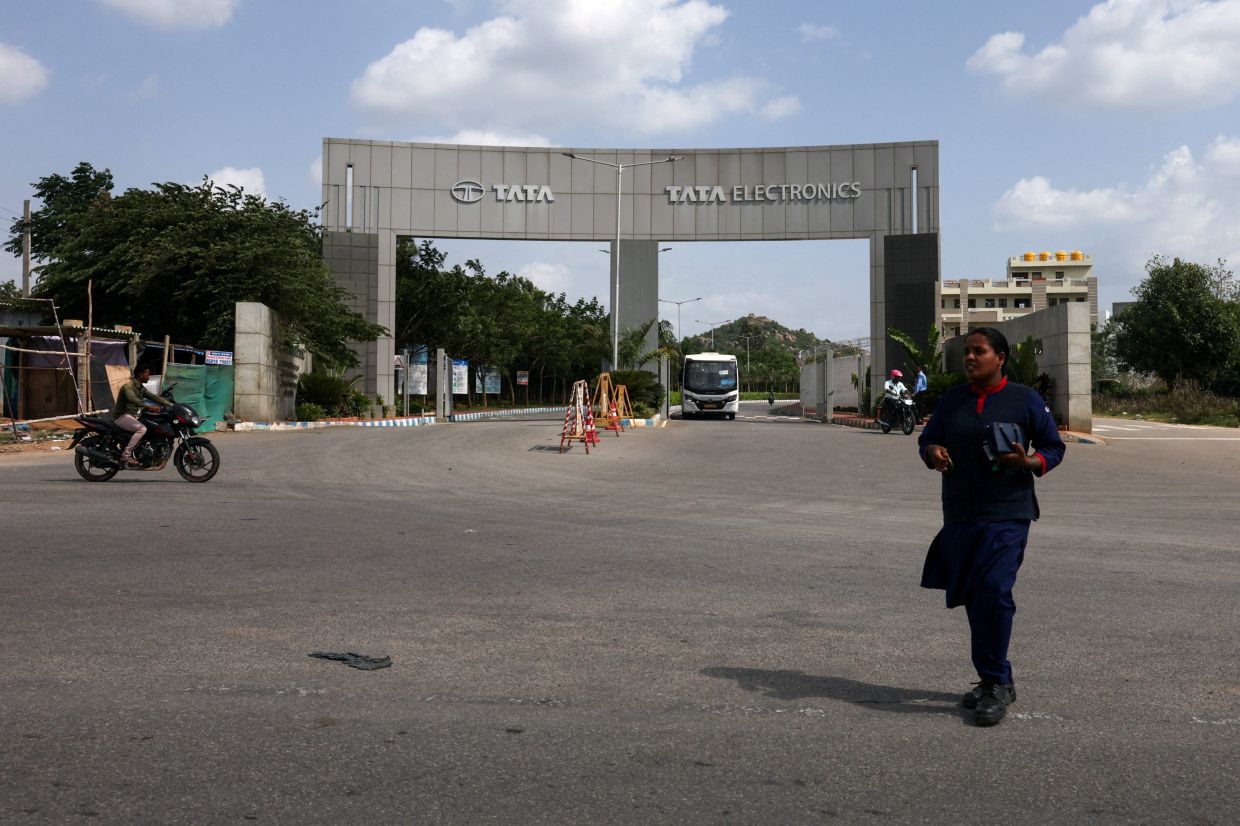
Tata Electronics, a cornerstone of India's electronics manufacturing strategy, revealed on Monday (June 22) that it had suffered a significant cybersecurity breach, with hackers subsequently dumping hundreds of thousands of confidential files belonging to major clients Apple and Tesla onto the dark web. The disclosure comes as the Tata conglomerate accelerates its role in reshoring critical technology production away from China, a development backed by Prime Minister Narendra Modi's vision of transforming India into a global electronics powerhouse. The timing of the incident raises uncomfortable questions about the security posture of suppliers tasked with handling some of the world's most sensitive manufacturing intelligence.
The ransomware group responsible, known as World Leaks, has published more than 200,000 files totalling over 630 gigabytes of data, according to security researchers who reviewed the material. The breach represents one of the most significant leaks of proprietary information from an Indian technology company in recent years. Tata Electronics moved quickly to contain the incident, activating its incident response protocols immediately upon detection. The company maintained that the breach had not disrupted operations across its businesses, a statement designed to reassure both its clients and investors that day-to-day manufacturing remained unaffected despite the theft of intellectual property.
Apple, which has gradually increased its reliance on Tata to diversify production beyond China, is now conducting a full technical analysis of the compromised data. Industry sources confirmed that Tata had received a ransom demand in connection with the breach, though neither Apple nor Tata has disclosed the amount sought by the attackers. The California technology giant declined to comment publicly on the incident, maintaining its customary silence on security matters. For Tata, the breach represents a significant setback at a moment when it has been positioning itself as a trusted partner for high-value manufacturing. The company currently produces roughly one-third of Apple's iPhones assembled in India, with Foxconn handling the remainder.
The stolen files paint a detailed picture of the sensitivity of information held by Tata's systems. Among the compromised materials are purported Apple documents marked with proprietary classifications, including a 52-page quality inspection standard document for iPhone circuit board components. Rajshekhar Rajaharia, an Indian cybersecurity researcher who reviewed the leaked files, discovered that searches for Apple-related materials returned 181 files and folders, while searches for Tesla generated manufacturing specifications and assembly documents dated as recently as May 2025. The presence of such current documentation suggests the attackers had access to Tata's systems for an extended period, potentially months, without detection.
Tesla's exposure through the breach appears equally serious. Folders labelled with apparent references to Tesla's charging systems for the Model Y SUV were found among the leaked materials, alongside documents marked as trade secrets describing specifications for Project Highland, Tesla's publicly known codename for a revamped Model 3 sedan. The discovery that Tata manufactures components for Tesla adds a second major client to the list of companies affected by the incident, broadening its implications for Silicon Valley's reliance on Indian suppliers. Neither Tesla nor Apple has made formal statements about the breach's impact on their business relationships or product timelines.
The breach threatens to complicate India's ambitious plans to establish itself as a credible alternative manufacturing destination for global technology leaders. For over a decade, Modi's government has pursued policies designed to attract foreign electronics manufacturers through incentive schemes and infrastructure investments. Tata's emergence as a major iPhone assembler was celebrated as a vindication of these efforts, proof that multinational corporations would trust Indian companies with sensitive production. The cybersecurity incident, however, demonstrates that infrastructure and manufacturing capability alone are insufficient if data security systems lag behind global standards. Technology companies considering expanding operations in India will likely scrutinise the security practices of potential partners more rigorously in the coming months.
This is not Tata's first encounter with major cybersecurity challenges. Last year, the Jaguar Land Rover group, part of Tata Motors, suffered a cyberattack that resulted in a six-week production halt, affecting the company's reputation for operational resilience. That incident raised questions about the conglomerate's ability to manage sophisticated cyber threats across its sprawling operations. The current breach at Tata Electronics, a different entity within the larger Tata group, suggests that security challenges may be systemic across the corporate structure. The accumulation of these incidents poses a reputational risk that extends beyond Tata itself, potentially affecting perceptions of Indian manufacturing generally among international clients.
World Leaks, the ransomware group claiming responsibility for the breach, has previously targeted other major corporations, including Nike. The group operates exclusively on the dark web, beyond the reach of conventional search engines and law enforcement monitoring. The accessibility of the stolen data on the dark web since at least June 10 means that the compromised information has potentially reached a wide audience of interested parties, including competitors and state actors. Security researchers noted that the leaked files include not only technical specifications but also internal communications, employee passport copies, and system logs spanning several years, providing a comprehensive window into Tata's internal operations and security architecture.
The Indian Computer Emergency Response Team, the government agency responsible for coordinating responses to cybersecurity incidents, did not immediately respond to inquiries about the breach. This administrative silence contrasts with the urgency with which authorities have pursued other security matters, suggesting possible challenges in mobilising rapid government response to ransomware incidents. The absence of swift official commentary may reflect either the complexity of the situation or jurisdictional uncertainties about which agency bears primary responsibility. India's cyber defence infrastructure, despite improvements in recent years, still lags behind the sophistication required to detect and respond to attacks targeting the most sensitive corporate systems in real time.
The breach exposes vulnerabilities that extend across the entire supply chain model that Western technology companies have constructed in India. If a manufacturer trusted with iPhone and Tesla components cannot adequately protect those clients' intellectual property, it raises broader questions about the security readiness of the Indian manufacturing ecosystem. Other suppliers in the sector may face increased pressure from clients to demonstrate robust cybersecurity frameworks and third-party certifications. The incident suggests that as India expands its role in global electronics production, it must simultaneously accelerate investment in cybersecurity infrastructure, training, and regulatory frameworks that match international standards.
For Tata Electronics specifically, recovery will depend not only on technical remediation but also on rebuilding confidence with its most important clients. Apple and Tesla represent a significant portion of the company's revenue and growth prospects. How effectively Tata communicates its security improvements and prevents future incidents will determine whether it retains its position as a preferred manufacturing partner. The company faces a delicate balancing act between demonstrating transparency about what occurred while protecting its own commercial interests and avoiding further reputational damage. Industry observers will watch closely for announcements regarding security enhancements and leadership changes that might signal Tata's commitment to preventing recurrence.