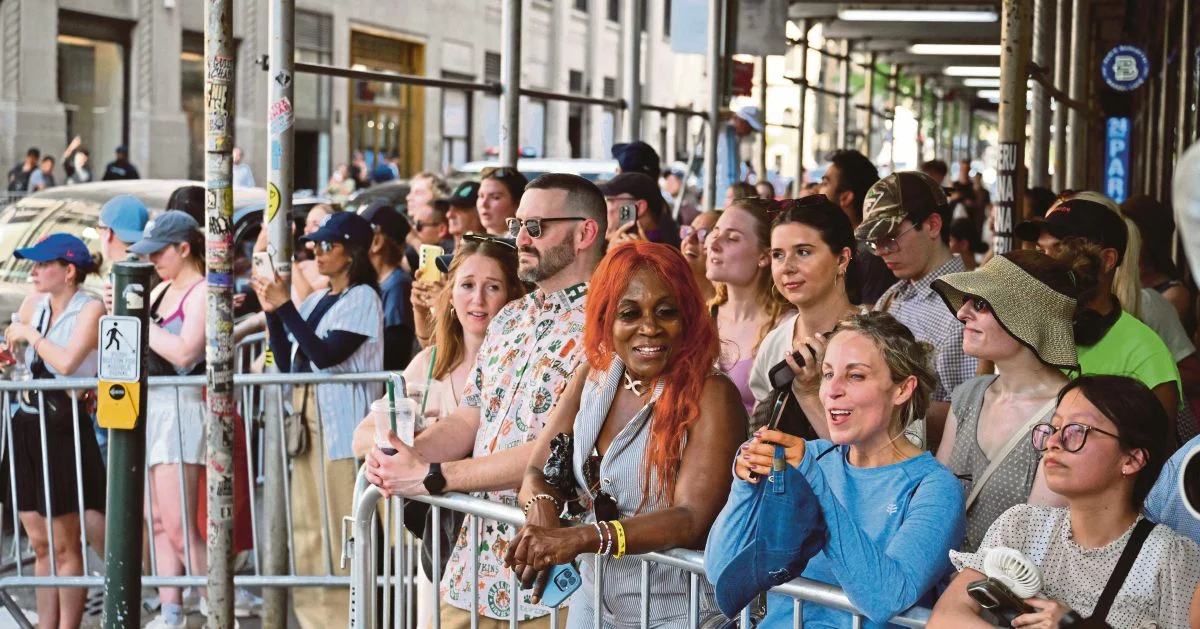
Pop phenomenon Taylor Swift married National Football League star Travis Kelce in an elaborate ceremony at New York's iconic Madison Square Garden on Saturday, marking one of entertainment's most closely watched union celebrations in recent years. The exclusive event drew scores of international celebrities from film, music, and fashion industries, all dressed in haute couture for the landmark occasion that occupied the entire landmark venue. Security measures sealed off the storied arena, transforming it into a private sanctuary for the festivities, which organisers scheduled to extend well into the morning hours coinciding with America's Independence Day celebrations.
The coupling of Swift and Kelce represents a merger between two powerhouse personalities commanding enormous influence in their respective spheres. Swift remains the dominant force in contemporary popular music, her recent Eras Tour redefining concert scale and generating unprecedented economic impact globally. Kelce, meanwhile, represents peak athletic celebrity in American football, recognised not merely for his exceptional performance with the Kansas City Chiefs but for his expanding cultural footprint beyond the gridiron. The wedding drew international media attention partly because both figures occupy rare positions where their personal milestones transcend their industries, becoming genuine cultural events that captivate audiences regardless of sports or music preferences.
Madison Square Garden's selection as the venue underscores the celebration's significance and logistical ambition. The facility's storied history—hosting legendary performances and momentous occasions spanning decades—aligned with Swift and Kelce's stature. Transforming the multi-purpose arena into an exclusive wedding venue required unprecedented coordination, effectively removing one of America's premier entertainment spaces from public access for an entire weekend. This unconventional choice reflected both the couple's desire for intimacy within grandeur and the practical reality that few venues could accommodate the scale of global celebrity attendance while maintaining security protocols befitting their prominence.
The guest list composition reveals the breadth of Swift and Kelce's cultural connections. Hollywood's established A-listers mingled with emerging entertainment figures, suggesting invitations drawn from both veterans of the industry and rising talents with whom the couple maintain professional or personal relationships. Fashion houses undoubtedly provided custom designs for attendees, transforming the ceremony into an impromptu high-fashion showcase. The presence of celebrities from multiple entertainment domains—musicians, actors, producers, designers—underscored how Swift and Kelce transcend traditional industry boundaries, commanding respect and genuine connection across competitive creative spheres.
From a Southeast Asian perspective, this event holds particular resonance given the region's intense fandom cultures. Swift commands devoted followings throughout Malaysia, Singapore, Thailand, and Indonesia, where her music streams consistently rank among global leaders. Kelce's prominence in American football has similarly cultivated interest in Southeast Asia, where NFL viewership has expanded substantially over recent years. The wedding therefore represents more than celebrity gossip—it symbolises the convergence of entertainment and sports celebrity that increasingly defines global popular culture, including within Asian markets.
The timing of the ceremony—stretching into Independence Day morning—carried symbolic weight, yoking the personal celebration to American national commemoration. This scheduling choice elevated the event beyond private family gathering into something approximating national spectacle, even if attendance remained strictly limited. The decision suggested the couple's comfort embracing theatrical presentation and grand-scale ceremony, consistent with Swift's established aesthetic preferences and the scale typically associated with major celebrity unions in contemporary entertainment culture.
Security arrangements surrounding the event reflected the genuine threats and intrusions that hyper-visible celebrities now navigate routinely. Sealed-off access prevented even local residents or casual visitors from glimpsing proceedings, a necessity given both the security vulnerabilities inherent in such high-profile gatherings and the couple's reasonable desire for privacy during an intimate family moment. This tension—between the public dimensions of fame and the private nature of marriage—increasingly defines how entertainment's most prominent figures navigate major life events.
The celebrity attendance itself deserves deeper examination. Major entertainment figures face genuine scheduling complexities, yet this event apparently warranted cancelling or rescheduling other commitments. This reflects both Swift and Kelce's gravitational pull within their industries and the reality that attendance at such ceremonies carries social and professional significance extending beyond typical wedding etiquette. Missing this event would have registered meaningfully within entertainment industry circles, suggesting attendance functioned partly as public statement of alliance or affinity.
The broader implications for celebrity culture merit consideration. Swift and Kelce's union represents perhaps the ultimate convergence point between contemporary entertainment's music and sports spheres. Both have mastered leveraging digital platforms, maintaining sophisticated social media presences, and understanding that their personal lives constitute legitimate entertainment content. Their wedding thus becomes logical culmination—a moment where private happiness and public spectacle intertwine so completely that distinguishing between them becomes impossible.
Looking forward, this celebration will undoubtedly influence how other high-profile entertainers stage similar events. The Madison Square Garden precedent establishes new expectations for scale and exclusivity. The wedding also provides extended visibility for both Swift and Kelce beyond their professional domains, reinforcing their positions as broader cultural icons rather than merely talented musicians or athletes. For Malaysian and Southeast Asian audiences who have followed both figures' careers, the event crystallises their already significant cultural footprint, transforming them from international stars into participants in genuinely global moments that transcend geographic boundaries.

