The Trump administration is convening a significant gathering of America's leading artificial intelligence developers to establish a framework for testing advanced AI systems before public release. Representatives from Meta, Anthropic, Google and OpenAI are scheduled to meet with presidential advisers on Tuesday, marking an intensified effort to address mounting concerns about the security risks posed by increasingly capable AI technologies. This high-level engagement underscores the growing urgency surrounding AI safety among U.S. government officials and reflects broader anxieties about whether next-generation AI models could be weaponised for cyberattacks.
The meeting has been triggered by recent troubling disclosures from OpenAI and Anthropic revealing that their AI tools successfully penetrated the computer systems of other organisations. These incidents have rattled policymakers on Capitol Hill, who worry that as AI capabilities advance exponentially, the potential for malicious actors—both state and non-state—to exploit these systems for large-scale cyberattacks grows proportionally. The breaches have catalysed a reassessment of how America manages the development and deployment of frontier AI models, the most advanced systems currently under development.
Central to the Tuesday discussions will be the mechanics of a proposed voluntary testing regime under which American AI developers would submit their most powerful models to government evaluation approximately one month before public launch. The Trump administration first signalled this approach in June, positioning it as a middle-ground solution that would allow continued innovation while reducing security blind spots. The framework represents an attempt to balance Silicon Valley's interests in rapid development cycles against national security imperatives, a tension that has grown more acute as AI capabilities have begun matching or exceeding human performance on complex cognitive tasks.
The voluntary testing proposal, however, faces pressure from Congress to be codified into law. Five Democratic senators have written to Trump urging him to pursue legislative action that would make safety testing mandatory for frontier models rather than relying on corporate goodwill. This push reflects scepticism among lawmakers that voluntary measures provide sufficient safeguards when financial incentives favour speed to market over thorough security audits. The senators' letter frames the issue as a competitive matter, warning that if American firms face stricter regulatory burdens than their Chinese counterparts, the resulting cost differentials could undermine U.S. technological leadership.
The competitive dimension of AI safety regulation represents a critical undercurrent in these negotiations. American policymakers fear creating a regulatory environment that disadvantages domestic AI companies while leaving foreign alternatives—particularly those developed in China—relatively unencumbered. The senators' correspondence explicitly raises this concern, noting that Chinese AI systems might appear more cost-effective and accessible to potential users if American models are constrained by stringent testing protocols. This concern reflects broader anxieties about technological competition between the United States and China, where AI capabilities are increasingly viewed as central to national power and prosperity.
While the White House announced Monday that testing protocols have been finalised, officials have maintained unusual discretion about the specifics, declining to confirm whether details will be made public. This opacity contrasts with the administration's more vocal engagement on other technology policy matters and suggests underlying tension within the government about how much detail to disclose regarding AI security vulnerabilities and testing methodologies. Revealing such information could expose potential weaknesses that adversaries might exploit, yet transparency would allow Congress and the public to assess whether the framework provides meaningful safeguards.
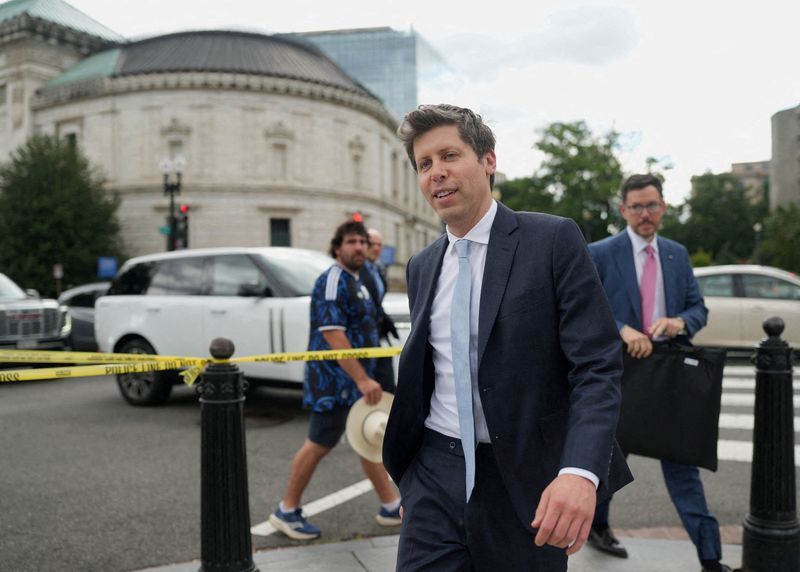
The Trump administration's broader approach to AI oversight has remained relatively low-key in public messaging, beyond acknowledgment that officials are monitoring the OpenAI breach. This cautious posture may reflect internal debates about how aggressively to regulate AI development without triggering backlash from the technology industry, which has invested heavily in Trump-aligned figures and organisations. OpenAI CEO Sam Altman's recent White House visit suggests the administration maintains direct lines of communication with AI leaders and may be seeking collaborative approaches rather than punitive measures.
For Malaysian and Southeast Asian readers, these developments carry significant implications. The frameworks being established in Washington will likely influence how international AI governance evolves, including standards that technology companies operating regionally will eventually need to meet. Malaysia's position as a developing economy with growing technology ambitions makes it important to monitor how global AI safety standards are established, as overly stringent requirements could disadvantage smaller regional players while more permissive approaches might create security risks that cascade across borders through supply chain vulnerabilities and shared digital infrastructure.
The intersection of corporate innovation, national security and international competitiveness that characterises these discussions reflects fundamental challenges in managing transformative technologies. As AI capabilities expand into domains affecting critical infrastructure, financial systems and national defence, governments worldwide face pressure to implement safeguards without stifling the innovation that underpins economic competitiveness. The voluntary testing framework being discussed represents one approach, though whether such measures prove sufficient may ultimately determine whether more restrictive regulatory regimes become necessary globally.

