TEKUN Nasional has channeled RM36 million in financing to around 1,500 entrepreneurs operating across Negeri Sembilan as of June this year, representing a significant injection of capital into the state's business ecosystem. At the national level, the microfinance institution has distributed RM540 million among 25,600 entrepreneurs during the same period, demonstrating substantial continued momentum in government-backed entrepreneurial support across Malaysia.
Entrepreneur Development and Cooperatives Minister Steven Sim Chee Keong announced the disbursement figures during a visit to Seremban on July 20, underscoring TEKUN's role as a cornerstone institution in nurturing local business growth. Established three decades ago, TEKUN has evolved into a critical conduit for channeling capital to small and medium enterprises that might otherwise struggle to access traditional banking finance. Sim acknowledged the organisation's significant contributions to creating entrepreneurial opportunity across Malaysia's diverse communities, though he flagged that performance improvements remain necessary to meet evolving market expectations.
Recognising that process efficiency directly impacts entrepreneurs' ability to launch and scale operations, Sim has set an ambitious timeline for financing decisions. Applications requesting RM100,000 or less will now be adjudicated within seven days, whether ultimately approved or rejected, eliminating prolonged uncertainty that often plagues applicants. This represents a meaningful reduction from previous timelines and signals ministerial intent to strip away bureaucratic friction from the funding process. The acceleration is particularly significant for small traders and home-based businesses that operate on tight margins and cannot absorb extended waiting periods.
For the ultra-micro financing segment—loans of RM20,000 and below—the Ministry of Entrepreneur Development and Cooperatives (KUSKOP) is pursuing an even tighter target of 24-hour turnarounds on application decisions. This sub-RM20,000 bracket encompasses hawkers, food vendors, retail traders, and service providers who form the backbone of Malaysia's informal economy. Rapid approvals at this tier could meaningfully accelerate business formalisation and job creation in communities across the country, potentially addressing persistent unemployment and underemployment among youth and marginalised groups.
Sim's emphasis on accelerating approval timelines, however, carries a critical caveat: fund disbursement must remain equally efficient. The minister stressed that securing a financing approval matters little if entrepreneurs subsequently endure weeks waiting for actual capital transfer. This dual focus—on both decision velocity and execution speed—reflects lessons learned from past programmes where bureaucratic delays between approval and fund release frustrated beneficiaries and undermined programme effectiveness. TEKUN's operational teams will need to streamline backend processes to ensure capital flows immediately upon approval.
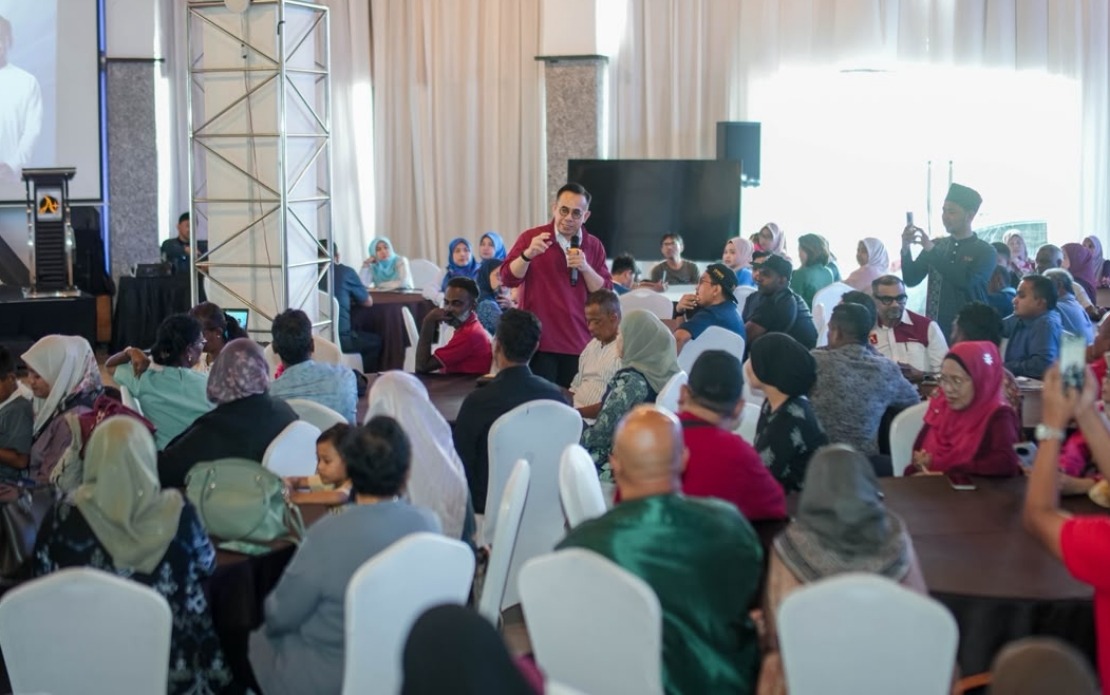
A particularly noteworthy dimension of Sim's Seremban visit involved direct engagement with TEKUN entrepreneurs themselves. The minister conducted a feedback-gathering session with borrowers, creating space for candid discussion about their experiences navigating applications, securing funds, and managing repayments. This grassroots consultation approach contrasts with top-down policy formulation and acknowledges that frontline entrepreneurs possess invaluable insight into systemic bottlenecks that bureaucrats may overlook. Such feedback loops, if genuinely incorporated into programme redesign, could generate meaningful improvements in service delivery.
Crucially, Sim used the platform to address a persistent governance challenge in Malaysia's entrepreneurship ecosystem: the expectation that business owners must cultivate political patronage or secure endorsement letters from elected representatives to access financing. The minister explicitly declared that TEKUN financing decisions must be divorced entirely from political considerations, racial calculations, or reliance on support letters from politicians or intermediaries. This normative statement, while seemingly obvious in a merit-based system, acknowledges uncomfortable reality: applicants across Malaysia have historically believed that political connections improve approval odds, creating a two-tier system where well-connected entrepreneurs gain easier access than equally qualified competitors lacking such networks.
Sim's commitment to colour-blind evaluation—whether entrepreneurs "wear blue, green, or red," using his phrase to reference Malaysia's competing political coalitions—represents an attempt to de-politicise TEKUN's operations. Applications must be assessed purely on eligibility criteria, irrespective of applicant race, religion, or political affiliation. This principle aligns with formal government policy but has faced persistent implementation challenges. Whether ministerial rhetoric translates into actual frontline behaviour will depend on training, accountability mechanisms, and whether approval officers face consequences for decision-making contaminated by extra-professional considerations.
Beyond procedural reforms, Sim highlighted expanded financing access for previously underserved communities. The Indian Community Entrepreneur Development Scheme (SPUMI) has received increased allocation from RM30 million to RM50 million, while the Indian Community Entrepreneur Financing Package (MUDRA) now provides RM220 million in total financing for the current year. These targeted allocations acknowledge historical underrepresentation of Indian Malaysians in formal entrepreneurship financing and attempt corrective rebalancing. Similar logic should inform financing architecture for other marginalised communities, though the minister's statement provided limited detail regarding comparable provisions for other ethnic or demographic groups.
The minister articulated an economically coherent argument for inclusive entrepreneurship policy: local enterprises ultimately compete on the international stage as Malaysian companies, not as ethnically or politically demarcated entities. This reframing shifts entrepreneurship from a domestic political resource allocation exercise to a national economic competitiveness imperative. Success in global markets requires that Malaysian businesses perform optimally, which logically demands that financing access be determined by merit and market potential rather than political patronage or ethnic calculation. Conversely, internal divisions that arbitrarily exclude capable entrepreneurs from capital access will undermine Malaysia's collective competitiveness, diminishing national prosperity.
The implications for Malaysian entrepreneurship policy extend beyond Negeri Sembilan or even the current fiscal year. If TEKUN successfully operationalises Sim's proposed reforms—accelerated timelines, depoliticised decision-making, expanded access for underrepresented communities—the institution could function as a genuine meritocratic alternative to political patronage networks that historically mediated small business finance. For Southeast Asia more broadly, Malaysia's approach to institutionalised microfinance carries instructive lessons about whether government-backed financing can genuinely escape political rent-seeking or whether bureaucratic structures inevitably reproduce the patronage logics they ostensibly transcend.
Implementation will ultimately determine whether Sim's vision materialises. Seven-day approval timelines require backend systems, trained personnel, and decision-making autonomy that many government agencies struggle to maintain. Depoliticised financing in a context where political incentives run deep requires enforcement mechanisms and cultural shifts among approval officers. Expanded ethnic-targeted financing, while addressing historical inequities, risks creating new grievances among communities perceiving themselves excluded from targeted schemes. The minister has articulated a coherent policy direction, but translating rhetoric into consistent practice across TEKUN's nationwide operations remains the true test of reform commitment.

