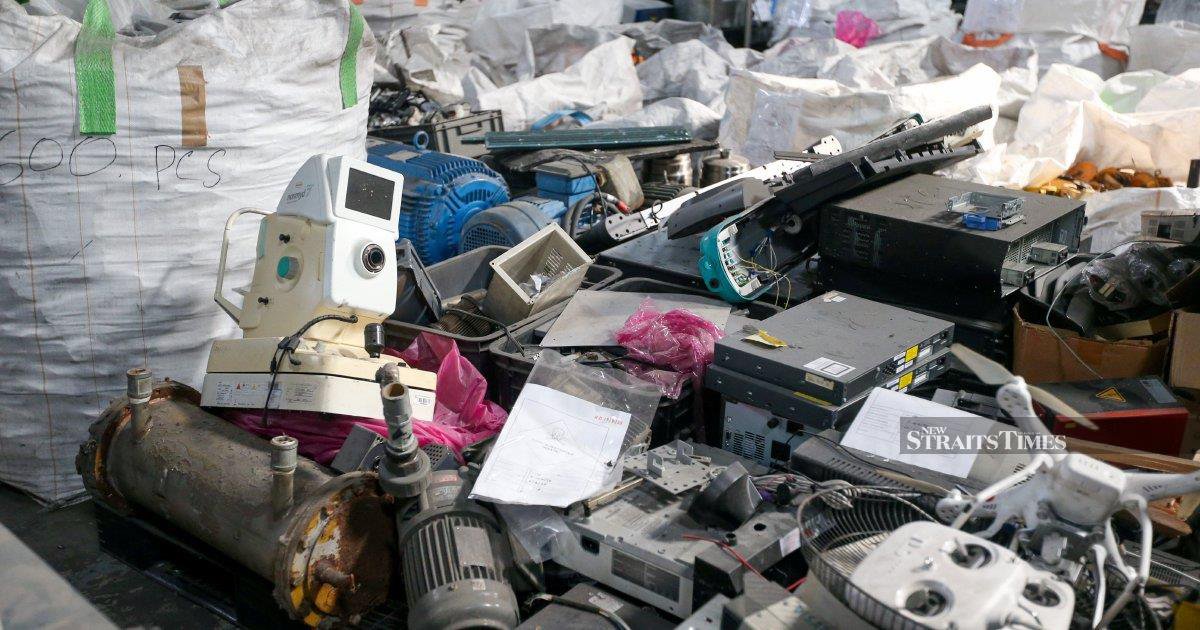
A significant law enforcement operation has resulted in the detention of ten General Operations Force (GOF) personnel, marking an unusual development in which members of a uniformed paramilitary unit face allegations of involvement in organised extortion. The arrests relate to an ongoing investigation centring on an e-waste processing factory located in Tasek Gelugor, Penang, where authorities allege that extortion payments were unlawfully demanded from factory operators.
The case underscores growing concerns about waste management facilities in Malaysia becoming targets for criminal activity. Electronic waste processing represents a specialised and increasingly important sector within the broader circular economy, as countries across Southeast Asia grapple with mounting volumes of discarded electrical equipment. The Penang facility appears to have drawn unwanted attention from those seeking to exploit what may have been perceived as operational vulnerabilities or insufficiently publicised activities.
Involvement of GOF personnel in such allegations carries particular significance given the organisation's primary mandate of maintaining public order and countering organised crime. The General Operations Force operates under the Royal Malaysia Police and has historically focused on high-risk security operations, making their alleged participation in extortion activities an exceptional circumstance that will likely prompt internal reviews of operational oversight and conduct standards within the unit.
The Tasek Gelugor location in Penang places the incident within one of Malaysia's most industrialised states, where manufacturing and processing facilities operate alongside residential areas. Penang's role as a significant electronics and industrial hub means that e-waste generation and recycling operations constitute an essential infrastructure component, making such facilities legitimate business enterprises deserving protection from criminal interference.
Extortion targeting industrial and manufacturing facilities has emerged as a concern in Malaysian law enforcement circles, particularly when perpetrators enjoy access to resources, information networks, or intimidatory authority that exceeds normal criminal capacity. The involvement of uniformed personnel would theoretically grant alleged perpetrators credibility and access that ordinary criminals might lack, potentially explaining any success in extracting payments from the factory operators.
The investigation into this matter will likely examine the chain of command and communication protocols within the relevant GOF unit, determining whether the alleged extortion represented a rogue operation by individual members or reflected broader institutional failings. Such determinations carry consequences extending beyond criminal prosecution to encompass organisational reform and restoration of public confidence in law enforcement integrity.
For businesses operating waste processing and recycling facilities throughout Malaysia, this case raises critical questions about security protocols and reporting procedures for threats or unlawful demands. Industry operators may intensify engagement with regulatory bodies and police to establish clearer frameworks for protecting legitimate enterprises from criminal predation, whether perpetrated by ordinary criminals or those with official standing.
The timing of these arrests and the progression of investigations will be monitored closely by civil society organisations and transparency advocates who maintain focus on police conduct and accountability. In a region where public confidence in institutions depends substantially on demonstrable commitment to investigating alleged misconduct by officials, this case's handling will signal the authorities' seriousness regarding internal accountability standards.
Industrial waste management and e-waste recycling have attracted increasing regulatory attention across Southeast Asia as nations implement stricter environmental standards and circular economy frameworks. Malaysia's position as a manufacturing centre generates substantial quantities of electronic waste requiring responsible processing, making the sector strategically important for environmental and economic policy objectives. Disruption or intimidation of legitimate recycling operations through extortion undermines these broader policy goals and potentially drives informal, environmentally damaging waste handling.
The investigation now proceeds to determine the full scope of alleged criminal activity, the duration over which extortion may have occurred, the amounts extracted, and the identities of all individuals involved in the conspiracy. Cooperation between different law enforcement agencies may become necessary should investigations reveal connections to organised crime networks or suggest systemic corruption within particular units.
Fact-finding processes will seek to establish whether factory management reported initial extortion threats through official channels and, if so, why initial complaints did not trigger earlier investigations. Such details will inform subsequent assessments of institutional responsiveness and communication effectiveness between different police branches and commercial establishments requiring protection from criminal enterprise.
As the investigation develops, the case will likely generate broader discussion within Malaysian law enforcement and public administration concerning the conditions that potentially enable such misconduct. Understanding root causes—whether insufficient supervision, inadequate remuneration, recruitment deficiencies, or cultural factors within particular units—will become essential for preventing recurrence and strengthening institutional safeguards against abuse of authority.

