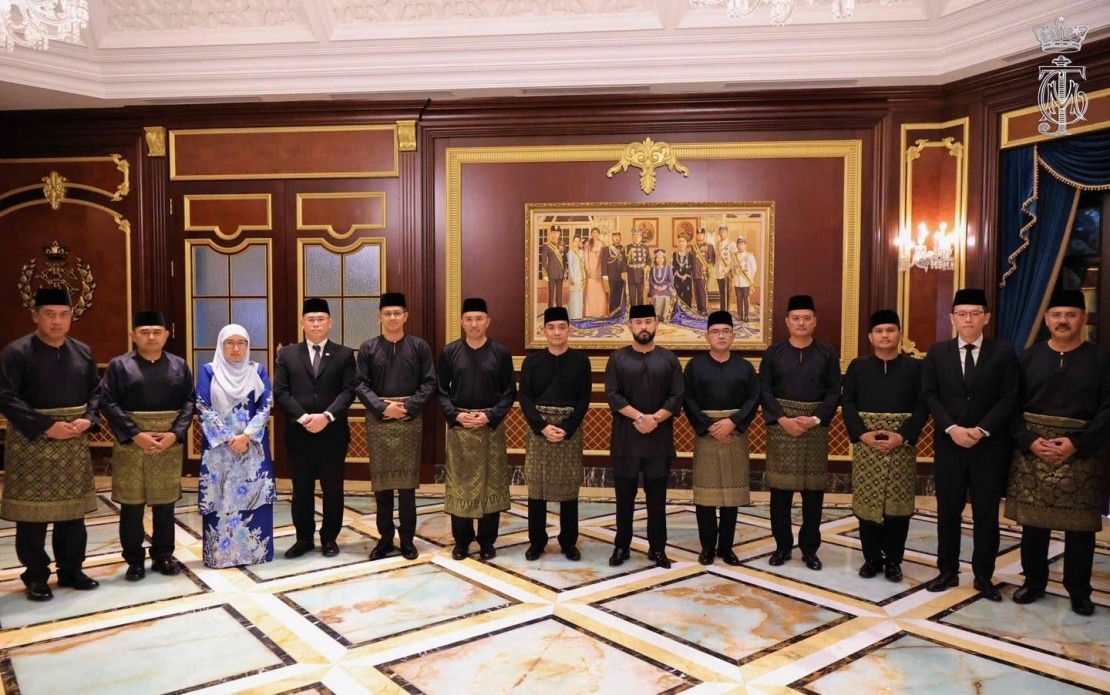
The new Johor State Executive Council was formally constituted on July 18 when ten assemblymen took their oaths of office before Tunku Mahkota Ismail, the Regent of Johor, at the official palace of Istana Bukit Serene in Johor Bahru. The ceremony marked a decisive moment in the state's political calendar, establishing the administrative framework that will steer the country's most southerly peninsular state through the coming years.
The Exco roster brings together both experienced hands and fresh political talent. Among those assuming cabinet positions are Mohd Hairi Mad Shah representing Larkin, Datuk Mohd Jafni Md Shukor from Bukit Permai, Mohd Fared Mohd Khalid of Semerah, Ling Tian Soon from Yong Peng, Lee Ting Han representing Paloh, and Mohamad Fazli Mohamad Salleh from Bukit Pasir. These six members bring parliamentary experience to their respective portfolios, having contested and won seats in the recent state elections.
Four newly elected assemblymen are making their inaugural appearance in the state cabinet, signalling a generational refresh within the Barisan Nasional administration. These newcomers are Md Israk Abdullah from Kukup, P. Pannir Selvam representing Perling, Hasrunizah Hassan from Pulai Sebatang, and Muhammad Naqib Md Ghazali of Panti. Their inclusion reflects the coalition's intent to blend continuity with fresh perspectives as it embarks on its term of governance.
The formal induction took place in the presence of senior state officials and dignitaries. Menteri Besar Datuk Onn Hafiz Ghazi, who leads the executive council, attended the ceremony alongside Yang Dipertua Datuk Dr Abdul Rahim Ramli of the Royal Court Council and State Secretary Datuk Mohammed Ridha Abd Kadir. The presence of these figures underscored the constitutional significance of the occasion and the state's commitment to orderly governance.
Onn Hafiz's elevation to his second consecutive term as Menteri Besar came just days earlier, following his own swearing-in ceremony on July 14. The Machap assemblyman's reconfirmation demonstrated voter endorsement of the Barisan Nasional programme, and the subsequent cabinet formation represents the translation of that mandate into executive action. His return to office, coupled with the formation of the expanded Exco, solidifies the ruling coalition's operational capacity across the state's administration.
The electoral backdrop to these appointments cannot be overlooked. The 16th Johor state election delivered a commanding outcome for Barisan Nasional, with the coalition securing 48 of the 56 available seats in the state assembly. This substantial parliamentary majority provides the government with considerable legislative scope and signals voter confidence in its vision for Johor's development. The electoral triumph was particularly pronounced in Onn Hafiz's own constituency, where he garnered 15,375 votes more than his nearest competitor, illustrating strong personal support from the Machap electorate.
For Malaysian political observers, the composition of the Exco offers insight into how Barisan Nasional intends to govern Johor during this period. The mixture of established figures with new entrants suggests a strategy that values institutional memory while welcoming emerging political voices. The representation from constituencies across the state—from coastal areas like Kukup and Paloh to more urbanised zones like Bukit Permai and Perling—indicates an attempt to reflect Johor's geographical and demographic diversity within the decision-making structure.
The formal swearing-in ceremony adheres to Malaysia's constitutional traditions, whereby state cabinet members must take their oath of office before the appropriate ruler. This constitutional requirement ensures that the executive derives its legitimacy not merely from electoral victory but from the formal apparatus of the constitutional monarchy. By conducting the ceremony at Istana Bukit Serene, the proceedings emphasised the constitutional foundation of the state administration and the enduring role of the institution of the sultanate in Johor governance.
For Johor's development trajectory, the formation of this cabinet sets the stage for the state's policy agenda over the coming years. With portfolios now distributed among ten ministers, the administration can focus on key areas requiring state-level attention. Whether in economic development, education, infrastructure, or welfare provision, the new Exco structure will bear responsibility for translating the Barisan Nasional's electoral promises into concrete governance outcomes.
The appointment of four first-time Exco members also reflects broader trends within Malaysia's political ecosystem, where established coalitions periodically refresh their leadership benches to sustain voter interest and demonstrate commitment to meritocratic advancement. For these newcomers, their inclusion in the cabinet represents both an opportunity to influence state policy and a test of their administrative capabilities in substantive governance roles. Their performance in office will likely influence perceptions of the Barisan Nasional's governance record in Johor when the state next faces electoral scrutiny.

