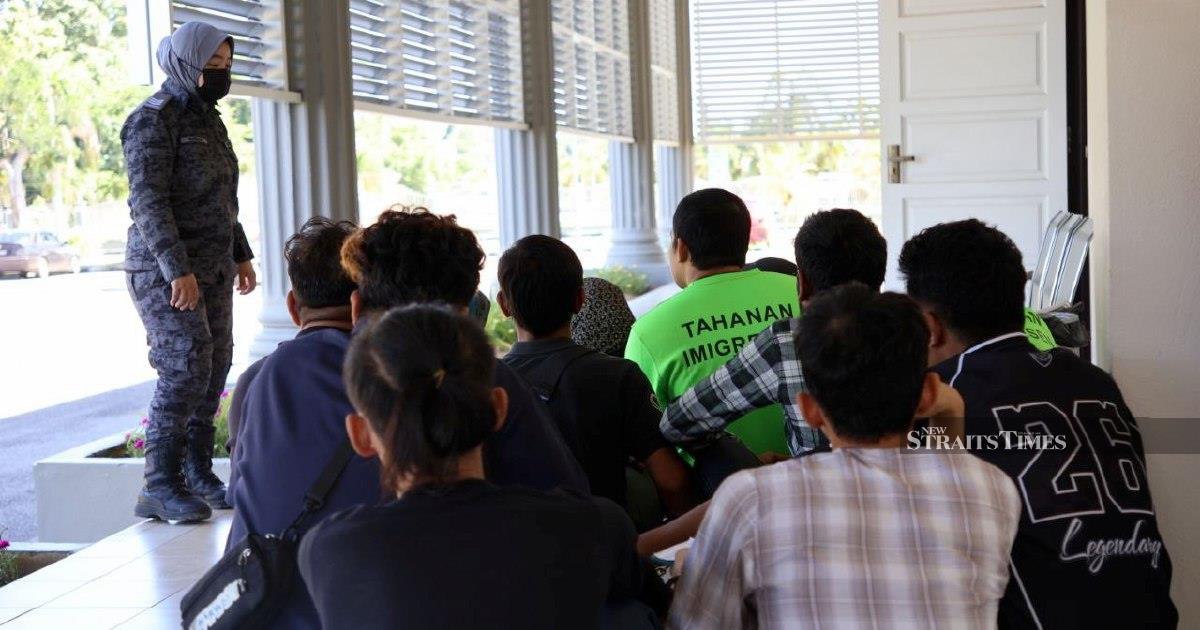
A Sessions Court in Pasir Mas, Kelantan, has moved forward with prosecution against ten undocumented migrants accused of serious immigration violations. Among those facing charges are three foreign women, who stand accused alongside seven male counterparts of overstaying in Malaysia, misusing social visit passes, and unlawfully entering the country. The proceedings reflect ongoing efforts by immigration authorities to strengthen enforcement against illegal residents and document manipulation at a critical border region.
The charges represent a convergence of distinct immigration offences that have troubled Malaysian authorities for years. Overstaying remains a persistent problem, particularly among migrant workers and visitors who fail to renew their permits or depart before expiry dates. The misuse of social visit passes—documents intended for tourists and short-term visitors—suggests a deliberate circumvention of Malaysia's immigration framework, where individuals may have falsified their entry purposes or extended stays beyond the scope permitted under such visas. Illegal entry, the third category of charges, indicates some defendants crossed borders through unofficial checkpoints or without proper clearance procedures.
Pasir Mas, located in Kelantan near the Malaysian-Thai border, serves as a strategic enforcement zone for immigration control. The northern border region experiences substantial cross-border movement, making it vulnerable to irregular migration patterns and document fraud. This case underscores the operational importance of courts in smaller towns and border localities, where immigration violations are frequently adjudicated. The Sessions Court's involvement signals that these matters are being treated with appropriate legal gravity, moving beyond administrative deportation procedures into the criminal justice system.
The inclusion of three female defendants adds a gendered dimension to migration enforcement efforts. Women migrant workers and visitors may face distinct vulnerabilities in irregular situations, including exploitation by trafficking networks or labour abuse. Immigration authorities recognise that female migrants sometimes become trapped in illegal status through coercive circumstances rather than deliberate evasion. Nevertheless, the charges indicate these particular individuals are being held accountable under the same legal framework applied to male defendants, reflecting Malaysia's commitment to uniform enforcement regardless of gender.
The seven male defendants facing identical charges represent the larger demographic pattern of irregular migration to Malaysia. Men constitute the majority of undocumented migrants, many of whom arrive seeking employment opportunities or transit through Malaysia to reach third countries. The charges against this cohort reflect intensified scrutiny of work-related migration, where individuals often resort to document manipulation or overstaying when employment situations deteriorate or employers withhold proper visa sponsorship. Such cases illuminate the intersection between irregular migration and labour exploitation in Malaysia's economy.
The social visit pass misuse allegations deserve particular attention as an enforcement priority. These passes are designed to facilitate legitimate tourism and social visits, yet they are frequently exploited as entry mechanisms for individuals intending to work or reside indefinitely. The misuse may involve initial honest presentation at immigration followed by deliberate overstaying, or it may involve fraudulent representations about purpose and duration at the port of entry. Malaysian immigration authorities have increasingly focused on detecting such misuse through post-entry monitoring and employer cooperation mechanisms.
Illegal entry charges indicate that not all defendants used official checkpoints with falsified documents; some may have entered through porous border areas or maritime routes. Kelantan's geography, with waterways and multiple boundary points, creates enforcement challenges. Prosecuting illegal entry cases requires proving the defendant crossed into Malaysia territory without passing through designated immigration control points. Such evidence typically involves witness testimony, surveillance data, or explicit admission during investigation interviews.
The Pasir Mas Sessions Court proceedings will establish important legal precedents for how Malaysia adjudicates compound immigration offences. The outcome will likely influence sentencing guidelines for similar cases elsewhere in the country. Convictions typically result in fines, imprisonment terms, and mandatory deportation. Multiple charges against single defendants may lead to concurrent or consecutive sentencing, affecting the severity of consequences.
Beyond individual cases, these prosecutions reflect Malaysia's broader immigration policy challenges. The country remains a significant destination for migrant workers from Southeast Asia and beyond, yet the formal sponsorship system creates bottlenecks that push migrants toward irregular pathways. The sheer number of undocumented residents—estimated at hundreds of thousands—suggests that criminal prosecutions alone cannot resolve the underlying structural issues. Authorities must simultaneously strengthen border controls, improve workplace compliance mechanisms, and address demand for irregular labour.
For Malaysian readers and businesses, these cases reinforce the importance of proper work visa sponsorship and compliance with recruitment regulations. Employers who hire undocumented workers face potential criminal liability and substantial penalties. The prosecutions also signal that immigration violations carry genuine legal consequences, not merely administrative corrections or fines. Immigration compliance has become a non-negotiable business requirement rather than a manageable risk.
The Kelantan cases emerge amid regional migration pressures affecting Thailand, Malaysia, and Singapore. Cross-border irregular movement continues despite enforcement efforts, suggesting that pull factors in destination countries remain strong. Malaysia's manufacturing, construction, agriculture, and domestic service sectors continue absorbing undocumented labour, despite government campaigns promoting regularisation and compliance. These structural economic realities complicate enforcement efforts and ensure that irregular migration remains a persistent policy challenge.

