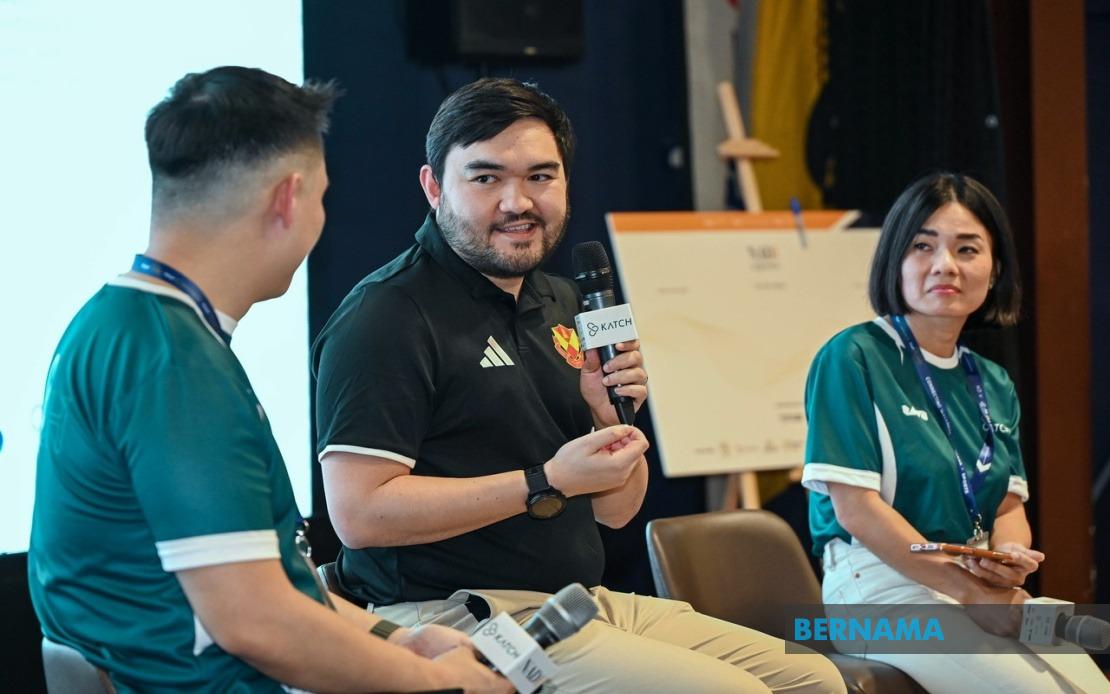
Selangor's commanding performance at the Malaysia Games 2026 has prompted reflection on how to sustain momentum in youth sports development. The Raja Muda of Selangor, Tengku Amir Shah Sultan Sharafuddin Idris Shah, argues that the state's success—capped by 101 gold, 73 silver and 71 bronze medals for overall champions status—should catalyse a deeper commitment to building competitive pathways at community level. Speaking at the NADI Connecting Wellness, Fitness and Sports With RMS event in Petaling Jaya, he outlined a vision where regular competitions become the backbone of a thriving sports ecosystem that extends far beyond major national games.
The crux of Tengku Amir Shah's message centres on the psychological and developmental benefits of consistent competition. Young athletes require not merely training facilities or coaching, but recurring opportunities to test themselves against peers in structured contests. When tournaments occur weekly or regularly throughout the year, they provide immediate goals that extend beyond individual training sessions. Athletes gain tangible reasons to maintain discipline during the week, refine technique, and cultivate the mental resilience that separates casual participants from serious competitors. This rhythmic cycle of preparation and competition builds what Tengku Amir Shah describes as a winning and goal-oriented mindset—a cultural shift that ripples across entire sports communities and influences how youth approach athletic pursuits.
Tengku Amir Shah's personal involvement with grassroots initiatives demonstrates this philosophy in practice. His establishment of the Selangor Champions League before taking on deeper responsibilities with the Football Association of Selangor exemplifies how community-level competitions can serve dual purposes: identifying latent talent while simultaneously raising competitive standards across participating organisations. The league deliberately unified active social football teams across Selangor, creating a single competitive platform to determine superior play. This model proved effective at the grassroots level, where informal club teams might otherwise operate in isolation without benchmarking mechanisms or incentives to elevate their game.
The selection of specific sports for Selangor's SUKMA 2026 contingent reflects strategic thinking about which disciplines warrant investment and promotion. By offering young athletes opportunities to represent the state across diverse sports, organisers created pathways for excellence while simultaneously exposing emerging talent to competitive environments aligned with their capabilities and interests. Tengku Amir Shah views this inclusivity as essential to the development process, allowing competitors to demonstrate not only technical ability but also sportsmanship, resilience, and the capacity to function within team structures.
Beyond football, Tengku Amir Shah identifies emerging sports gaining traction among Malaysian youth as candidates for similar grassroots competition frameworks. Pickleball and chess represent distinctly different athletic categories—one emphasising agility and court positioning, the other requiring strategic thinking and patience. The willingness to expand community competition models to non-traditional sports reflects recognition that talent development operates across a broad spectrum of human endeavour. What matters most is the underlying architecture: regular contests, clear ranking systems, and opportunities for progression that motivate sustained participation.
The broader implications for Malaysian sports development are significant. National performance at major games like SUKMA depends ultimately on cultivation pipelines that begin in neighbourhoods and school compounds. Without robust grassroots competition structures, promising young athletes may never receive the developmental stimulus necessary to refine elite-level abilities. Investment in community leagues and regular tournaments thus represents not a peripheral concern but a foundational requirement for sustaining the medal counts and competitive excellence that states like Selangor have achieved.
Tengku Amir Shah's emphasis on consistency also addresses a structural vulnerability in Malaysian sports: the feast-famine cycle where intense preparation precedes major games, followed by diminished activity until the next scheduled event. This pattern allows trained athletes to deteriorate between competitions and fails to create consistent pathways for newcomers to develop progressively. By contrast, a calendar saturated with regular competitions maintains athletic fitness, provides data on comparative performance, and ensures that talent identification occurs continuously rather than episodically.
The gathering of fifty wellness, fitness and sports leaders at today's event underscores growing recognition that sports development requires coordinated effort across multiple stakeholders. Governing bodies, facility managers, coaches, and community organisers must align their efforts around shared objectives. When leaders actively engage in dialogue about sector direction, bottlenecks become apparent and collaborative solutions emerge more readily than through isolated institutional efforts.
For Southeast Asian neighbours observing Malaysian approaches to grassroots sports, Selangor's model offers instructive lessons. Regional competitiveness in sports increasingly depends on early identification and systematic development of talent rather than reliance on occasional exceptional individuals. Countries investing in structural frameworks—leagues, competitions, coaching development, and facility access—tend to see returns measured in both medal counts and broader public health outcomes as participation rates rise.
Moving forward, translating Tengku Amir Shah's vision into reality requires sustained resource allocation and coordination among government agencies, state sporting bodies, and private sector partners. The economic case exists: organised grassroots sports reduce youth unemployment, improve public health metrics, and generate social cohesion. Yet consistent funding and political will remain prerequisites for establishing the competition calendars that young athletes require. Selangor's SUKMA success, viewed through this lens, represents not a culmination but rather validation of investment philosophy that should inform sporting priorities across Malaysia's states and territories.

