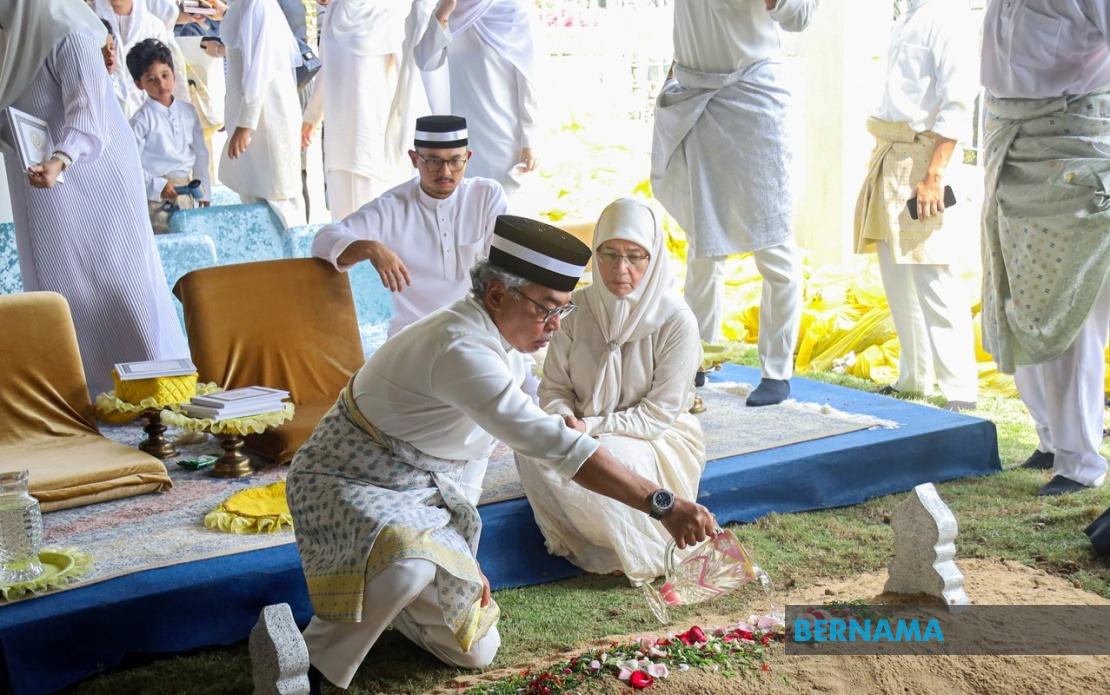
Tengku Datuk Seri Aishah, the elder sister of Pahang's reigning Sultan Al-Sultan Abdullah Ri'ayatuddin Al-Mustafa Billah Shah, has been interred at the Royal Mausoleum in Pekan following her death at age 69. The funeral rites concluded on Wednesday, drawing members of the royal family and senior government officials to pay their final respects to the late Tengku Puteri Seri Kemala Tengku Datuk Seri Aishah Almarhum Sultan Ahmad Shah, whose passing marks another significant moment in the state's royal lineage.
The distinguished member of Pahang's royal household passed away at 9.25 pm on Tuesday evening at a hospital in Kuala Lumpur. Her death prompted a full state funeral befitting her status within the sultanate's hierarchy. The arrangements reflected both the solemnity of the occasion and the customary protocols observed within Malaysia's royal institutions for members of the extended palace family.
Funeral rites began in Kuala Lumpur with prayers conducted at the Khalid bin Al-Walid Mosque along Jalan Padang Tembak. Following the completion of these initial ceremonies, her remains were transported to Subang Air Base before being flown to Pahang, underscoring the coordination between federal and state authorities in honouring members of the sultanate. The logistical arrangements ensured a dignified journey that allowed the family to participate in observances both in the capital and within her home state.
Upon arrival in Pekan, the coffin was conveyed to the Sultan Ahmad 1 Mosque, where attendants received it at approximately 1.25 pm. A second round of prayers took place after the zuhur congregation, permitting the extended royal household, government representatives, and close associates to offer their condolences and participate in the religious observances. These dual prayer ceremonies reflected the significance accorded to her position within the Pahang royal household and the broader Malaysian royal system.
The burial ceremony itself proceeded with full state honours, a testament to her standing as a senior member of the sultanate. Pahang Mufti Datuk Dr Asmadi Mohamed Naim presided over the final rites at the Royal Mausoleum, which sits adjacent to the Sultan Ahmad 1 Mosque. The religious components of the ceremony included recitation of Yasin, followed by tahlil and prayers for the deceased, observing Islamic funeral protocols while acknowledging her elevated status within the state's hierarchy.
The Sultan of Pahang, Al-Sultan Abdullah Ri'ayatuddin Al-Mustafa Billah Shah, attended the burial personally alongside Tengku Ampuan of Pahang Tunku Azizah Aminah Maimunah Iskandariah, demonstrating the centrality of family in the mourning process. Their presence was complemented by that of Tengku Mahkota of Pahang Tengku Hassanal Ibrahim Alam Shah, reinforcing the collective participation of the state's senior royals in honouring a respected family member. The Sultan and Tengku Ampuan performed the symbolic final gestures of sprinkling rose water and scattering flowers upon the grave, acts laden with spiritual significance within Islamic tradition.
Beyond immediate family, the funeral drew attendance from prominent state and federal figures, reflecting the public dimension of royal bereavement. Melaka Yang Dipertua Negeri Tun Mohd Ali Rustam and Pahang Menteri Besar Datuk Seri Wan Rosdy Wan Ismail were among those present, signalling the recognition accorded to her within Malaysia's broader political establishment. Such representation underscores how deaths within the royal family extend beyond private grief to become matters of state significance, particularly in a constitutional monarchy where the monarchy serves as a unifying national institution.
The timing of her passing and the subsequent arrangements reflect the practical and ceremonial demands that arise when senior members of royal households depart. State funeral protocols must balance Islamic religious requirements with palace traditions and governmental coordination, particularly when deaths occur outside the state capital. The multiday observance from Kuala Lumpur through to Pekan demonstrates the institutional mechanisms that exist within Malaysia's royalty-centric system to ensure dignified treatment of deceased senior royals.
For Pahang specifically, the loss represents a generational shift within the sultanate's royal house. As the elder sister of the current Sultan, Tengku Aishah represented a bridge to previous eras of state governance and dynasty. Her passing is likely to prompt reflections within royal and political circles regarding succession planning, institutional continuity, and the evolving roles of extended royal family members in an increasingly complex political environment. The respectful manner in which her funeral was conducted signals the continued importance placed upon familial bonds and historical continuity within Malaysia's monarchical institutions.
The event also highlights the continuing relevance of Pekan, historically the administrative centre of Pahang sultanate, as the site where major state ceremonies—particularly those related to the royal family—are conducted. The Royal Mausoleum and adjoining Sultan Ahmad 1 Mosque serve as focal points for state occasions, underlining how physical spaces within the sultanate carry profound symbolic and historical weight. Her interment at this location ensures her memory remains intertwined with the spiritual and administrative heart of Pahang's governance structure.
The conclusion of the burial ceremony at the Royal Mausoleum marked the formal conclusion of publicly observed mourning rites, though private grieving by family members would continue in the days and weeks following. For observers of Malaysian royal affairs, the smooth coordination evident across the funeral arrangements reflects the institutional sophistication that surrounds the monarchy's operations, even during periods of loss and transition.

