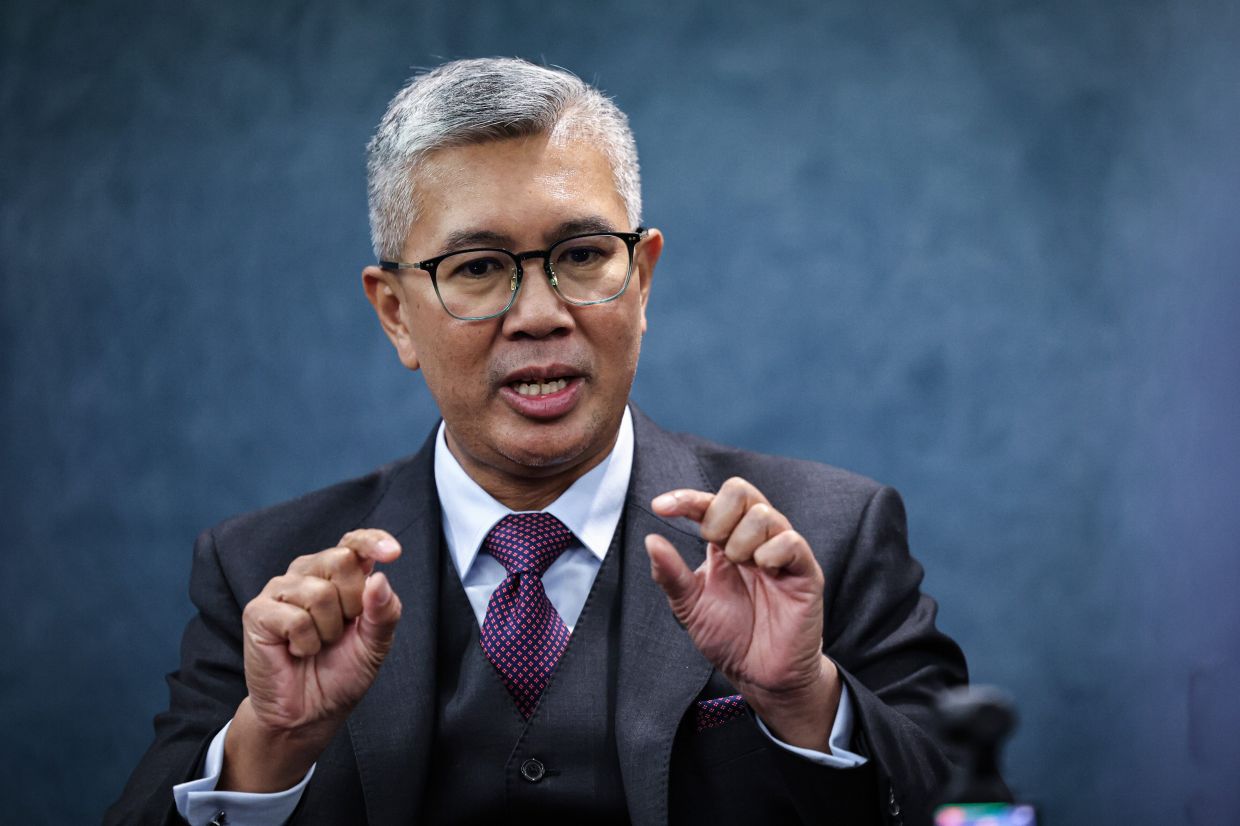
The energy security imperative facing Southeast Asia demands immediate coordinated action across the region, according to Malaysian Investment Development Authority chairman Tengku Datuk Seri Zafrul Abdul Aziz, who highlighted that ASEAN's commitment to climate goals must be backed by substantially improved mechanisms for capital deployment. Speaking at the 7th International Sustainable Energy Summit in Kuala Lumpur, Tengku Zafrul identified a critical disconnect between political resolve and financial capacity, framing the regional challenge not as a shortage of ambition but as a structural failure in how capital is mobilized and allocated across the bloc's energy transition initiatives.
The scale of the financial requirement underscores why piecemeal national approaches are insufficient for Southeast Asia's energy future. ASEAN economies collectively require approximately US$200 billion annually through 2030 to successfully execute their energy transition strategies, a figure that demonstrates the massive infrastructure investments necessary to shift regional power systems toward renewable and sustainable sources. This extraordinary capital requirement reflects both the urgency of decarbonization commitments made by nearly all ASEAN member states and the complexity of simultaneously maintaining grid reliability while fundamentally restructuring energy generation capacity. The scale of funding involved places the challenge beyond the comfortable reach of any single national treasury, rendering regional cooperation not merely desirable but economically inevitable.
The barriers to mobilizing this capital are deeply institutional rather than merely financial, according to the MIDA chairman's analysis. Project development timelines stretch excessively before reaching bankability, meaning that even promising renewable energy initiatives face years of regulatory uncertainty before attracting investor capital. Regulatory frameworks remain fragmented across the region, forcing international investors to navigate distinct and sometimes contradictory requirements across different ASEAN jurisdictions, thereby increasing compliance costs and limiting capital flows. Cross-border financing mechanisms remain underdeveloped, constraining the ability of investors to diversify their exposure across multiple countries and sectors within a single integrated transaction. Risk-sharing arrangements are inadequate, leaving investors bearing disproportionate exposure to political and regulatory risks that could more efficiently be distributed across larger pools of capital or underwritten through regional mechanisms.
Tengku Zafrul's first proposal centers on the ASEAN Power Grid, an ambitious infrastructure initiative targeting comprehensive regional integration by 2045. The conceptual power of such a unified grid extends beyond simple electricity interconnection; it would create a system capable of leveraging the region's extraordinary natural resource diversity as a strategic advantage. Laos possesses substantial untapped hydropower capacity that could serve as a reliable baseload supply, Indonesia commands geothermal resources unmatched anywhere else in the developing world, Vietnam's coastal geography offers favorable conditions for offshore wind deployment, and Malaysia's equatorial location provides consistent solar irradiation. By allowing these complementary resources to reinforce one another through integrated transmission infrastructure, the region could achieve energy security and affordability simultaneously while reducing reliance on fossil fuels or concentrated geopolitical energy dependencies.
The second pillar of Tengku Zafrul's framework proposes establishing an ASEAN Green Investment Facility that would consolidate capital from multiple sources into a coordinated investment vehicle. Such a facility would blend sovereign wealth, pension fund capital, and private investment into a single mechanism capable of deploying substantial resources across strategic projects throughout the region. This approach addresses the risk-aversion that typically characterizes institutional investors in developing Asian economies by creating a larger, diversified portfolio that can absorb losses from individual underperforming projects while maintaining adequate returns. By pooling capital across borders and sectors, the facility would enable individual treasuries to support larger regional initiatives without bearing undue concentration risk, a principle that Tengku Zafrul emphasized when noting that no single national government should shoulder such enormous capital deployment burdens in isolation.
Emergency preparedness and supply chain resilience constitute the third component of the proposed regional framework, addressing vulnerabilities exposed during recent global disruptions. Tengku Zafrul advocated for shared emergency protocols that would harmonize ASEAN responses to future energy shocks, allowing coordinated action rather than competitive scrambling for limited resources. Joint strategic reserves of critical fuels would provide buffer capacity during supply interruptions, reducing the region's vulnerability to price spikes or prolonged outages. Coordinated crisis communication mechanisms would prevent misinformation and market panic, enabling rational responses to emerging problems. Regional supply chain monitoring would provide early warning of disruptions in manufacturing, transportation, or distribution networks, permitting proactive intervention before minor problems cascade into systemic failures. These measures acknowledge that energy security in an interconnected region cannot be achieved through national isolation but requires explicit frameworks for collective response.
Malaysia's own commitment to this regional agenda finds expression through several national initiatives that could serve as templates for ASEAN-wide coordination. The New Industrial Master Plan 2030 positions Malaysia within the region's broader economic transformation, while the National Energy Transition Roadmap establishes specific domestic targets and milestones aligned with regional decarbonization objectives. The Green Investment Strategy creates institutional mechanisms for channeling capital toward sustainable projects, potentially offering models that other ASEAN economies could adapt to their own contexts. However, Tengku Zafrul's underlying message cautioned against viewing these national frameworks as sufficient in isolation; Malaysia's leadership must ultimately be measured by its willingness to support and coordinate with broader regional initiatives rather than by the achievements of domestic programs alone.
The philosophical foundation of Tengku Zafrul's argument centers on recognizing that energy security in Southeast Asia has become irreducibly regional in character. Individual ASEAN economies cannot insulate themselves from regional supply disruptions, price volatility, or infrastructure failures through purely national policies. Conversely, the competitive advantages that different member states possess—whether in hydroelectric potential, geothermal capacity, solar resources, or financial capital—cannot be fully leveraged by individual nations acting independently. This creates a mutually reinforcing logic for regional integration: the economic efficiency gains from coordinated resource deployment exceed what any member state could achieve alone, while the security benefits of distributed generation and supply sources strengthen every participant.
The implementation challenges should not be minimized, however. Creating binding regional mechanisms requires surrendering some degree of national autonomy over energy policy and investment decisions, a prospect that has historically proven contentious within ASEAN's consensus-based institutional structures. Building sufficient trust to coordinate strategic fuel reserves or to allow cross-border financing on substantial scales requires addressing fundamental concerns about sovereignty and control. Harmonizing regulatory frameworks across diverse legal and political systems presents technical challenges that have frustrated previous ASEAN integration efforts in other sectors. Yet Tengku Zafrul's framing suggests that these implementation difficulties, while real, are far less daunting than the alternative scenario in which ASEAN continues to address energy transition challenges through fragmented national efforts, thereby perpetuating the capital coordination problems that currently constrain regional decarbonization.
The urgency that Tengku Zafrul emphasized throughout his address reflects an underlying reality: every year that passes without establishing these coordinated regional mechanisms represents a compounding loss of economic efficiency and climate progress. Projects that could have been financed through a functioning regional facility instead languish in development limbo. Investment capital that might have been deployed at scale through coordinated mechanisms instead fragments into smaller national initiatives with higher administrative costs and suboptimal risk-adjusted returns. The renewable energy transition timeline—which requires most of the global decarbonization in the next two decades—leaves no room for protracted negotiation or gradual institutional evolution. The window for establishing regional energy cooperation frameworks remains open, but it will not remain so indefinitely.
Looking beyond ASEAN's borders, the regional energy cooperation agenda that Tengku Zafrul outlined carries implications for relationships with major powers and international institutions. A successfully integrated ASEAN energy system would reduce the region's vulnerability to pressure from any single energy supplier or external actor, thereby enhancing strategic autonomy. Conversely, a fragmented regional approach leaves individual ASEAN members potentially susceptible to leverage through selective energy partnerships or conditional investment offers. The development of robust regional financing mechanisms through vehicles like the proposed Green Investment Facility would also reduce dependence on international development banks or bilateral investment relationships with external powers, allowing ASEAN to direct its own energy transition according to its own priorities and timelines. In this sense, energy cooperation emerges as simultaneously an economic imperative and a geopolitical imperative for Southeast Asia.
The path forward requires converting Tengku Zafrul's diagnostic insights and programmatic proposals into concrete institutional mechanisms and binding commitments. ASEAN member states must recognize that the capital coordination problem cannot be solved through incremental adjustments to existing national frameworks; it demands new regional institutions with sufficient autonomy and resources to function effectively. The ASEAN Power Grid project requires accelerated timeline development and dedicated financing mechanisms. The proposed Green Investment Facility must move from conceptual stage to operational reality with committed capital pledges from member states and international partners. Emergency preparedness protocols must advance from informal coordination toward formal agreements with specified obligations and enforcement mechanisms. Whether ASEAN can achieve this transformation in institutional practice remains the defining question for the region's energy security over the coming decade.

