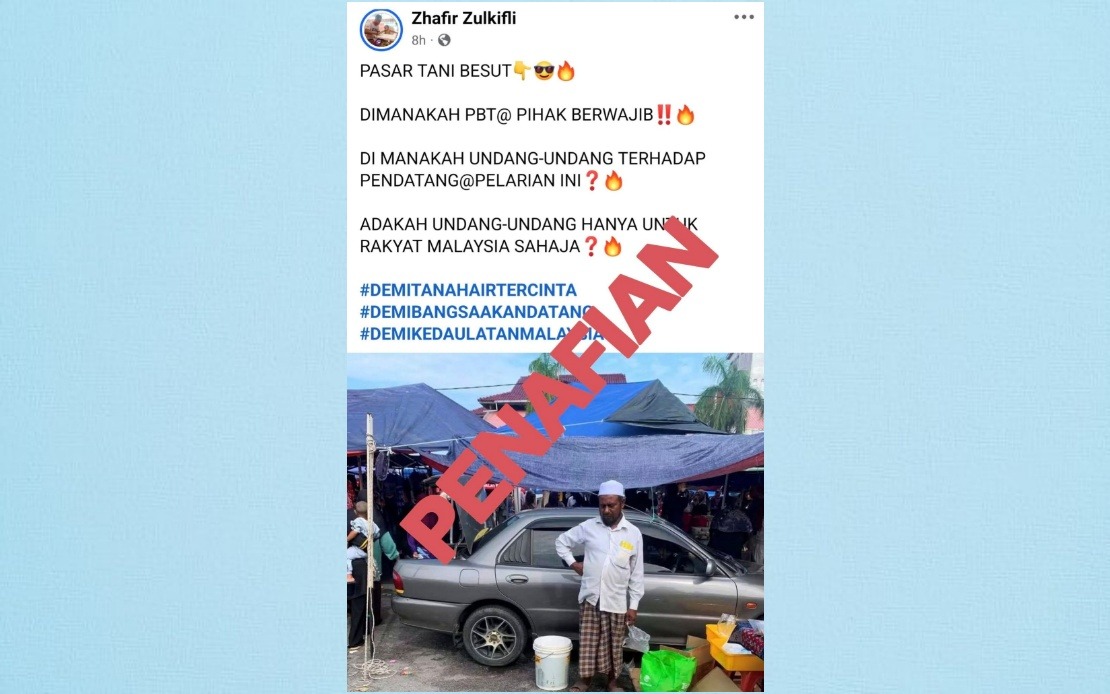
The Terengganu branch of the Federal Agricultural Marketing Authority (FAMA) moved swiftly on Friday to rebut spreading claims on Facebook suggesting that non-Malaysian citizens were permitted to operate as traders at farmers' markets operating under its governance. The authority issued a formal statement distancing itself from allegations that have circulated widely across social platforms, particularly following a viral post from the previous day depicting what appeared to be a foreign national vending vegetables at a morning market in Besut.
According to FAMA Terengganu's clarification, the incident referenced in the social media post actually took place at Kuala Besut Morning Market, an establishment that falls entirely outside the agency's operational purview. This distinction is significant, as it demonstrates how allegations can rapidly spread across digital platforms without proper verification of venue ownership or management structures. The authority emphasized that the morning market in question operates independently and bears no affiliation with FAMA's regulated farmers' market network.
FAMA Terengganu operates two specifically designated farmers' markets within the Besut district, each maintaining distinct operational schedules designed to serve local agricultural communities. The Jerteh Farmers' Market functions on Thursday mornings from 7 am until 1 pm, providing a weekly trading opportunity for authorized vendors. The Alor Lintang Farmers' Market similarly serves the region on Saturdays during the same operating window. Both venues maintain oversight from FAMA and presumably adhere to the authority's vendor qualification and documentation requirements.
The rapid circulation of the viral post highlights ongoing concerns among Malaysian consumers regarding the employment of foreign nationals in agriculture-related trading activities at public markets. Such incidents, whether substantiated or not, tend to generate considerable anxiety within local farming communities that increasingly compete against imported products and labor-cost advantages. The incident also reflects broader questions about regulatory oversight at morning markets and wet markets nationwide, many of which operate with minimal government supervision compared to more formally managed facilities.
FAMA's role as the primary government agency responsible for agricultural product distribution and marketing positions it as a crucial safeguard for local farmer interests across the country. The authority implements various regulatory frameworks ostensibly designed to protect Malaysian agricultural producers and ensure fair market access. However, the proliferation of unregulated or loosely supervised morning markets throughout Malaysia sometimes creates gaps in enforcement and documentation verification.
The Besut incident, regardless of venue, raises practical questions about vendor verification mechanisms at informal markets throughout Terengganu and neighbouring states. Many morning markets operate with minimal paperwork and rely on informal arrangements, making it difficult to monitor participant nationality and work authorization status. This structural challenge extends beyond Besut and represents a persistent issue for market authorities attempting to maintain regulatory compliance across dispersed trading venues.
For local farmers and traders in Besut and surrounding areas, the FAMA clarification offers reassurance regarding the authority's commitment to maintaining standards at facilities directly under its management. However, the incident underscores the reality that unauthorized or inadequately supervised trading remains a widespread concern at numerous markets throughout Malaysia. Traders operating at informal morning markets often escape formal documentation requirements that FAMA-regulated facilities must satisfy.
The social media controversy also demonstrates how rapidly unverified claims can damage confidence in agricultural marketing institutions and local market systems. Public perception of regulatory laxity, whether accurate or misplaced, can undermine consumer confidence in locally sourced products and create competitive disadvantages for legitimate vendors. FAMA's swift response attempted to mitigate reputational damage and restore public assurance regarding its supervisory capacity.
This episode reflects broader tensions within Malaysia's agricultural trading sector regarding foreign participation, labor standards, and regulatory compliance. As the country continues integrating into regional and global trade frameworks, questions persist regarding the appropriate balance between foreign investment and participation in agricultural markets and protection of local farming livelihoods. Different authorities have adopted varying approaches to managing these competing interests.
Government agencies managing public markets will likely face increasing pressure to enhance vendor verification processes and transparency regarding nationality and work permit requirements. Enhanced documentation and communication about market regulations could help prevent misinformation and build community confidence in official institutions. The incident also suggests opportunities for improved coordination between FAMA and local municipal authorities managing informal markets.
Moving forward, market authorities throughout Terengganu and neighbouring states may need to strengthen documentation practices and communication protocols to address public concerns proactively. Clear information about vendor registration requirements, eligibility criteria, and compliance mechanisms could reduce speculation and build consumer trust. The distinction between formally managed facilities and informal morning markets requires clearer public communication, particularly regarding regulatory oversight and quality assurance practices.

