A deadly maritime incident off Kuala Terengganu has prompted state officials to intensify calls for comprehensive safety measures aboard commercial fishing vessels, particularly those engaged in the popular nocturnal squid jigging trade. The capsize, which occurred approximately nine nautical miles from Dataran Kuala Nerus around 9 pm, resulted in the death of crew member Ahmad Nasaruddin Mohmad Jalil, 37, while three participants sustained injuries and eight others were successfully rescued. State Tourism, Culture, Environment and Climate Change Committee chairman Datuk Razali Idris has seized upon the tragedy to emphasize what he views as non-negotiable safety protocols that must be universally adopted across all water-based commercial activities in the state.
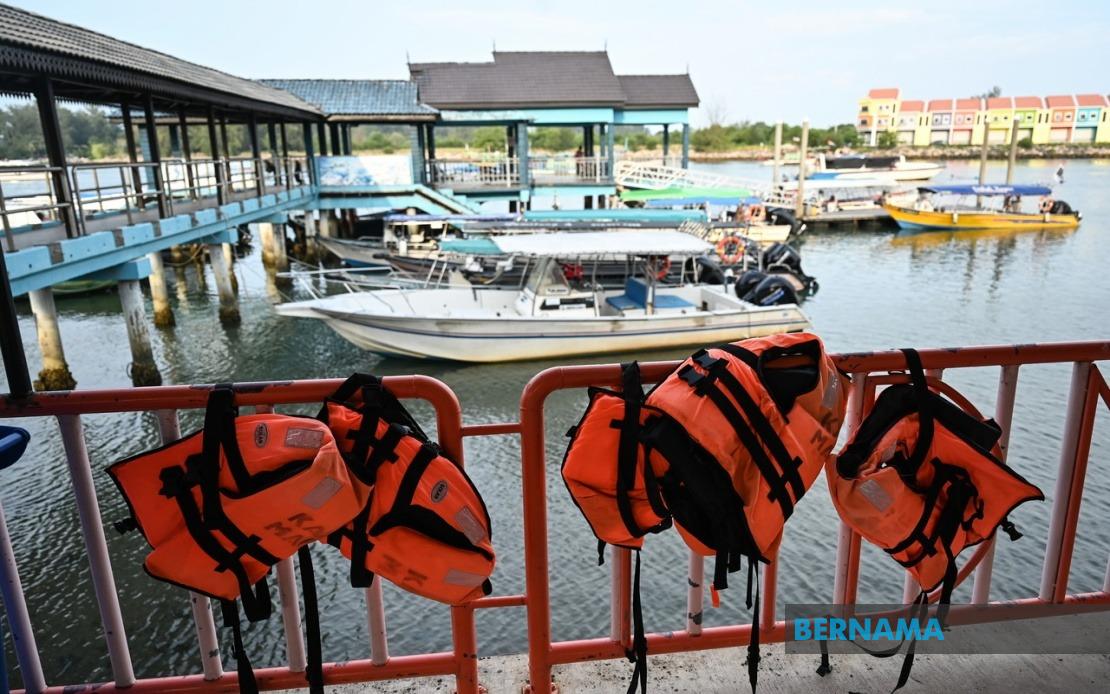
The fundamental message being articulated by Terengganu's leadership is that life jackets should become inseparable from any person aboard a vessel, regardless of their role or the duration of their time onboard. Razali's emphasis extends beyond the conventional understanding that passengers wear safety equipment during active transit—he is explicitly instructing that life jackets remain fastened even when individuals are resting or sleeping during extended night-time fishing expeditions. This clarification suggests a previous laxity in compliance, where crew members and participants may have been removing protective gear during quieter periods, fundamentally undermining the purpose of such safety infrastructure. The committee chairman framed this requirement not as an inconvenience but as an absolute responsibility borne by vessel operators who are entrusted with human lives.
Beyond individual compliance, Terengganu's officials are advocating for a systemic overhaul in pre-departure procedures that brings squid jigging operations into alignment with international maritime standards. Razali specifically referenced the safety briefing protocols observed on tourist ferries operating to island destinations, suggesting these established practices should become mandatory for all commercial fishing vessels. Such briefings would necessarily encompass detailed information about prevailing sea conditions, anticipated trip duration, proper life jacket deployment, and emergency procedures. The committee chairman noted that boat skippers possess specialized knowledge of local marine conditions that passengers and crew cannot possess, making their authority to assess weather suitability and communicate associated risks central to accident prevention. This positioning of skipper expertise as a governance mechanism reflects an acknowledgment that regulatory oversight from government agencies, while necessary, cannot substitute for real-time professional judgment at the operational level.
The tragic incident that catalyzed these policy discussions occurred under conditions that appeared routine to observers but proved catastrophic in execution. According to preliminary information, the vessel was in good mechanical condition and operated by an experienced skipper, suggesting that mechanical failure or operator incompetence were not the primary contributing factors. Rather, the capsize appears to have resulted from large volumes of water infiltrating the engine compartment, a scenario that highlights the vulnerability of even well-maintained vessels to sudden environmental shifts. Significantly, all passengers aboard were wearing life jackets at the moment of capsizing, a fact that Razali emphasized as having directly enabled the survival of the majority. This reality underscores the distinction between tragedies that might have been prevented through better preparation and those that can only be survived through proper protective measures—the life jackets functioned exactly as intended, allowing rescue operations to succeed where they might otherwise have failed.
The state government has explicitly declined to introduce additional regulatory frameworks governing squid jigging operations, instead asserting that existing standard operating procedures are sufficiently comprehensive. This position reflects confidence in the adequacy of current guidelines, provided they are rigorously implemented. Razali characterized the existing SOPs as products of extended operational experience spanning decades, suggesting they embody accumulated knowledge about managing the specific risks inherent to nocturnal squid fishing. The emphasis thus shifts decisively from regulatory innovation to enforcement of compliance with established protocols. This approach also acknowledges the jurisdictional reality that vessel licensing and operational approval fall within the purview of the Malaysia Marine Department rather than state tourism authorities, limiting Terengganu's direct enforcement capacity to advisory and coordination functions.
A critical dimension of the safety framework involves respecting prohibitions issued by the Malaysia Marine Department regarding vessel operations during adverse weather periods. Razali's reminder to operators and participants to comply with such directives indicates that warnings are sometimes disregarded, whether through operator pressure or participant insistence. The committee chairman specifically noted that most Terengganu squid jigging operators are responsible business owners willing to refund customers when trips cannot proceed safely, suggesting that economic incentives do not typically override safety considerations among established operators. However, the need for such reminders indicates that the pressure to proceed despite warnings does occasionally materialize, requiring consistent reinforcement of the principle that no fishing expedition is worth the risk of preventable drowning or maritime disaster.
The injured passengers treated following the capsize received care at Hospital Sultanah Nur Zahirah in Kuala Terengganu, with two discharged as outpatients and one remaining under medical supervision. The survival of the majority of those aboard, against the backdrop of a fatal incident, reinforces the statistical reality that proper life jacket use fundamentally alters outcomes in water-based emergencies. For Malaysian maritime operators and recreational water users beyond Terengganu's borders, the incident presents a sobering reminder of the consequences when comprehensive safety measures are not uniformly enforced. The squid jigging industry, while economically important to coastal communities and culturally significant as a nocturnal fishing practice, operates in an inherently hazardous environment where mechanical failures, sudden weather shifts, and human error can converge within seconds.
For Southeast Asian maritime sectors more broadly, the Terengganu case study illustrates the tension between operational convenience and safety imperatives. The region's fishing industries, which employ hundreds of thousands across multiple nations, operate with varying regulatory oversight and enforcement capacity. Malaysia's articulation of a clear safety posture through its state officials' statements establishes a benchmark for other jurisdictions grappling with similar challenges. The emphasis on skipper responsibility, comprehensive pre-departure briefings, universal life jacket compliance, and respect for marine department warnings represents a holistic approach that addresses human factors, environmental conditions, and mechanical systems simultaneously.
The investigation into the specific cause of the capsize continues under official auspices, though preliminary findings suggest no singular equipment or procedural failure precipitated the disaster. This ongoing inquiry will likely inform whether additional guidance should be issued regarding engine compartment waterproofing, ballast management, or other technical specifications. However, from the immediate policy perspective articulated by Terengganu's officials, the lesson drawn emphasizes the primacy of fundamental safety protocols applied with absolute consistency. The message to operators, crew, and participants is unambiguous: life jackets remain fastened throughout every voyage, safety briefings occur before every departure, and no trip proceeds against the professional judgment of the skipper regarding sea conditions. Whether these emphatic reiterations will translate into sustained behavioral change across the squid jigging sector remains to be observed.

