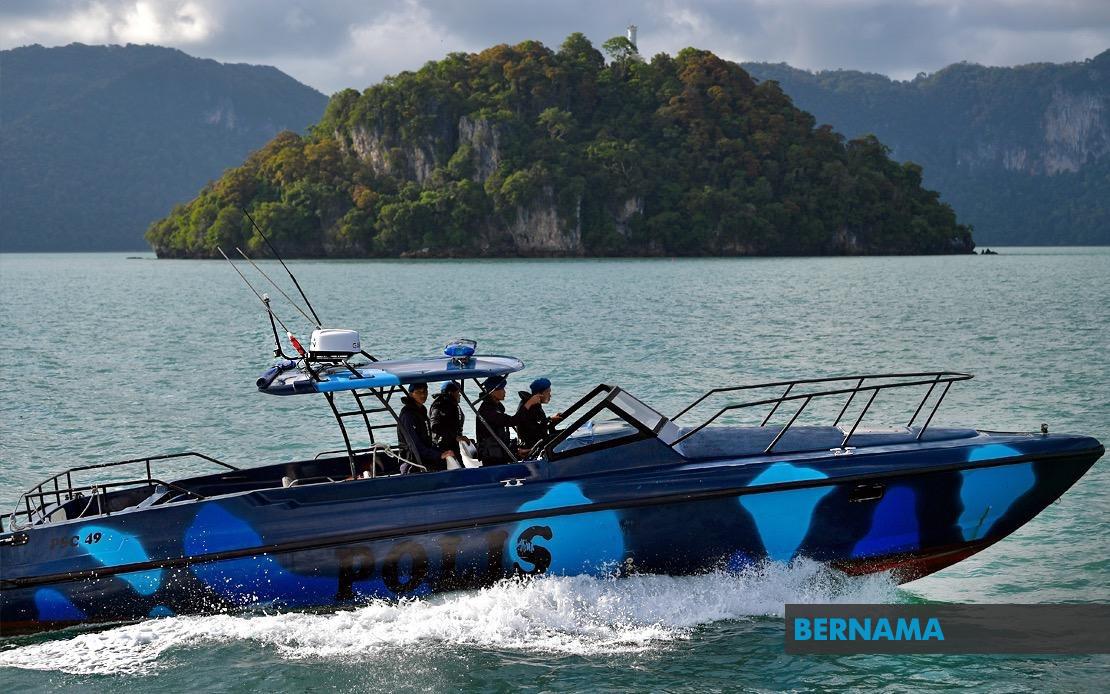
Terengganu state government is moving to address escalating concerns over coral reef deterioration at Pulau Redang, announcing a comprehensive three-day engagement session scheduled for August 26-28 that will bring together tourism operators, enforcement agencies, and environmental stakeholders to examine the root causes and remedial pathways. The initiative underscores growing alarm over marine ecosystem damage attributed to day-trip boats anchoring illegally in protected zones, a practice threatening one of Malaysia's premier marine tourism destinations and a biodiversity hotspot of regional significance.
Datuk Razali Idris, chairman of the Terengganu Tourism, Culture, Environment and Climate Change Committee, framed the forthcoming consultation as more than a dialogue forum, positioning it as a decisive platform where enforcement action against rule-breakers will be intensified and policy options rigorously examined. His remarks reflect mounting pressure on state authorities to demonstrate concrete environmental stewardship, particularly after allegations emerged that commercial tour operators have disregarded anchoring restrictions with apparent disregard for marine conservation imperatives. The session represents a pivot from passive awareness-raising toward active regulatory intervention, signalling official intolerance for continued ecosystem degradation.
The underlying tension centres on a fundamental conflict between economic interests and environmental preservation. Day-trip tourism generates substantial revenue for local operators and communities, yet the anchoring practices allegedly responsible for reef damage reflect prioritisation of convenience over sustainability. Razali's explicit acknowledgment that conservation efforts spanning decades or centuries risk erasure through short-term profit-seeking articulates the philosophical divide: whether Pulau Redang functions primarily as a revenue-generating resource or as an ecological asset warranting custodial protection. This framing carries implications beyond Terengganu, resonating with broader Southeast Asian struggles to balance tourism expansion against marine environmental integrity.
The engagement framework will scrutinise enforcement weaknesses that have presumably allowed improper anchoring to persist. Malaysian marine protected areas typically operate under permit systems with stipulated operational zones and anchoring protocols, yet compliance monitoring often suffers from resource constraints, limited patrol capacity, and insufficient penalties to deter violations. By convening operators and enforcement bodies jointly, Terengganu authorities aim to identify systemic gaps—whether in permit conditions, monitoring infrastructure, penalties, or communication protocols—that have enabled or tacitly permitted reef-damaging practices to continue. This diagnostic approach acknowledges that regulatory failure, not merely operator malfeasance, has contributed to the problem.
Razali's reference to potential permit review represents a significant escalation in regulatory posture. Rather than merely fining individual violations, the state government is contemplating structural interventions that could restrict day-trip operations through tighter permit conditions or reduced operation frequencies. Such measures would directly affect livelihoods of boat operators and tourism businesses dependent on high-volume visitation, generating likely resistance from commercial interests. The prospect of permit revocation or non-renewal introduces genuine stakes for operators, theoretically compelling compliance with anchoring restrictions. However, implementation will require political will to withstand commercial pressure and coordinate across competing agencies.
The proposal to impose heavier penalties on boat operators reflects recognition that existing fines have proven insufficient deterrents. If financial costs of violations remain marginal relative to revenues from reef-adjacent tourism, operators retain economic incentive to anchor anywhere convenient. Escalating penalty structures—whether through per-violation fines, permit suspension provisions, or operating license forfeit—would theoretically alter cost-benefit calculations. Yet penalty efficacy depends on detection and prosecution capacity. Terengganu would need enhanced marine patrols capable of identifying violations, documenting evidence, and processing enforcement actions swiftly. Without commensurate investment in monitoring infrastructure, heightened penalties remain symbolically tough but practically toothless.
The framing of Pulau Redang as a "state treasure" and "tourism asset" establishes environmental protection as a matter of regional pride and long-term competitive advantage. This positioning invokes shared stewardship responsibilities across tourism operators, environmental organisations, and government agencies—a collaborative framing that softens coercive messaging while asserting non-negotiable environmental bottom lines. For Malaysian policymakers, this rhetorical approach offers a template for reconciling tourism development with conservation: characterising environmental protection not as constraint on commerce but as prerequisite for sustaining the resource base underlying future tourism revenues.
The August gathering occurs within Southeast Asia's broader context of marine conservation challenges. Coral reef systems across the region face compounding stressors including climate change-induced bleaching, coastal development, fishing pressure, and tourism-related damage. Individual states' responses to localised degradation carry regional demonstration effects. Terengganu's willingness to confront tourism operators—typically politically influential constituencies—sends signals about environmental commitment that neighbouring jurisdictions monitor. Conversely, if Terengganu's engagement session yields only cosmetic changes while reef damage accelerates, it would reinforce perceptions that economic interests systematically trump environmental governance in Southeast Asia.
The implications for Malaysian environmental policy extend beyond coral reefs. Pulau Redang represents a microcosm of tensions inherent in managing natural resources under competing pressures. The state government's recognition that dialogue platforms alone prove insufficient, necessitating enforcement teeth and regulatory restructuring, reflects maturing understanding that conservation requires institutional mechanisms, not merely stakeholder goodwill. Whether Terengganu translates August's engagement into sustained action—permit reviews, enhanced patrols, penalty escalation, and monitoring—will determine whether the exercise constitutes meaningful intervention or strategic performance designed to placate environmental concerns without disrupting commercial interests.
The engagement session's outcomes will likely shape expectations for how Malaysian authorities approach marine protection elsewhere. If meaningful reforms emerge, the model becomes replicable across other tourism-dependent marine zones. If the session concludes with vague commitments requiring further study, it reinforces cynicism about gap between rhetorical commitment and operational reality. For tourism operators, the stakes are equally clear: the three-day consultation represents both opportunity to shape more proportionate regulatory frameworks and warning that authorities are prepared to implement stricter oversight. Pulau Redang's future trajectory—whether it stabilises as a sustainably managed marine destination or continues degrading—will reflect how seriously state government translates the engagement session's discussions into binding enforcement action.

