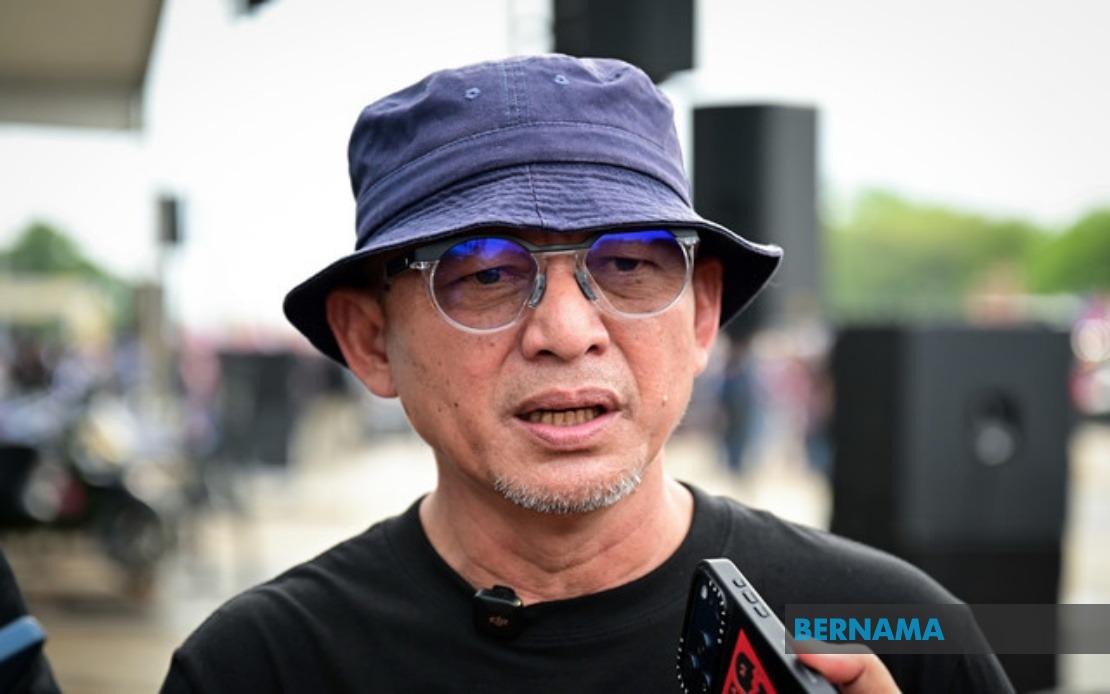
The Terengganu state government has moved to clarify that its new Visit Truly Terengganu 2027 logo represents a carefully considered balance between modernising the state's tourism brand and respecting Islamic principles. Speaking after the Terengganu Classic Festival 2026 closing ceremony at Dataran Shahbandar, State Tourism Committee chairman Datuk Razali Idris explained that the redesigned emblem maintains the turtle as its centrepiece, a symbol intrinsically linked to Terengganu's identity, whilst introducing contemporary visual elements that comply with Shariah standards.
The decision to retain the turtle reflects the state's commitment to preserving its distinctive character even as it refreshes its marketing approach for international and domestic visitors. Razali noted that the original 2007 design appeared rigid and static, whereas the new iteration employs vibrant colours and fluid shapes to convey movement and energy—elements that resonate better with contemporary tourism campaigns across Southeast Asia. This evolutionary approach allows Terengganu to compete effectively in the regional tourism market whilst remaining rooted in its cultural identity.
A key consideration in the logo's redesign involved navigating Islamic interpretations regarding animal imagery. The turtle has been deliberately stylised to avoid excessive anatomical detail, addressing religious sensitivities that exist within Malaysia's Muslim-majority context. Razali emphasised that such precautions are necessary given the logo's ubiquitous presence across merchandise, apparel, and promotional materials. Since clothing bearing animal figures cannot be worn during Islamic prayer observances, the state government sought to create a design that poses no practical conflict with the daily religious practices of both residents and visitors.
This approach highlights a broader challenge facing Malaysian state governments attempting to balance secular commerce with religious considerations. Rather than viewing these elements as competing priorities, Terengganu's strategy demonstrates how thoughtful design can accommodate multiple perspectives. The stylisation approach—reducing anatomical accuracy whilst maintaining recognisability—represents a pragmatic middle ground that allows the state to leverage its natural and cultural assets without generating controversy or resistance from conservative religious constituencies.
The turtle carries significant weight in Terengganu's tourism narrative. Beyond its symbolic role, the state's coastal ecosystems support one of Southeast Asia's most important marine turtle nesting sites, with Rantau Abang formerly being a globally recognised destination for witnessing leatherback turtle arrivals. Whilst turtle landings have declined dramatically in recent decades due to environmental pressures, the creature remains embedded in the state's identity and continues to attract specialist tourists and researchers. Maintaining this icon whilst updating its visual representation ensures continuity in Terengganu's long-term positioning as a heritage and nature-based tourism destination.
Touching on tourism performance, Razali projected considerable optimism regarding Terengganu's ability to reach its target of nine million visitors by year's end. The state recorded 2.45 million tourist arrivals during the first quarter alone, encompassing visitors to its popular island resorts and coastal attractions. This trajectory suggests the state is well-positioned to achieve its annual targets, though performance will depend on sustained promotional efforts and infrastructure development.
Vehicle entry data provides an additional metric for assessing tourism flows into Terengganu. Tolled entry points recorded over 600,000 vehicle passages in March and April combined, climbing to 829,000 in May before moderating to 608,000 in June. Whilst these figures offer insight into domestic visitation patterns, the state government maintains its own counting systems to ensure accuracy, with data ultimately to be reconciled and formally presented during the upcoming state legislative assembly sitting. Such granular monitoring reflects the importance state officials place on evidence-based tourism planning and resource allocation.
The Terengganu Classic Festival 2026, where Razali made his remarks, demonstrated the state's diversified approach to attracting visitors. The event showcased over 500 vintage vehicles spanning motorcycles and automobiles from the 1960s era, drawing approximately 10,000 attendees. Such niche events complement mainstream beach and island tourism, extending the state's appeal beyond conventional leisure travellers to enthusiast communities and cultural heritage seekers. This diversification strategy reduces dependency on seasonal patterns and weather-related disruptions that can impact beach-based tourism.
For Malaysian policymakers and tourism professionals elsewhere in the region, Terengganu's experience offers instructive lessons. The state demonstrates that religious considerations need not impede commercial ambition or tourism development; rather, integrating cultural and religious sensitivities into the design process can enhance social acceptance and ensure sustained community support for tourism initiatives. As Malaysia positions itself as a regional tourism hub, balancing religious values with economic imperatives will remain a recurring challenge requiring similarly thoughtful approaches.
The new logo represents more than aesthetic refinement; it embodies Terengganu's determination to modernise whilst maintaining cultural authenticity. As the state progresses toward its 2027 tourism targets, this symbol will serve as a visual touchstone for both promotional campaigns and visitor expectations. The design's successful reception will likely influence how other Malaysian states approach similar branding exercises, particularly those in Peninsular Malaysia with substantial Muslim populations seeking to market themselves globally whilst respecting local religious frameworks.

