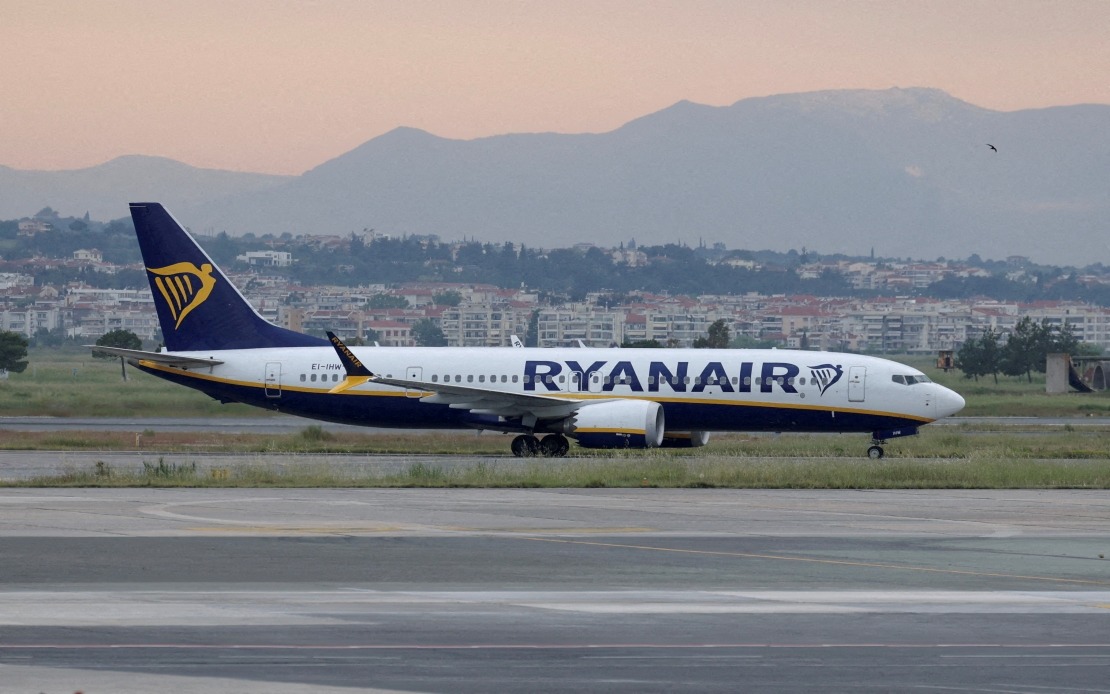
Chaos erupted aboard a Ryanair aircraft on Friday when a cabin window catastrophically failed during flight, prompting an immediate return to Thessaloniki Airport in Greece. The incident, which occurred on a service bound for Memmingen in southern Germany, unfolded within minutes of take-off and exposed the vulnerability of modern air travel despite rigorous safety standards. The shattered window triggered oxygen mask deployments throughout the cabin and widespread panic among passengers, a stark reminder of how quickly routine flights can transform into life-threatening emergencies.
Accounts from passengers describe a sudden, explosive noise followed by the window pane rupturing with dramatic force. The nearest passenger bore the brunt of the decompression event, becoming partially exposed to the external environment as pressurised cabin air rushed outward. One eyewitness recounted to Greek broadcaster ERT that the man's head and shoulders protruded through the broken opening, an image that captures the severity of what could have become a far more tragic outcome. The quick thinking of fellow passengers proved decisive—nearby travellers managed to physically pull the injured man back inside the aircraft before the situation escalated beyond recovery.
The incident highlights the inherent risks associated with cabin pressurisation and structural integrity at cruising altitude. While modern aircraft are engineered with redundant safety systems and windows typically feature reinforced design, the forces at play during rapid decompression can overwhelm standard protections. At altitude, the pressure differential between the interior and exterior environment creates powerful forces that can cause objects and even people to be drawn outward. The fact that passengers could retrieve the man suggests the window failure occurred at a relatively low altitude or that the aircraft had already begun its descent, though official details remain limited.
Video footage distributed through social media channels documented the immediate aftermath, showing oxygen masks suspended from overhead compartments throughout the cabin—equipment designed to provide supplemental oxygen during rapid altitude loss or decompression scenarios. Passengers can be heard screaming in these clips, reflecting the genuine fear that gripped the aircraft. The combination of mechanical failure, environmental hazard, and human vulnerability created a perfect storm of terror for those on board. Most passengers would have had no prior experience with such emergencies despite flight attendant safety briefings, making the reality of the situation all the more psychologically overwhelming.
Ryanair's response was operationally sound, with the flight crew immediately initiating emergency procedures. The pilot made the critical decision to abort the journey toward Memmingen and execute an emergency return to Thessaloniki Airport, the flight's point of origin. The return journey consumed approximately twenty minutes, suggesting the failure occurred relatively soon after take-off. This rapid turnaround demonstrates the close proximity of the Thessaloniki facility and the swift reaction time of the aircrew in prioritising passenger safety over schedule adherence—a fundamental principle in aviation operations worldwide.
The Serbian national who sustained injuries was transferred to a medical facility in Thessaloniki by emergency services upon landing. While specific details about the nature and extent of his injuries have not been disclosed, the proximity to a catastrophic decompression event suggests potential trauma from physical contact with structural forces, pressure changes, or both. Medical professionals would likely have assessed him for decompression sickness, barotrauma affecting ears and sinuses, and trauma from the incident itself. His survival owes much to the collective action of nearby passengers and the rapid response of the flight crew.
As of the time of reporting, neither Ryanair nor Greek aviation authorities had issued formal public statements addressing the incident. However, ERT confirmed that an investigation had been launched into the circumstances surrounding the window failure. Such investigations typically examine manufacturing records for the affected window assembly, maintenance logs documenting any prior issues with that particular aircraft component, and environmental factors that might have contributed to structural failure. Determining whether the window was defectively manufactured, improperly installed, inadequately maintained, or simply subject to an extraordinary stress event requires detailed technical analysis.
For Malaysian and Southeast Asian travellers, this incident carries particular relevance given the heavy reliance on budget carriers like Ryanair across European routes and similar low-cost operators throughout the region. While such catastrophic failures remain extraordinarily rare in commercial aviation, the incident underscores the importance of aircraft maintenance standards, proper training of cabin crew in emergency response, and the value of passenger awareness. The survival of the injured passenger represents a positive outcome that could have been far worse under slightly different circumstances.
The incident also raises questions about aircraft structural maintenance regimes and whether current inspection protocols adequately detect early signs of window degradation. Aviation authorities globally maintain stringent certification requirements for aircraft windows, yet failures do occasionally occur. Industry experts will likely scrutinise whether the Ryanair aircraft in question had undergone recent maintenance and whether any anomalies had been noted. Each commercial aircraft accumulates flight hours measured in thousands, and maintaining structural integrity across all components remains an ongoing challenge requiring vigilance and investment.
This frightening episode serves as a sobering reminder that despite the exceptional safety record of modern commercial aviation, mechanical failures can still occur with shocking suddenness. The response of passengers and crew likely prevented an outcome that could have involved loss of life. Ryanair and European aviation authorities will now focus on determining root causes and implementing any necessary corrective measures to prevent similar incidents. For passengers worldwide, the incident illustrates both the unpredictability of air travel and the resilience of human response to crisis.

