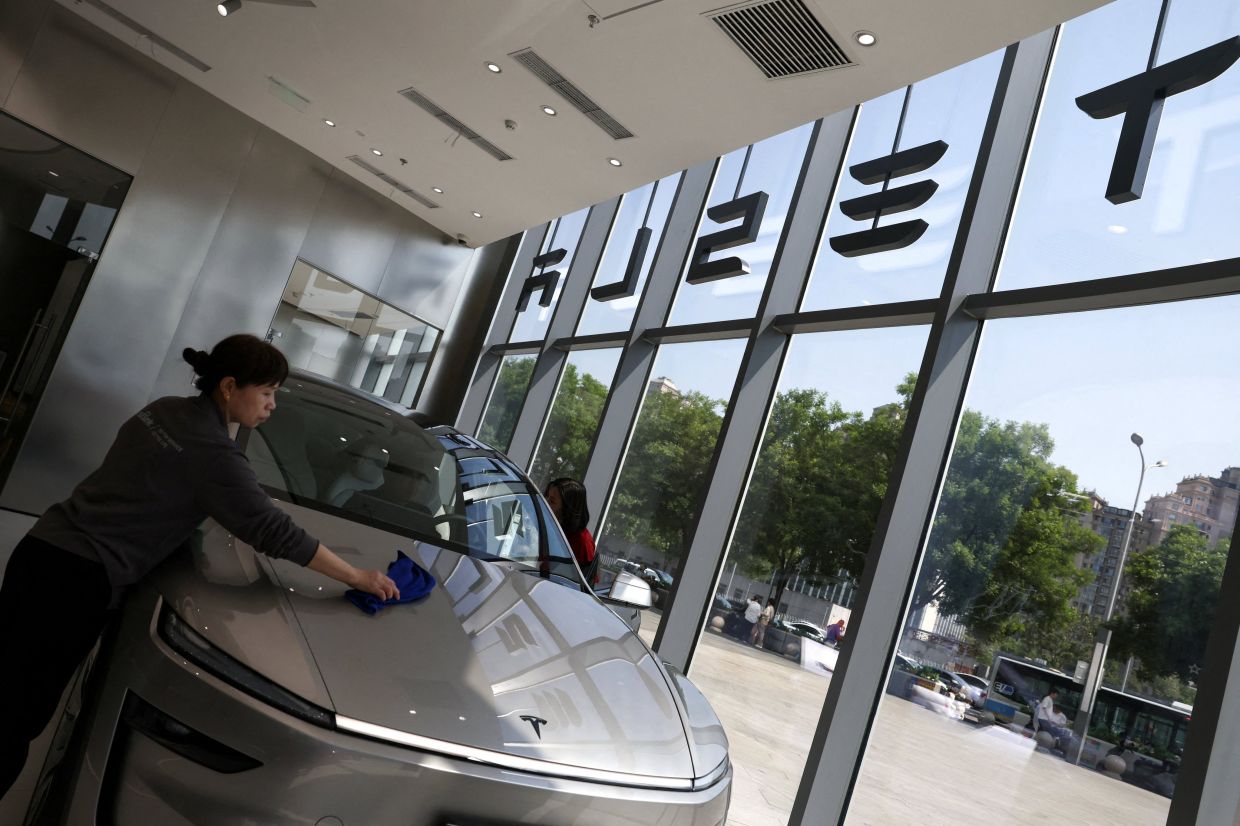
Tesla has announced what will become the largest product recall in mainland China's electric vehicle sector, with approximately 2.98 million vehicles requiring attention as the American manufacturer addresses persistent safety concerns surrounding retractable door handles. The recall represents a significant escalation in quality control measures for the industry and underscores intensifying regulatory pressure in the world's largest EV market, where safety standards are being rewritten in response to high-profile incidents that have captured public attention and sparked widespread concern among consumers.
The move comes as Chinese regulators have signalled their intention to prohibit retractable door-handle technology entirely, citing safety risks that became starkly apparent following a fatal accident in Sichuan province last October. That tragedy involved a Xiaomi SU7 Ultra electric vehicle where emergency responders and bystanders discovered themselves unable to extract a 31-year-old driver from the burning vehicle because the doors could not be opened. The incident galvanised public opinion and prompted government intervention, transforming what might have remained an isolated incident into a catalyst for comprehensive regulatory reform across the automotive sector.
While other manufacturers have also been affected by China's evolving safety requirements, Tesla's recall is notably the most extensive announced to date, reflecting both the company's substantial market share in mainland China and the scale of its reliance on retractable door-handle designs across its model lineup. The announcement demonstrates how quickly regulatory environments can shift in response to documented safety failures, and how manufacturers must adapt rapidly to maintain market access in strategically important regions. For Tesla, which operates its Shanghai gigafactory as a critical production hub serving both domestic Chinese consumers and global export markets, compliance with these new standards is essential.
The Chinese Ministry of Industry and Information Technology formalised its safety agenda in February when it announced regulations requiring all vehicles from next year onwards to be equipped with both internal and external door handles capable of mechanical operation at all times. These specifications are deliberately stringent, mandating functionality even when vehicles experience catastrophic failures such as complete power loss or severe collision damage. The regulatory framework represents a fundamental shift in how Chinese authorities approach automotive safety design, moving away from reliance on electronic systems toward mechanical redundancy as a baseline requirement.
Tesla's remedial strategy involves multiple complementary approaches to address the underlying vulnerability. Beginning from 25 September, the company will affix warning labels to internal door handles on recalled vehicles, providing drivers with immediate notification of the safety concern and guidance on proper usage. Simultaneously, Tesla will deploy an over-the-air software update to modify how its window-control systems respond to collision events. The new programming will automatically lower vehicle windows following a crash, thereby creating an alternative egress route when door-opening mechanisms fail or become inaccessible. This dual approach—combining mechanical alerts with enhanced electronic failsafes—attempts to provide comprehensive protection across multiple failure scenarios.
A separate Tesla recall affecting 2.74 million Model 3 and Model Y vehicles manufactured at the Shanghai facility targets entirely different safety systems, specifically addressing assisted steering and driver-assistance functions. That update is designed to ensure these critical safety features remain engaged even when drivers fail to respond appropriately to collision warning systems. The Shanghai factory, which produced approximately 851,000 vehicles during 2025 for distribution across China and international markets, represents more than half of Tesla's global manufacturing output during that year—a proportion that underscores the facility's strategic importance to the company's worldwide operations and growth trajectory.
For Shanghai-based automotive specialists and industry observers, these recalls reflect broader lessons about product design philosophy in an increasingly safety-conscious marketplace. Zhang Wenjie, who operates a car maintenance workshop in Shanghai, characterised the situation as emblematic of a fundamental shift in how both regulators and consumers now evaluate automotive safety. According to industry analysis, the high-profile nature of these recalls and the regulatory response they have triggered should prompt the entire automotive sector to reconsider design approaches that prioritise technological innovation over mechanical redundancy and proven safety mechanisms.
The recalls arrive at a particularly significant moment for Tesla's operations in China, where the company faces intensifying competitive pressures from domestic manufacturers while also navigating an increasingly complex regulatory environment. China represents Tesla's second-largest market globally, surpassed only by the United States in terms of revenue and market importance. The Shanghai gigafactory's output declined by 8.6 per cent during 2025, with total production falling to 1.63 million units—a contraction that reflects both broader market pressures and the company's need to manage production in response to evolving regulatory requirements and competitive dynamics.
The regulatory action reflects Beijing's determination to establish itself as a global leader in automotive safety standards, particularly as electric vehicles proliferate throughout the Chinese market and consumer expectations around vehicle reliability continue rising. By mandating mechanical door-opening capabilities and establishing clear timelines for compliance, Chinese authorities are effectively redefining what constitutes acceptable automotive design in the EV era. This approach sends powerful signals to the international automotive industry about the trajectory of safety regulations in the world's largest EV market and the consequences of design choices that prioritise elegance or technological sophistication over fundamental safety redundancy.
For multinational automotive manufacturers operating in China, including Tesla, these developments underscore the necessity of adapting product strategies to accommodate jurisdiction-specific requirements that may differ substantially from regulations in other major markets. The recalls also demonstrate how a single tragic incident can catalyse systemic regulatory change, transforming industry practices and forcing manufacturers to confront design vulnerabilities that might otherwise have remained unaddressed for years. As the global automotive industry continues its transition toward electric powertrains and increasingly sophisticated driver-assistance systems, the Chinese experience suggests that regulators will continue scrutinising how these technologies interact with fundamental safety requirements, particularly those relating to vehicle egress during emergency situations.

