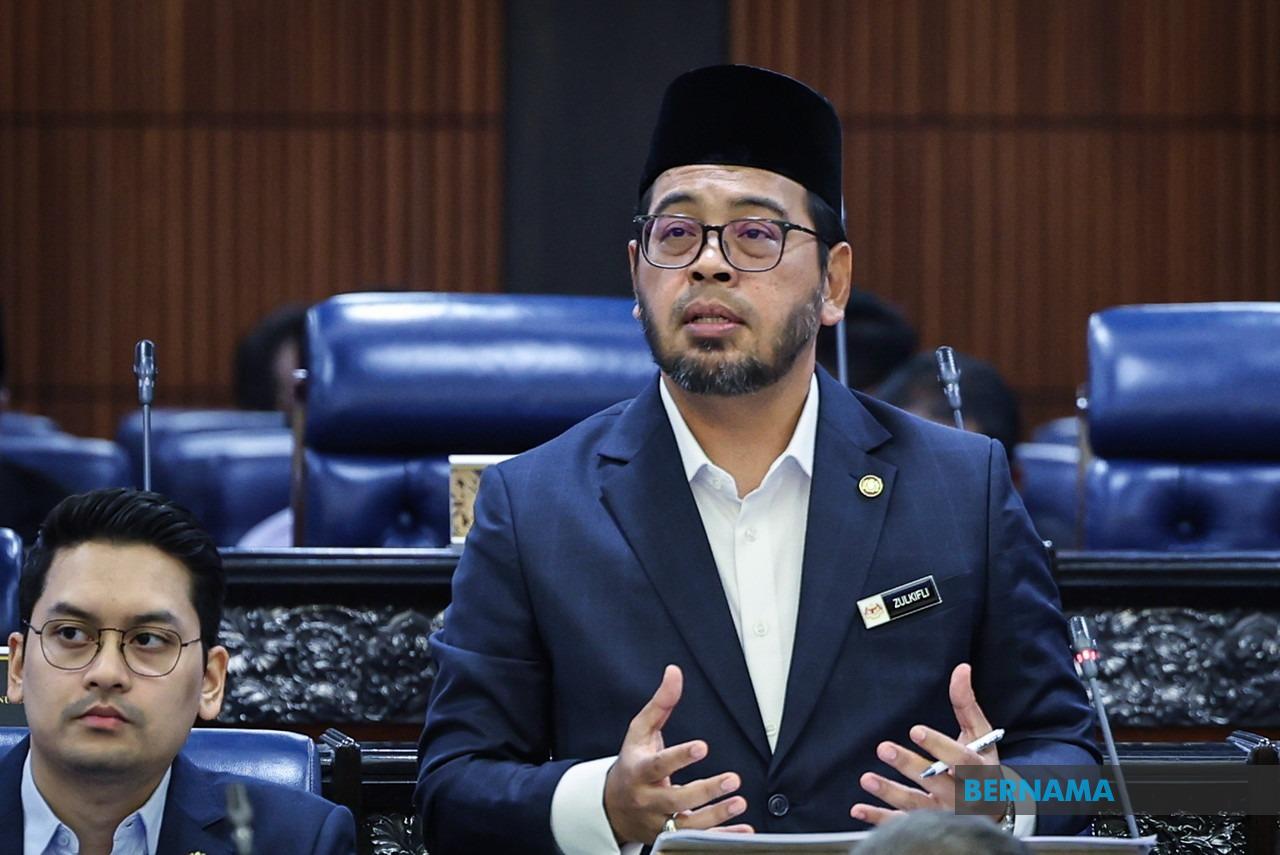
The Malaysian government is moving to substantially overhaul governance and financial accountability at Tabung Haji, with comprehensive amendments to the TH Act 1995 designed to prevent the regulatory failures documented in a damning Royal Commission of Inquiry report. Minister in the Prime Minister's Department (Religious Affairs) Dr Zulkifli Hasan announced during a special parliamentary sitting on August 11 that the revised legislation will incorporate explicit accounting standards, defined penalties for financial statement misreporting, and clearer legal frameworks across the institution's operations—all grounded in the RCI's investigation into TH management spanning 2014 to 2020.
The RCI investigation uncovered serious governance weaknesses during a period when Tabung Haji faced mounting financial pressures and operational challenges. Rather than shelving the findings, the government released the 211-page report publicly on July 29, enabling MPs to scrutinise and debate the commission's recommendations in parliament. This transparency reflects an acknowledgment that restoring public confidence in Malaysia's premier Islamic pilgrimage fund—which manages savings for hundreds of thousands of Muslims preparing for hajj—requires substantial institutional reform and parliamentary oversight. For Malaysian Muslims, particularly those in rural and lower-income brackets who depend on Tabung Haji's structured savings schemes, the proposed changes carry significant implications for the security and governance of their religious investment.
A key mechanism driving reform is a newly established task force chaired by the TH chairman and including the Bank Negara Malaysia governor and Securities Commission chairman. This inter-agency body is examining how best to implement RCI recommendations while preserving TH's integrated operations. The task force has already reached consensus on a pivotal structural change: transferring oversight of TH's fund management and investment activities to the Securities Commission, while keeping hajj logistics and religious affairs management under the Minister in the Prime Minister's Department for Religious Affairs. This division of labour attempts to reconcile the need for rigorous financial regulation with TH's unique dual mandate as both a savings institution and a religious services provider.
The Securities Commission framework would introduce professional investment standards and supervisory practices analogous to those governing Malaysia's broader financial sector. By subjecting TH's fund management to SC oversight, the government aims to eliminate the regulatory grey zone that previously allowed substantial autonomy without corresponding accountability mechanisms. Malaysian investors and depositors—who have entrusted substantial sums to TH over decades—stand to benefit from clearer investment rules, regular supervisory inspections, and standardised risk disclosures. The move also signals to regional and international observers that Malaysia takes institutional financial discipline seriously, potentially restoring confidence in TH ahead of its critical pilgrimage season operations.
Among the RCI's most pointed criticisms was TH's historical practice of awarding disproportionately large staff bonuses, which drained institutional resources and raised questions about executive compensation accountability. The government has responded by adopting what Dr Zulkifli described as a more measured bonus structure, now calibrated to overall institutional financial performance and employee key performance indicators. These payments require dual approval from the religious affairs and finance ministers, introducing political and financial oversight of what were previously opaque compensation decisions. This change addresses not merely financial prudence but also public perception: for Malaysian taxpayers and depositors, knowing that executive rewards are tied to tangible institutional outcomes rather than arbitrary allocations strengthens institutional legitimacy.
The RCI also pressed for clearer governance of TH's profit distributions to depositors, a critical issue given that millions of Malaysian Muslims depend on these returns to fund their hajj journeys. Since 2022, TH has announced profit distribution rates based on audited annual financial statements, moving away from practices that permitted distribution announcements divorced from verified financial results. This reform closes a significant accounting loophole; distributions now rest on transparent, independently verified performance data rather than management projections or political considerations. For depositors, this shift from opaque to audited distributions substantially reduces the risk of financial shocks when actual fund performance diverges from announced returns.
Compliance with international accounting standards has been another cornerstone of reform. The institution adopted relevant accounting standards across its financial statements beginning in 2018, yet the RCI investigation revealed that sustained compliance was inconsistent during earlier periods. The proposed amendments will enshrine these standards within the TH Act itself, converting what was previously administrative practice into statutory obligation. This legal embedding serves multiple purposes: it prevents future boards from relaxing standards under political pressure, it provides grounds for enforcement action should compliance lapse, and it aligns TH with global best practices that international pilgrims and investors increasingly expect from Islamic financial institutions.
Board governance has emerged as another critical reform area. The RCI recommended implementing expertise-based selection procedures for board members, establishing specific eligibility criteria, and prohibiting active politicians from serving as chairman or board members. These recommendations directly challenge a longstanding Malaysian pattern wherein political appointments dominated Tabung Haji leadership, often prioritising political loyalty over financial expertise. Dr Zulkifli stated that TH has since adopted 'fit and proper' criteria modelled on Bank Negara Malaysia's framework, screening candidates for integrity, capability, and experience rather than political affiliation. This professionalisation of board recruitment aims to attract technocrats and subject-matter experts whose reputations rest on institutional performance rather than political patronage.
The implications of these reforms extend beyond TH itself. Malaysia's Islamic financial sector—including Islamic banks, takaful operators, and investment funds—increasingly faces regional and international pressure to demonstrate rigorous governance, particularly as competition for Muslim savings grows across Southeast Asia and the wider Islamic world. By substantially upgrading TH's regulatory framework, the government signals commitment to institutional accountability that could set precedent for other state-linked Islamic financial entities. For Malaysian finance professionals and regulators, the RCI process and subsequent reforms provide a detailed case study in diagnosing governance failures and implementing structural remedies within established institutions.
The 2014–2020 period examined by the RCI coincided with significant global economic volatility, including oil price fluctuations that affected asset valuations and investment returns. Yet the commission's findings suggest that operational and governance weaknesses amplified TH's vulnerability during these downturns. Tighter financial reporting rules, clearer accounting standards, and enhanced supervisory oversight should provide early warning systems for future financial stress, enabling intervention before problems compound. For Malaysian policymakers overseeing other large institutional funds and endowments, the RCI report offers cautionary lessons about the costs of delayed reform.
Dr Zulkifli's framing of available talent—asserting that Malaysia possesses capable, competent technocrats suited to lead TH—implicitly rejects arguments that political patronage is necessary or inevitable in institutional governance. This rhetorical positioning matters symbolically for broader Malaysian governance discourse, suggesting official acknowledgment that merit-based leadership is both desirable and achievable even within historically politicised institutions. Whether implementation matches this rhetoric will depend on sustained political commitment and effective oversight by parliament, the religious affairs ministry, and the Securities Commission over coming years.
The proposed TH Act amendments represent one of Malaysia's most comprehensive institutional governance overhauls in recent years, driven by documented regulatory failure and public disclosure of findings. Passage of revised legislation and genuine implementation of Securities Commission oversight will be closely watched by depositors, pilgrims, MPs, and international observers. For Tabung Haji specifically, success in these reforms could transform the institution from a politically managed entity into a professionally governed Islamic financial specialist—a transition with implications for Malaysia's broader financial reputation and for Muslim communities throughout Southeast Asia who regard TH as a model for Islamic institutional practice.

