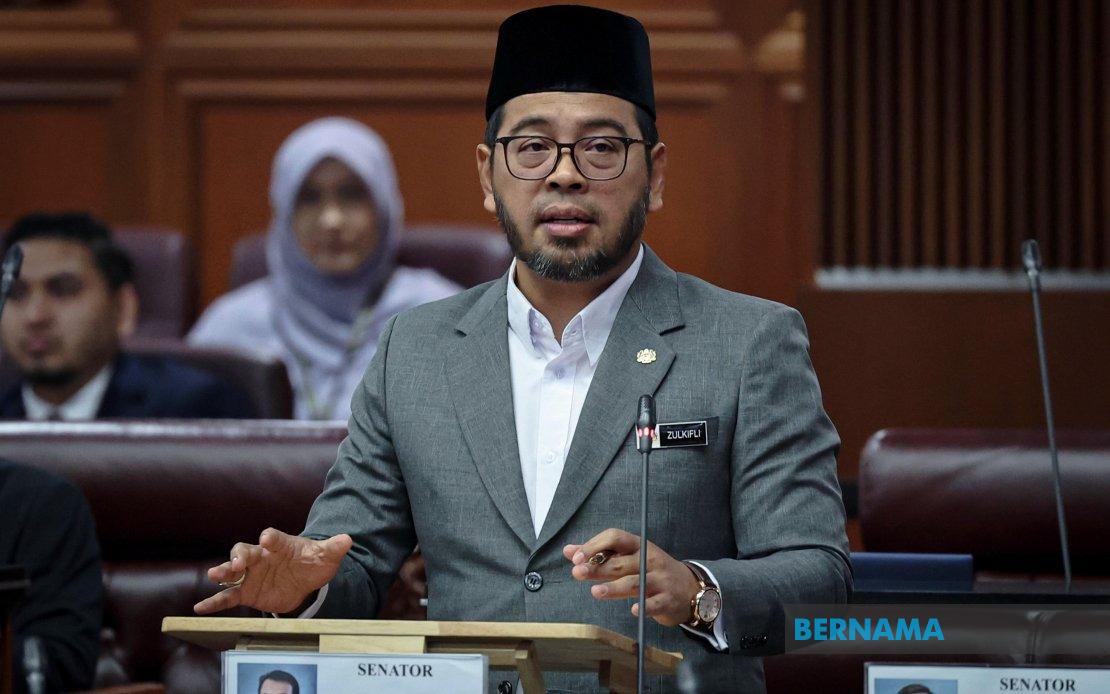
Depositors of Lembaga Tabung Haji (TH) can rest assured that their religious obligations regarding zakat have been properly discharged, according to Minister in the Prime Minister's Department (Religious Affairs) Dr Zulkifli Hasan. Speaking to Parliament during a special sitting on the Royal Commission of Inquiry findings concerning the savings institution, Zulkifli highlighted that TH's Syariah Advisory Committee has validated the zakat payments made on behalf of account holders throughout the institution's history, confirming that these contributions remain religiously sound regardless of the methodologies employed in different periods.
The reassurance comes as TH navigates the aftermath of a comprehensive inquiry that examined its operations between 2014 and 2020. The RCI report, released publicly on July 29, identified significant management weaknesses but also offered a pathway forward with 25 specific recommendations. Zulkifli's parliamentary address focused particularly on clarifying the zakat dimension of this scrutiny, an issue of profound concern to TH's approximately two million account holders across the country, many of whom depend on the institution for their pilgrimage savings whilst also expecting their religious duties to be meticulously observed.
Zulkifli explained that the TH Syariah Advisory Committee conducted a formal review on September 2, 2020, and determined that zakat collected during the years preceding the introduction of the wakalah framework in 2019 remained valid and fully compliant with Islamic jurisprudence. This determination addresses what had been an area of uncertainty for depositors, particularly those whose funds were managed under the Wadiah Yad Damanah contract between 2016 and 2019, when the institution remitted business zakat on the pooled funds of depositors that were invested in commercial activities. The distinction between various zakat calculation methodologies, whilst technical, carries significant weight for Muslims whose faith demands certainty in religious compliance.
The minister further anchored his reassurances in a longstanding ruling from Malaysia's National Fatwa Committee for Islamic Religious Affairs, which determined on May 3, 1979, that although TH itself is not subject to zakat as an institution, it bears the obligation to pay zakat on behalf of its depositors. This foundational fatwa has guided TH's operations for over four decades and remains the authoritative religious reference point for the institution's zakat practices. Zulkifli emphasised that TH has consistently honoured this requirement, maintaining a track record of compliance that aligns with the interpreted wishes of Malaysia's Islamic scholarly consensus.
In response to the RCI's own recommendation that zakat matters be examined by the National Council for Islamic Religious Affairs through its Muzakarah Committee, Zulkifli reported that this review had been completed. The committee endorsed TH's zakat practices during a June 2024 session, and the findings were subsequently presented to the 267th Meeting of the Conference of Rulers in October 2024. This escalation to Malaysia's highest institutional forums—both in Islamic affairs and royal governance—represents a deliberate effort to provide the broadest possible validation of the institution's religious compliance, signalling that the matter has received scrutiny from multiple authoritative levels within Malaysia's Islamic establishment.
The governance framework surrounding TH's zakat operations appears comprehensive, according to Zulkifli's account. He noted that all zakat activities are subject to oversight by the institution's Syariah Advisory Committee, which comprises specialists in Islamic law and Islamic finance. These experts monitor operations against the Zakat Guidelines that have been formally approved for TH's use, ensuring that decisions remain grounded in both religious principle and contemporary financial best practice. For account holders, this multi-layered governance structure provides multiple safeguards against potential deviations from prescribed Islamic standards.
Beyond zakat concerns, Zulkifli indicated that TH is actively implementing the RCI's recommendations regarding hajj management reforms. As of July 30, the institution had successfully executed approximately 75 percent of the 25 recommendations contained within the 211-page inquiry report. The minister emphasised that TH is now in advanced stages of refining its hajj eligibility policies and waiting period structures, aiming to introduce a more transparent and equitable system. These proposed changes incorporate the Islamic concept of istito'ah, which emphasises the pilgrim's capacity and preparedness to undertake the sacred journey, alongside more systematic and planned approaches to managing the massive logistical undertaking of facilitating Malaysian pilgrimages to Mecca and Medina.
The RCI itself was established in 2021 following public concern about TH's financial trajectory and governance standards. Formal appointments of commission members occurred in January 2022, with the investigation spanning a critical seven-year period that encompassed significant financial market volatility and substantial scrutiny of the institution's investment decisions. The inquiry's presentation to the Yang di-Pertuan Agong on August 30, 2022, followed by the public release of findings more than two years later, represented a lengthy but thorough examination designed to understand systemic issues and chart a credible recovery path.
For Malaysian Muslims, particularly those with substantial TH holdings intended for hajj, the convergence of multiple institutional endorsements—from TH's own Syariah Advisory Committee, the National Fatwa Committee, the Muzakarah Committee, and the Conference of Rulers—offers substantial reassurance regarding religious compliance. The investment of time and institutional resources in validating zakat practices reflects a recognition that financial institutions serving Muslim communities bear not only economic responsibilities but also spiritual and religious accountability to their account holders. Zulkifli's parliamentary statement, whilst responding to specific RCI recommendations, serves the broader function of reinforcing public confidence during a period when TH's reputation requires careful restoration.
The broader context is significant for understanding Malaysian Islamic governance. TH represents one of the nation's most important vehicles for connecting ordinary Malaysian Muslims with both financial security and religious obligation. The institution manages savings for pilgrims across diverse economic backgrounds and geographic locations, making it a democratising force within Malaysia's Islamic practice. Ensuring that zakat remains properly discharged regardless of the sophistication of underlying investment structures demonstrates an institutional commitment to serving depositors with both financial prudence and spiritual integrity, qualities that must coexist for genuine public confidence to flourish in such organisations.

