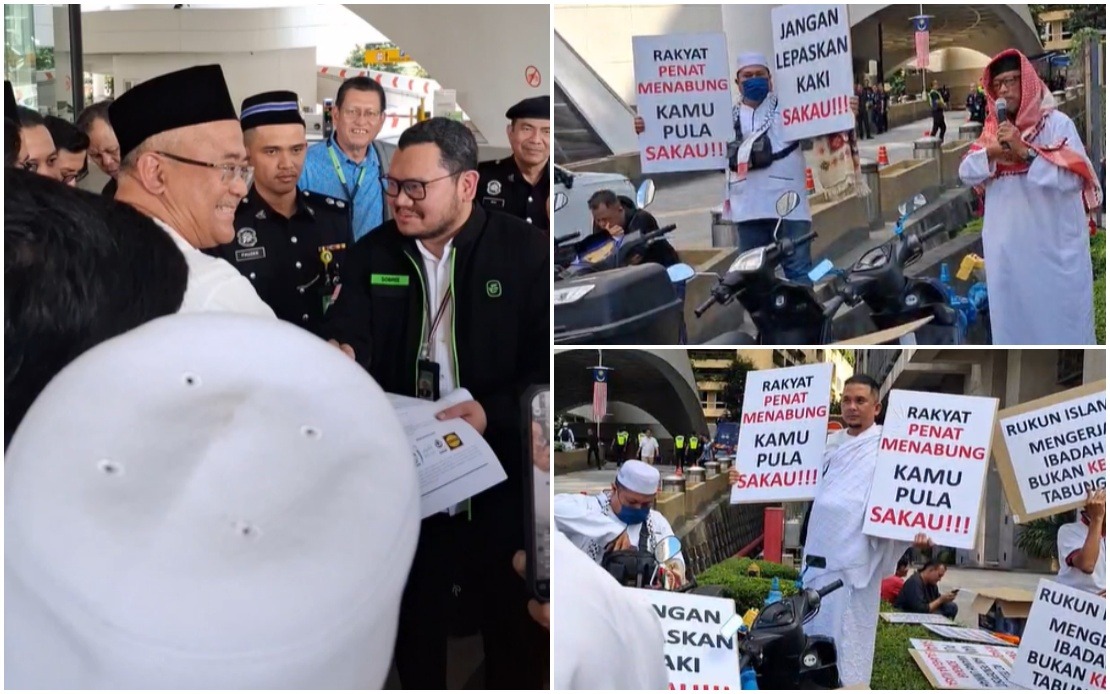
Religious and political groups aligned with the MADANI government are calling for a shield around the investigation into findings from the Royal Commission of Inquiry into Lembaga Tabung Haji's management, warning against any attempts to compromise the process through political maneuvering or pressure on anti-corruption authorities. The RCI's sweeping examination of the Islamic pilgrimage fund's governance between 2014 and 2020 has surfaced serious allegations requiring proper legal resolution, according to the coalition, which fears that external pressure could derail accountability efforts.
Amir Zuhair Abdull Khalid, chairman of Daie MADANI, emphasized during a solidarity gathering at Menara TH in Kuala Lumpur that the integrity of ongoing investigations hinges on their insulation from interference at any level. He framed the matter as transcending typical political disputes, instead positioning it as a fiduciary responsibility affecting millions of Muslim savers who have entrusted their money to the institution. The scale of public interest—particularly the religious significance of Tabung Haji's role as custodian of pilgrimage savings—elevates the investigation beyond routine governance concerns.
The RCI's scope has proven extensive, uncovering not merely financial irregularities but also systemic governance failures. Among its findings are accusations that political interference shaped board appointments and influenced management decisions during the period under review. These discoveries suggest that the fund's independence was compromised, potentially affecting investment decisions and asset allocation. Such structural vulnerabilities would need addressing through the legal system, meaning courts must ultimately determine culpability once investigators and prosecutors present their cases.
Amir Zuhair articulated a position that separates factual investigation from premature judgment. While acknowledging that individuals under scrutiny will naturally deny wrongdoing, he insisted that only courts possess the authority to establish guilt following due process. This distinction matters considerably in Malaysian public discourse, where political actors sometimes attempt to pre-judge legal outcomes or use investigations as partisan weapons. His appeal to respect the separation of powers reflects growing concern that investigations into high-profile cases can become compromised when subjected to external political pressure.
The Malaysian Anti-Corruption Commission emerges as a central player in translating RCI findings into prosecutable cases. Amir Zuhair's specific call for authorities not to face obstruction underscores anxiety within reform-minded circles that powerful interests might mobilize to slow or deflect investigations. For depositors and the broader Muslim community, bureaucratic delays or procedural complications could mean further erosion of confidence in institutional oversight. The MADANI coalition's framing positions transparent investigation as essential to restoring public trust in both Tabung Haji itself and the government's commitment to accountability.
The Malaysian Islamic Movement Coalition, known as HIKAM, has formalized demands extending beyond mere investigation. The coalition submitted ten specific requirements to government, including immediate legal proceedings against implicated parties, comprehensive asset recovery efforts, and implementation of the RCI's reform recommendations. This multi-pronged approach reflects recognition that investigation alone proves insufficient; the system must demonstrate capacity for restitution and institutional renewal. HIKAM comprises several established Islamic civil society organizations including WADAH, IKRAM, HALUAN, and ABIM, lending it substantial grassroots legitimacy.
The financial losses at stake have not been publicly quantified in full, but the RCI's findings imply substantial sums were mismanaged or improperly invested during the seven-year period examined. Tabung Haji holds collective savings of millions of Malaysians, many of modest means, saving toward the religious obligation of hajj pilgrimage. When institutional leadership operates without proper oversight or grants itself improper discretion, even modest percentage losses multiply across the depositor base. Recovery of assets thus carries both practical and symbolic importance for affected individuals.
Governance reform represents the broader horizon beyond any individual prosecutions. The RCI presumably identified structural weaknesses permitting the problems documented during 2014-2020. Without institutional redesign—clearer oversight mechanisms, board independence standards, investment controls, and transparency requirements—a successor leadership could repeat similar patterns. The MADANI government's commitment to implementing RCI recommendations therefore constitutes the visible reassurance that investigation yields systemic learning, not merely individual blame-shifting.
Regional observers monitoring Malaysian governance developments find the Tabung Haji situation instructive. Other Southeast Asian nations grapple with similar tensions between religious institutional autonomy and public accountability, particularly where faith-based funds manage communal savings. How Malaysia resolves the TH investigation may establish precedents affecting governance discussions elsewhere in the region. A genuinely independent process, shielded from political interference, could demonstrate that Islamic democracies can investigate institutional misconduct without sacrificing religious respect or institutional integrity.
The coalition's emphasis on non-interference carries implicit recognition that Malaysian investigations have historically experienced political disruption. By articulating clear demands that both MACC and courts operate free from external pressure, MADANI groups are attempting to establish a protective perimeter around due process. This defensive posture suggests their anxiety about whether institutional mechanisms possess sufficient resistance to political influence, particularly when powerful individuals face scrutiny. Their public advocacy aims partly to deter would-be interferers through transparency and civil society attention.
For depositors and their families, the investigation's outcome will determine whether their savings remain secure and whether lost value might be recovered. Beyond individual financial impact, many Malaysians view Tabung Haji through a lens of religious trust. An institution nominally serving Muslim pilgrims cannot operate effectively if governance failures erode confidence in its stewardship. The MADANI coalition's mobilization reflects this understanding that institutional legitimacy requires demonstrable accountability, not merely internal remediation.

