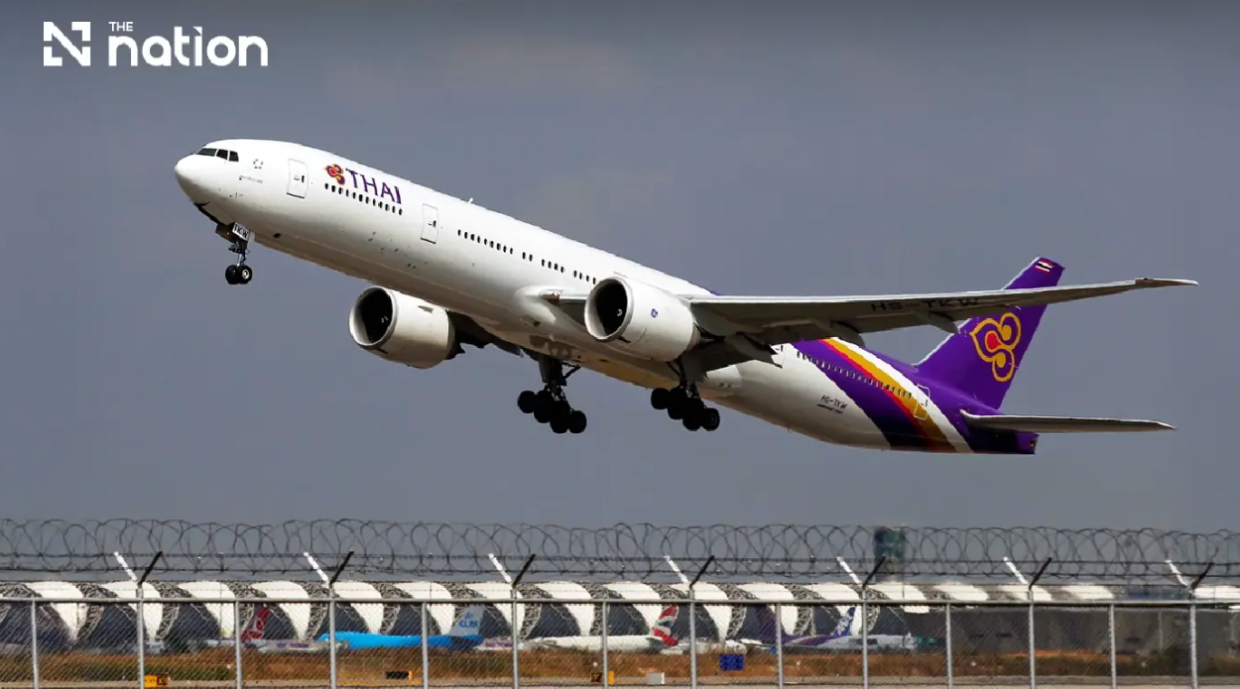
Thai Airways International's chief executive Chai Eamsiri has publicly committed to unreserved cooperation with Australian law-enforcement agencies in the heroin trafficking case involving a female cabin crew member arrested at Melbourne Airport. In a statement addressing the incident, Chai made clear that the airline would not interfere with the legal process unfolding in Australia, positioning Thai Airways as a responsible corporate partner to international authorities while simultaneously managing the severe reputational crisis the case has triggered.
The arrested employee, a 26-year-old Thai national working as cabin crew aboard flight TG465 from Bangkok to Melbourne, was taken into custody after Australian customs officials discovered more than one kilogramme of heroin in her baggage following her arrival on June 25. The contraband carries an estimated street value of A$500,000, equivalent to approximately 11.5 million baht. The sheer quantity and value of the seizure underscore the seriousness of the alleged offence and the potential exposure facing Thai Airways to heightened regulatory scrutiny and operational complications across its Australian operations.
Responding swiftly to contain the damage, Thai Airways suspended the crew member immediately upon learning of her arrest and established an internal fact-finding and disciplinary panel to investigate the circumstances. The company has committed to completing this parallel investigation within seven days, with the possibility of concluding sooner. Should the internal inquiry substantiate wrongdoing, Chai indicated that the airline would impose its maximum disciplinary sanction—termination of employment. This approach allows Thai Airways to demonstrate institutional accountability while the legal proceedings unfold in the Australian justice system, potentially mitigating regulatory backlash from Thai aviation authorities.
The Australian Federal Police and Australian Border Force have filed serious charges against the suspect, accusing her of importing a marketable quantity of a border-controlled drug and possessing a marketable quantity of a border-controlled drug. Each charge carries a maximum prison sentence of 25 years, reflecting the severity with which Australian authorities treat large-scale drug importation. The accused was remanded in custody on June 26 and is scheduled for her next court appearance before Melbourne Magistrates' Court on September 14, meaning the case will likely remain in the public eye for months.
Chai acknowledged candidly that the incident has inflicted substantial reputational damage on Thai Airways' brand and standing. More significantly, he flagged concern that the case could complicate entry procedures for Thai crew members and Thai nationals travelling to Australia, potentially creating friction with Australian immigration and customs authorities. However, he expressed confidence that foreign governments would evaluate such cases on individual merit rather than imposing blanket restrictions on all Thai travellers based on the actions of a single employee. This measured optimism appears designed to reassure Thai staff and the travelling public while avoiding inflammatory rhetoric that might escalate diplomatic sensitivities.
The executive emphasised that Thai Airways maintains rigorous protocols and training regimens for pilots, cabin crew, and ground staff. Before each flight, employees receive detailed briefings on applicable regulations, prohibited items, and the legal boundaries governing what may be transported in their baggage or on company aircraft. Despite these institutional safeguards, Chai acknowledged the inherent difficulty of policing individual conduct within an organisation employing more than 4,000 cabin crew members and over 1,000 pilots. To address this gap, he announced that relevant departments would implement tighter supervisory mechanisms going forward, suggesting that the airline recognises systemic vulnerabilities in its screening and oversight procedures.
The Civil Aviation Authority of Thailand has initiated its own review, contacting Melbourne Airport operators and Thai Airways to investigate the facts and examine existing procedures. The regulator emphasised that passenger and baggage screening at Thai airport checkpoints comply with CAAT requirements and meet International Civil Aviation Organization standards. However, CAAT drew a distinction between aviation security—which focuses on threats to aircraft safety—and narcotics enforcement, which remains the responsibility of law-enforcement agencies and requires seamless international cooperation. This demarcation of responsibilities suggests potential tensions over whether CAAT should have detected the heroin before the flight departed Thailand, a question that will likely feature prominently in any subsequent inquiry.
CAATapproached the airline to monitor the results of Thai Airways' internal investigation, signalling that the regulator stands ready to take action if wrongdoing is confirmed. The authority indicated that it may revoke or suspend the crew member's aviation-security certificate to reinforce civil aviation safety standards and preserve public and international confidence in Thailand's aviation infrastructure. Such regulatory intervention, while potentially necessary, underscores the cascading consequences that individual lapses can generate across the aviation ecosystem.
For Malaysian readers and regional observers, the case illustrates the vulnerability of international air transport to drug trafficking and the complex interplay between commercial aviation operators, national regulators, and law-enforcement authorities. Thai Airways' situation demonstrates how a single employee's alleged misconduct can trigger corporate liability questions, regulatory intervention, and operational complications that ripple through the entire airline sector. The incident also highlights the importance of robust cross-border intelligence-sharing and harmonised security protocols, particularly within Southeast Asia where aviation volumes continue to expand and regulatory capacity varies significantly. How Thai Airways navigates this crisis—and whether regional authorities use it as a catalyst for tighter coordination on in-flight security—will carry implications for the entire aviation industry across the region.

