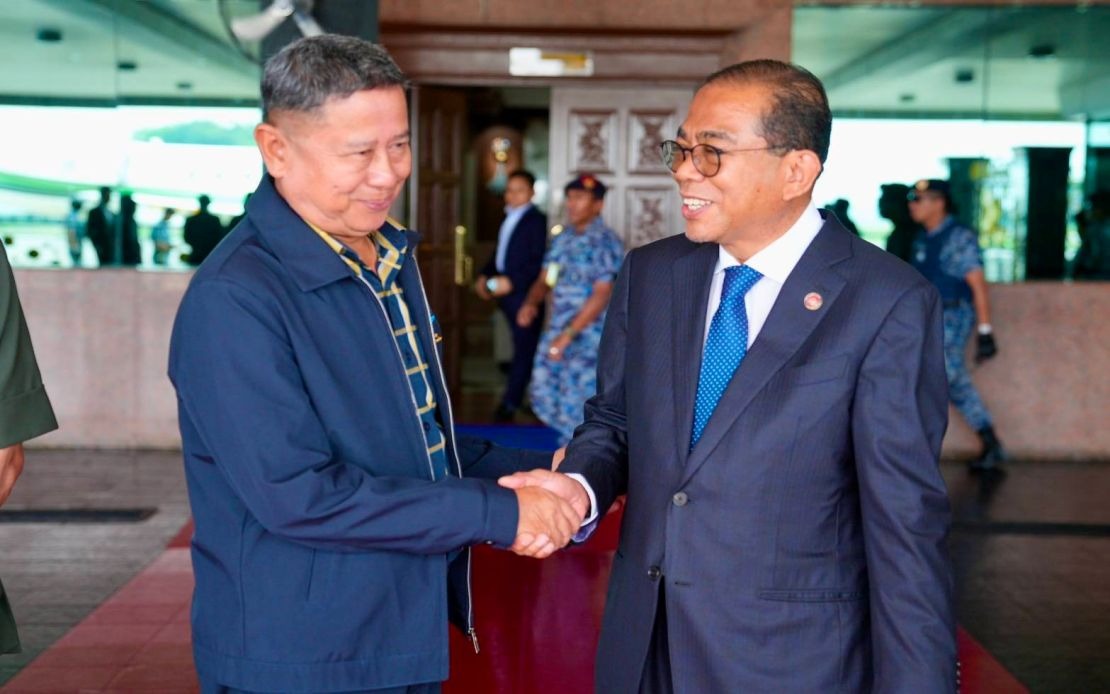
Thailand's Defence Minister Lt Gen Adul Boonthamcharoen travelled to Kuala Lumpur on Wednesday for an urgent meeting with his Malaysian counterpart, signalling Bangkok's determination to strengthen bilateral security coordination at a critical moment for the troubled southern border region. The high-level talks, which included Malaysian Defence Minister Datuk Seri Mohamed Khaled Nordin, came just 24 hours after Thailand announced a temporary halt to planned peace negotiations with southern insurgent groups, marking a significant escalation in tensions that threatens regional stability.
The timing of the visit underscores Bangkok's recognition that Malaysia, as the principal host nation for peace dialogue platforms and a neighbouring state with deep cross-border ties, plays an indispensable role in managing the humanitarian and security crisis in Thailand's southern provinces. Throughout the meeting, Thai officials detailed the security situation across the kingdom's southern border areas, painting a picture of deteriorating conditions that necessitated the suspension of talks previously scheduled for September in Malaysia. The briefing reflected growing urgency within Thai government circles about the trajectory of insurgent activities and their potential spillover effects into neighbouring regions.
A deadly attack in Narathiwat province last week served as the immediate catalyst for Thailand's decision to pause diplomatic efforts and impose martial law across 13 districts, according to National Intelligence Agency Director Thanat Suwannanont. This security measure demonstrated that Bangkok views the current threat level as sufficiently acute to warrant exceptional governance measures, despite the potential diplomatic costs of abandoning peace talks. The attack's severity and the government's forceful response highlight the persistent security challenges that have plagued the region for nearly two decades, claiming thousands of lives and displacing countless communities.
During their discussions, both defence ministers reaffirmed their shared commitment to strengthening strategic security cooperation and expanding intelligence-sharing arrangements. This emphasis on information exchange reflects a recognition that insurgent networks and criminal organisations operate fluidly across the Malaysia-Thailand border, requiring coordinated surveillance and rapid intelligence response mechanisms. The two officials specifically highlighted the importance of enhanced border security protocols tailored to the rapidly shifting security landscape, suggesting that existing frameworks may be insufficient to address contemporary threats emanating from the southern theatre.
Lt Gen Adul's statement articulated Thailand's foundational belief that sustainable peace in the region depends fundamentally on deepening cooperation with Malaysia based on mutual trust, mutual respect, and shared strategic interests. This framing positions Malaysia not merely as a venue for talks but as a genuine security partner whose role extends beyond diplomatic mediation to active participation in confidence-building measures. By emphasising shared interests and collective security concerns, Thai officials sought to bind Malaysia more tightly to regional stability objectives and position Bangkok's security challenges as regional rather than merely bilateral matters.
The Thai Defence Minister stressed that his government remains committed to advancing the peace-building process despite the current operational suspension, signalling that the pause in talks represents a tactical adjustment rather than a fundamental shift away from dialogue. This nuance carries significant implications for Malaysian policymakers, who have invested considerable diplomatic capital in facilitating multiple rounds of negotiations and maintaining momentum toward settlement. The explicit reaffirmation of commitment to peace suggests that Bangkok intends to resume talks once security conditions improve, though neither side specified what conditions would trigger resumption.
Thailand's characterisation of Malaysia as a key security partner reflects the deeper strategic context of regional stability architecture in Southeast Asia. As a non-claimant state in maritime disputes and a country with substantial Muslim populations and cross-border economic ties, Malaysia occupies a unique position in Thailand's security calculations. Bangkok's decision to brief Kuala Lumpur personally rather than through conventional diplomatic channels underscored the seriousness with which Thai policymakers view the need for Malaysian understanding and support during this critical period.
The meeting also addressed quality-of-life improvements for affected populations in southern Thailand, recognising that sustainable peace requires not only military and security measures but also tangible economic development and social stabilisation. This dimension reflects international best practices in counter-insurgency and peace-building, acknowledging that security interventions divorced from developmental considerations often prove counterproductive. Malaysian officials, with their own experience managing development in border regions, could offer valuable insights on balancing security with socioeconomic advancement.
From a Malaysian perspective, Thailand's security challenges in the south carry direct implications for cross-border stability and regional security architecture. Insurgent movements that find safe harbour or operational flexibility across borders potentially affect Malaysian security interests, making Bangkok's security situation a legitimate Malaysian concern. The two defence ministers' emphasis on intelligence sharing and coordinated border management suggests recognition that security problems in one jurisdiction inevitably influence conditions in neighbouring territories, requiring coordinated responses that transcend conventional sovereignty boundaries.
The suspension of talks, while concerning for peace advocates, may paradoxically create space for stakeholders to address underlying security threats that had continued despite ongoing dialogue. Some analysts suggest that maintaining peace negotiations amid deteriorating security conditions risks delegitimising the process if the government appears powerless to prevent attacks. Thailand's decision to pause talks pending improved conditions therefore reflects a calculation that security credibility must be re-established before meaningful political negotiations can resume with genuine authority and legitimacy.
Looking forward, the trajectory of Malaysia-Thailand security cooperation will likely depend on whether Bangkok can stabilise the southern border provinces sufficiently to resume peace talks without appearing to negotiate under duress. Malaysian policymakers face the delicate task of maintaining their commitment to dialogue while supporting Thailand's legitimate security needs, a balance that will test the region's diplomatic mechanisms throughout the coming months. The outcome will significantly influence broader regional stability patterns and the viability of inclusive peace-building models in Southeast Asia's most intractable conflicts.

