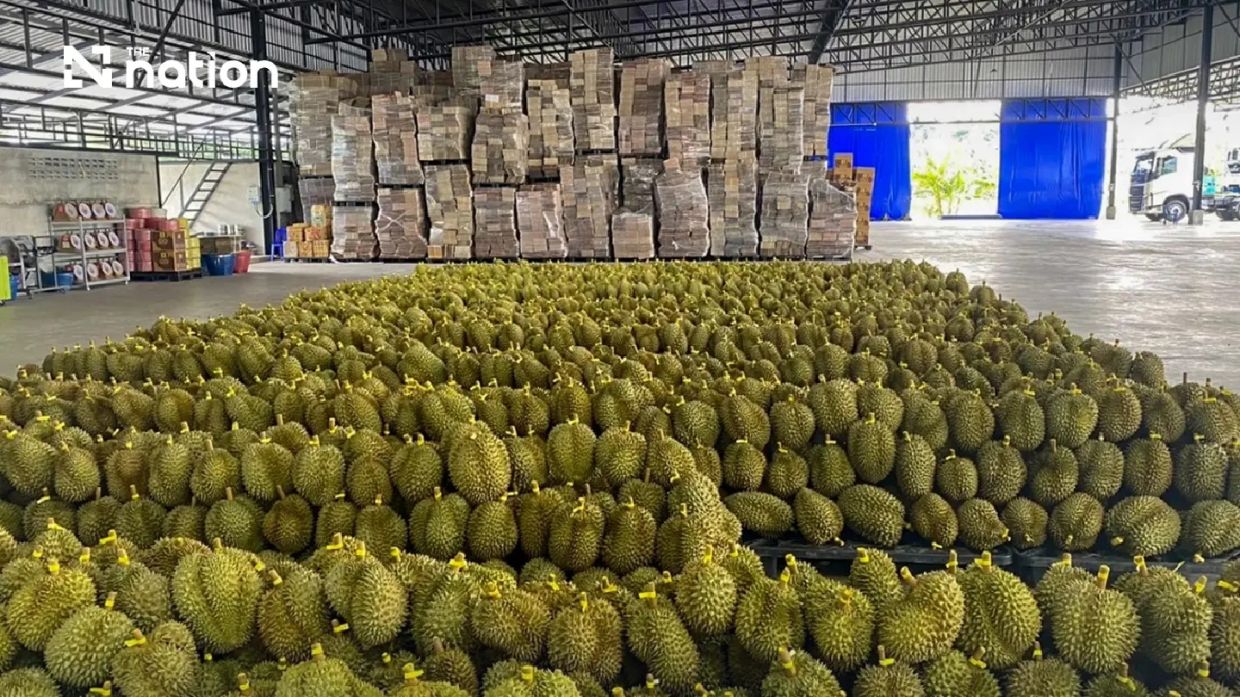
Thailand has achieved a historic breakthrough in durian exports, with fresh shipments to China exceeding THB100 billion in value during the first half of 2026. The remarkable performance reflects a fundamental shift in how the kingdom manages its most valuable agricultural export, moving away from reactive problem-solving towards a proactive, system-wide quality assurance framework. Over 870,000 tonnes of fruit were dispatched across more than 53,000 containers to Chinese markets by the end of June, positioning Thailand to exceed its ambitious full-year target of THB150 billion.
The success story underscores the strategic importance of durian exports to Thailand's agricultural economy and broader development goals. For Malaysian readers, this development carries particular significance given the regional competition in tropical fruit exports. Thailand's ability to capture and expand Chinese market share reflects broader trends in how Southeast Asian nations are leveraging their natural advantages while adapting to increasingly stringent international quality standards. The Thai government's experience offers lessons for other regional players seeking to enhance their agricultural competitiveness.
At the heart of the achievement lies a comprehensive overhaul initiated by Agriculture and Cooperatives Minister Suriya Jungrungreangkit within his first 90 days in office. Rather than maintaining ad-hoc responses to quality concerns, Thai authorities designed an integrated management system spanning the entire supply chain from farm to port. This institutional restructuring has proven decisive in addressing longstanding obstacles that previously undermined trader confidence and slowed export clearances. The streamlined approach has demonstrably accelerated shipments while maintaining the rigorous standards demanded by Chinese regulators and consumers.
Central to this transformation are the so-called "Four Nos" protocols, which establish clear benchmarks preventing immature fruit, pest infestation, fraudulent origin labelling, and contamination by Basic Yellow 2, a food additive banned in many markets. These measures address the specific challenges that had plagued Thai durian exports and repeatedly triggered rejections or delays at Chinese ports. By embedding these standards into production and handling procedures rather than relying solely on terminal inspections, Thai exporters have effectively shifted quality assurance upstream, where problems can be prevented rather than detected. This approach has resonated strongly with Chinese importers seeking reliability and consistency.
The regulatory architecture supporting these measures represents a significant institutional innovation. Thailand's Department of Agriculture now functions as a centralized coordinator, integrating efforts across the National Bureau of Agricultural Commodity and Food Standards, extension services, customs authorities, producing provinces, testing laboratories, private operators, and Chinese regulatory counterparts. This horizontal coordination marks a departure from traditional siloed bureaucratic structures common across Southeast Asia. By pooling expertise and data, Thai authorities have created transparency and rapid-response capability that individual agencies could never achieve in isolation.
Technology infrastructure underpins the system's effectiveness. Electronic phytosanitary certificates linked to traceability databases allow regulators and trading partners to verify product origins and handling practices in real-time. The four-layer PLUS screening methodology applies scientific risk assessment at each critical control point, replacing subjective inspection with data-driven decision-making. These tools reduce clearance times while simultaneously strengthening assurance about product safety and authenticity. For regional exporters, the model demonstrates how digital systems can enhance both efficiency and credibility in high-value agricultural trade.
The previous challenges that plagued Thai durian exports illuminate why this systematic overhaul proved necessary. Detections of cadmium contamination, seed borers, false origin claims, and immature fruit had accumulated into a credibility crisis within the Chinese market. Chinese regulators responded by tightening inspection protocols, which created bottlenecks that further damaged Thai competitiveness. The vicious cycle threatened Thailand's position as the world's leading durian exporter despite the country's natural production advantages. Suriya's intervention broke this pattern by demonstrating that quality improvements and regulatory streamlining can reinforce rather than contradict each other.
The ministry's strategic reorientation towards what officials term the "Smart Regulator" model carries implications beyond durian. By deploying science, technology, and risk management as tools rather than relying on command-and-control enforcement, Thai policymakers have outlined a template applicable to other agricultural exports facing similar market pressures. Coffee, rice, cassava, and seafood exporters could potentially adapt comparable systems to their respective challenges. The approach inverts conventional assumptions about regulation as a burden on producers, instead positioning it as a competitive advantage by building durable trader confidence.
Suriya's public statements emphasise the sustainability dimension underlying these achievements. Rather than pursuing short-term export maximisation through unsustainable intensification, the minister framed the durian success as establishing foundations for long-term leadership. By stabilising farmer incomes through reliable quality standards, enabling operators to compete on level footing, and building international market acceptance, Thailand is pursuing a growth strategy that can endure. This messaging resonates with global sustainability narratives and positions Thai agriculture as development model rather than merely commodity supplier.
The THB100 billion milestone in first-half exports carries particular resonance given China's centrality to regional agricultural markets. Chinese consumers increasingly demand product traceability and quality assurance, preferences that have become non-negotiable for exporters. Thailand's systematic response to these expectations contrasts with reactive approaches common in other Southeast Asian nations. As Chinese market standards continue tightening, suppliers who have already embedded quality systems into their operations possess substantial structural advantages over competitors attempting to retrofit compliance at the last moment.
For Malaysian stakeholders observing Thailand's durian export success, several insights merit consideration. Thailand's willingness to invest in institutional capacity—training officials, deploying technology, and coordinating across bureaucratic silos—preceded rather than followed export growth. This sequencing reversed the typical assumption that countries enhance regulatory capacity only after achieving export volumes. Additionally, Thailand leveraged a commodity with natural comparative advantage while simultaneously raising quality standards, avoiding the false choice between volume and premium positioning. Finally, by positioning the agricultural ministry as facilitator and enabler rather than mere inspector, Thai authorities created stakeholder buy-in from farmers and traders.
As Thailand pursues its THB150 billion full-year target, success remains contingent on sustained institutional commitment and continued investment in supply chain infrastructure. The achievement to date demonstrates that even established agricultural exporters can reinvent their competitive positions through strategic governance innovation. For a region where agricultural exports remain economically vital, Thailand's durian model offers practical evidence that quality leadership and market expansion need not represent competing objectives.

