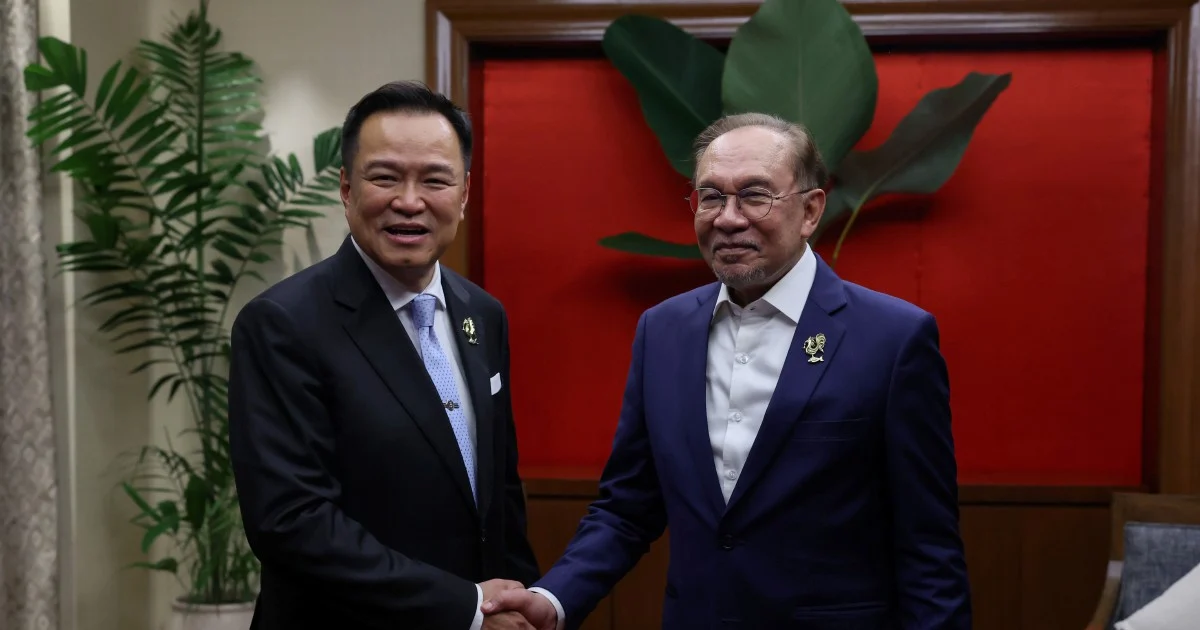
Thai Prime Minister Anutin Charnvirakul is scheduled to arrive in Malaysia on July 9 for a two-day official visit that will see him engage in high-level talks with Prime Minister Datuk Seri Anwar Ibrahim. The bilateral meeting represents another opportunity for the two neighbours to address longstanding security concerns and explore avenues for deeper economic integration in a period marked by regional tensions and shifting trade dynamics.
Border security has emerged as a critical focal point in Malaysia-Thailand relations, particularly given the shared challenges emanating from cross-border criminal networks and militant activities in the northernmost regions. The 595-kilometre land boundary between the two countries has historically presented enforcement difficulties, with trafficking of drugs, weapons, and contraband goods remaining persistent problems that strain law enforcement resources on both sides. The visit provides a formal platform for senior officials to review existing bilateral security mechanisms and potentially establish new cooperative frameworks aimed at strengthening intelligence sharing and coordinated patrols along sensitive frontier areas.
The drug trafficking menace represents perhaps the most pressing security issue for both nations. Myanmar's ongoing internal instability has created a vacuum that transnational criminal syndicates have exploited, using Thai and Malaysian territories as transit routes for methamphetamine and other synthetic narcotics destined for regional and international markets. Enhanced cooperation on this front could include expanded joint task forces, real-time information exchange systems, and harmonised legal frameworks to facilitate prosecution of traffickers operating across borders. Both countries have invested heavily in anti-narcotics operations, yet the problem persists, underscoring the need for more sophisticated bilateral coordination.
Beyond security, economic cooperation will feature prominently in the discussions. Malaysia and Thailand maintain substantial trade relationships, with bilateral commerce exceeding several billion dollars annually. Both nations recognise the potential for expanded cooperation in sectors including manufacturing, agriculture, tourism, and digital services. The Thai government has been actively promoting regional economic integration through initiatives like the Ayeyawady-Chao Phraya-Mekong Economic Cooperation Strategy, in which Malaysia participates. During Anutin's visit, officials may explore mechanisms to reduce trade barriers, facilitate investment flows, and establish special economic zones that benefit from proximity and complementary industrial bases.
Tourism cooperation between the two nations presents untapped commercial opportunities. Malaysian visitors represent a significant source market for Thailand's tourism industry, while Thai tourists increasingly frequent Malaysian destinations. Joint marketing initiatives, simplified visa procedures, and coordinated infrastructure development at border crossings could enhance visitor flows and generate substantial revenue for both economies. The post-pandemic tourism recovery has created renewed interest in streamlining cross-border travel experiences, making this an opportune moment for bilateral cooperation.
Regional geopolitical developments form an implicit backdrop to the visit. Both Malaysia and Thailand navigate complex relationships with major powers, manage concerns about maritime security in shared waters, and participate in multilateral forums including ASEAN and BIMSTEC. The strengthening of bilateral ties reinforces ASEAN cohesion during a period when external pressures and internal divergences test regional solidarity. Thailand's role as a bridge between mainland Southeast Asia and maritime Southeast Asia, combined with Malaysia's pivotal position in the Strait of Malacca and broader Indo-Pacific affairs, makes bilateral cooperation strategically significant beyond immediate bilateral interests.
The timing of Anutin's visit also reflects broader diplomatic cycles within Southeast Asia. Official visits at the prime ministerial level serve multiple purposes beyond the formal agenda items. They signal continued commitment to bilateral relationships, provide opportunities for personal relationship-building among senior leaders, and allow both governments to demonstrate to domestic constituencies that they are actively pursuing national interests through diplomacy. For Malaysia, hosting a Thai PM underscores its role as a regional diplomatic hub, while for Thailand, engaging with Malaysia's current leadership reflects Bangkok's commitment to maintaining constructive relationships across the region.
Antecedents to this visit include previous high-level exchanges and ongoing dialogue through established bilateral mechanisms. The Malaysia-Thailand Joint Commission on Bilateral Cooperation and other institutional frameworks provide structured settings for officials to negotiate specific agreements and coordinate policies. During Anutin's visit, these mechanisms may be activated to advance pending initiatives or launch new collaborative endeavours. The formal nature of a prime ministerial visit typically results in joint statements, memoranda of understanding, or announcements of expanded cooperation in designated sectors.
For Malaysian stakeholders, the visit carries implications for border security policies, trade negotiations, and regional positioning. Strengthened cooperation with Thailand could enhance Malaysia's capabilities in combating transnational organised crime, a persistent challenge that affects domestic stability and public safety. Enhanced trade ties offer growth opportunities for Malaysian businesses, particularly small and medium enterprises operating in border regions that could benefit from reduced barriers and improved logistics. Additionally, deepening Malaysia-Thailand relations contributes to broader Southeast Asian stability and prosperity, benefiting Malaysia through a more secure and prosperous neighbourhood.
The visit exemplifies how bilateral diplomacy remains a fundamental pillar of Southeast Asian international relations. Despite the presence of multilateral forums and regional mechanisms, direct country-to-country engagement at the highest levels continues to drive policy coordination and relationship-building. Prime ministerial visits create momentum for bureaucratic follow-up and signal political will necessary to translate cooperative agreements into tangible outcomes. As Anutin prepares for his Malaysia engagement, both nations have opportunities to advance shared interests while navigating the complexities of 21st-century regional diplomacy.

