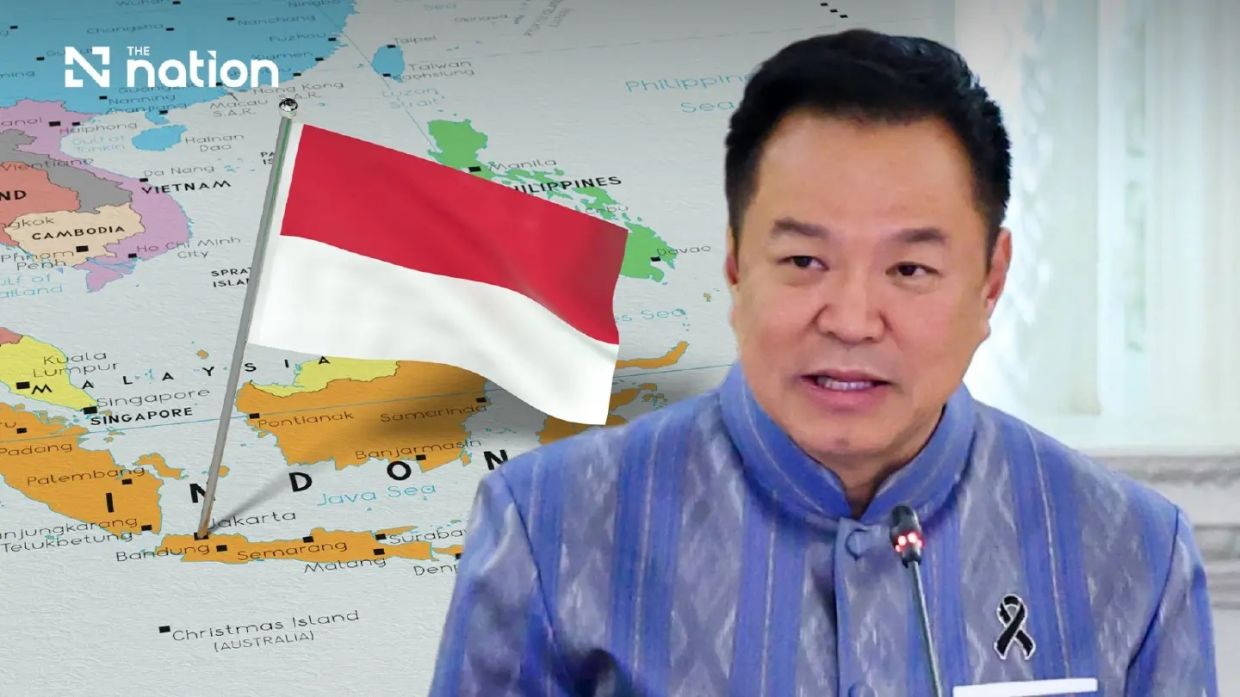
Prime Minister and Interior Minister Anutin Charnvirakul is heading to Indonesia for an official visit on August 3–4, marking the first such trip by a Thai prime minister in 15 years and signalling renewed diplomatic momentum between two of Southeast Asia's heavyweight nations. The journey underscores Bangkok's determination to deepen engagement with the region's largest economy at a time of shifting global dynamics and intensifying regional competition.
The itinerary reflects an ambitious agenda that extends well beyond ceremonial courtesy. Anutin will hold substantive discussions with Indonesian President Prabowo Subianto on a broad spectrum of issues spanning trade and investment to food security, energy cooperation and education. These conversations will set the foundation for advancing practical partnerships that both governments believe can unlock tangible economic benefits for their citizens and businesses. The breadth of topics indicates recognition that modern bilateral relations must address interconnected challenges rather than operating in isolated silos.
A centrepiece of Anutin's visit involves addressing the Asean Secretariat in Jakarta, where he will articulate Thailand's regional vision and outline preparations for the country's assumption of the Asean chairmanship in 2028. This platform amplifies Thailand's voice within the bloc and demonstrates proactive thinking about the regional grouping's direction during a period when Southeast Asia faces unprecedented geopolitical and economic pressures. The speech will frame how Thailand intends to steer Asean towards greater cohesion and resilience.
Government Spokesperson Rachada Dhnadirek has characterised the visit as instrumental in translating governmental goodwill into concrete advancement of the bilateral strategic partnership. She emphasised Indonesia's significance as Asean's economic engine and most populous nation, with approximately 280 million people representing an enormous market that Thai enterprises—from multinational corporations to small and medium-sized businesses—are keen to penetrate more effectively. The sheer scale of Indonesia's economy and consumer base makes it strategically indispensable to Thai growth aspirations.
The economic opportunity extends across multiple sectors with significant implications for Thai exporters and investors. Improved bilateral relations could facilitate broader market access for Thai agricultural commodities, processed foods and services, while simultaneously strengthening supply chains and encouraging capital flows between the two economies. For Thailand's agribusiness sector in particular, closer ties with Indonesia offer pathways to reach hundreds of millions of additional consumers and establish production bases serving the broader Southeast Asian market. The visit signals government intent to actively facilitate these commercial connections rather than allowing them to develop haphazardly.
Beyond large corporations, the trip targets expansion opportunities for small and medium-sized Thai enterprises that currently lack visibility or established networks in Indonesia. Government officials view this engagement as a mechanism for generating employment and skills development across multiple sectors. The emphasis on knowledge and technology exchanges in complementary industries suggests both nations recognise mutual benefit in learning from each other's experiences and capabilities rather than viewing the relationship as zero-sum competition.
Rachada articulated a distinctly development-focused foreign policy rationale, positioning diplomatic engagement as a vehicle for economic advancement and improved living standards rather than treating international relations as separate from domestic prosperity. This approach reflects broader Thai government philosophy that foreign policy must ultimately serve the material interests of ordinary Thais through job creation, income growth and access to expanding markets. The framing demonstrates how bilateral diplomacy is being explicitly linked to economic nationalism and citizen welfare.
The timing of this visit assumes added significance given both nations' foundational roles in shaping Asean since its establishment. Thailand and Indonesia have historically exercised considerable influence over the regional bloc's trajectory and policy positions. With Asean confronting challenges ranging from economic inequality and transnational crime to geopolitical pressures from external powers, discussions between these two major players about unity, regional connectivity and sustainable development carry implications extending far beyond their bilateral relationship. The conversations will likely touch on how Asean can maintain centrality and agency amid great power competition in Southeast Asia.
The business component of the visit deserves particular attention. Anutin's participation in a forum organised jointly by the Indonesian Chamber of Commerce and Industry and the Thai Chamber of Commerce represents structured efforts to match companies seeking partnerships and investment opportunities. Such platforms can crystallise the abstract notion of closer relations into concrete commercial transactions that generate employment and tax revenue for both nations. The emphasis on private-sector engagement throughout the visit suggests Thai policymakers understand that government-level agreements mean little without active buy-in from businesses responsible for implementing them.
The detailed itinerary—encompassing official ceremonies, bilateral talks, delegation-level meetings and private-sector engagements—indicates meticulous planning designed to maximise the visit's productivity. The schedule incorporates meetings with Indonesia's Asean secretary-general to advance regional cooperation frameworks, demonstrating recognition that bilateral ties and multilateral engagement reinforce each other. Thailand's diplomatic calendar is clearly configured to advance interconnected objectives simultaneously.
From a Malaysian perspective, this Thai-Indonesian realignment bears watching. As the region's third-largest economy, Malaysia has its own interests in seeing healthy great-power relationships that contribute to regional stability and prosperity. Stronger Thai-Indonesian economic integration could create both opportunities and pressures for Malaysian businesses, depending on their competitive positioning. The emphasis on supply-chain connectivity and investment flows signals structural economic changes that may reshape intra-Asean commercial patterns.
Ultimately, Anutin's visit represents something deeper than diplomatic courtesy between neighbouring nations. It reflects recognition that in an era of economic uncertainty and geopolitical volatility, middle powers like Thailand and Indonesia must strengthen their mutual relationships to enhance their individual negotiating positions and collective influence. By prioritising practical partnership over rhetoric, Bangkok and Jakarta are potentially setting a model for how Asean nations can deepen engagement in ways that deliver genuine benefits to their populations and businesses.

