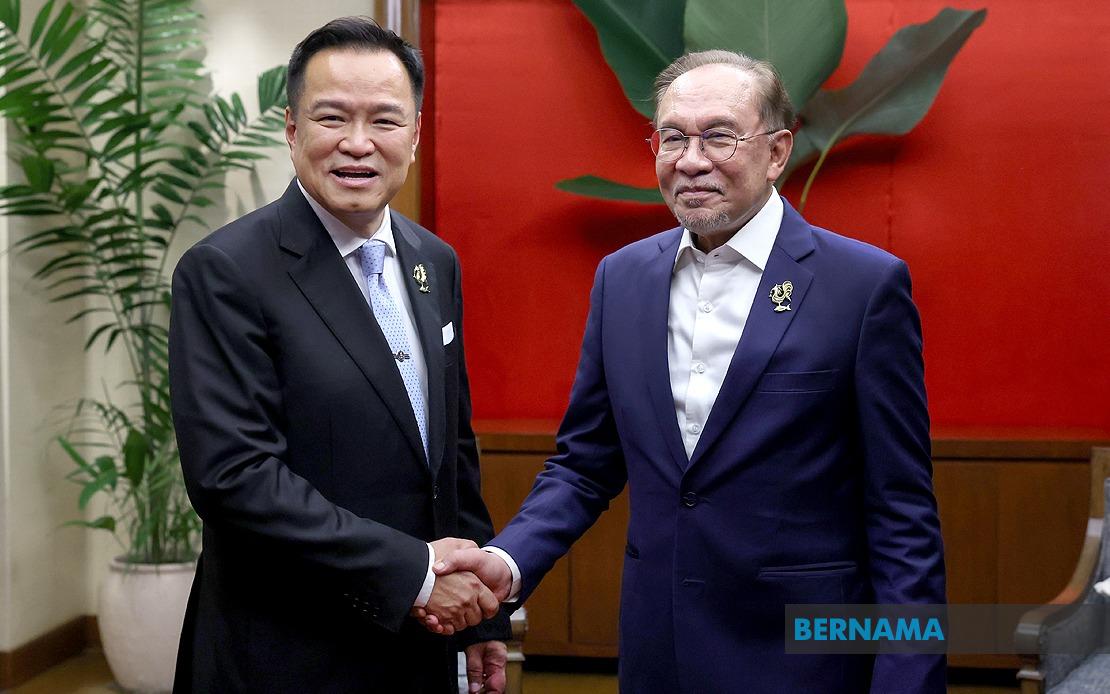
Thai Prime Minister Anutin Charnvirakul is set to arrive in Malaysia on Thursday, July 9, for a two-day official visit that coincides strategically with the inauguration of the new permanent Sadao border checkpoint two days later. The timing of his trip, accepted at the invitation of Malaysian Prime Minister Datuk Seri Anwar Ibrahim, underscores the significance both governments place on cross-border infrastructure development and the deepening of their bilateral relationship during a pivotal moment for Southeast Asian trade corridors.
The opening of the new Sadao crossing represents a substantial investment in streamlining movement between Thailand and Malaysia, replacing the existing checkpoint with a modern facility designed to handle the volume and complexity of contemporary cross-border commerce. The new Sadao Customs, Immigration and Quarantine Complex, situated in Songkhla province on the Thai side, will directly connect with Malaysia's Bukit Kayu Hitam checkpoint in Kedah state. This integrated approach to border management is expected to create a seamless transition point for goods and travellers moving between the two nations, reducing delays and improving efficiency in one of Southeast Asia's busiest land crossings.
Operational procedures for the new checkpoint reflect a commitment to accessibility and convenience. The facility will remain open from 5 am to 11 pm Thailand time on a daily basis under provisions established by a Ministry of Interior notification. This extended operating window accommodates the needs of both scheduled commercial traffic and spontaneous cross-border movement, particularly important for the significant daily traffic between Songkhla and Kedah that carries everything from agricultural products to manufactured goods destined for markets throughout the region.
Thailand's Cabinet formally approved the checkpoint opening on Tuesday, July 7, signalling the completion of preparations at the administrative level. Beyond the checkpoint itself, the Cabinet has directed relevant agencies to accelerate supporting infrastructure projects that will maximise the effectiveness of the new crossing. These include the construction of connecting roads on the Thai side designed to improve traffic circulation and reduce congestion bottlenecks that often plague border areas during peak periods. The government has also instructed agencies to establish shuttle bus services linking the checkpoint with inland areas, a practical measure that will extend the checkpoint's benefits to communities and businesses located further from the immediate border region.
Awareness and education initiatives form a critical component of the transition strategy. Thai authorities have received directives to intensify public information campaigns targeting the Dan Nok border community and beyond, focusing on the new traffic routes, updated customs and immigration procedures, and mechanisms designed to facilitate cross-border trade and tourism. Such campaigns are essential given that border infrastructure changes often disrupt established patterns of movement and business practice, and clear communication can substantially reduce friction during the transition period.
The visit by Anutin represents his third journey to Malaysia since becoming prime minister, reflecting the frequency of high-level engagement between Bangkok and Kuala Lumpur. He previously attended the ASEAN Summit and Related Summits in Kuala Lumpur in October 2023, followed by an official visit on November 26 of the same year. This pattern of engagement demonstrates a sustained commitment to regional cooperation and bilateral relationship management at the highest political levels, ensuring that both countries maintain aligned positions on issues affecting their mutual interests.
Government spokesperson Ratchada Thanadirek emphasised that Anutin's visit exemplifies the two nations' dedication to advancing bilateral cooperation and achieving tangible results before the 70th anniversary of their diplomatic relations in 2027. This forward-looking perspective positions near-term infrastructure improvements within a longer-term framework of strategic partnership, suggesting that both countries envision the period leading to 2027 as an opportunity to consolidate and expand cooperation across multiple sectors. The checkpoint opening thus becomes not merely a practical border management upgrade but a symbolic affirmation of commitment to shared prosperity and regional stability.
For Malaysia, the new Sadao checkpoint carries particular significance given the prominence of cross-border logistics to the Malaysian economy and the strategic importance of maintaining efficient connections with Thailand. Improved border infrastructure directly translates to reduced shipping times and lower transaction costs for Malaysian exporters and importers, enhancing competitiveness in regional and global markets. The checkpoint modernisation also supports Malaysia's broader objectives of strengthening ASEAN connectivity and positioning itself as a hub for Southeast Asian trade and investment flows.
The broader implications extend beyond bilateral Thailand-Malaysia relations to encompass regional economic integration. Efficient border crossings are foundational to ASEAN's ambitious regional integration agenda, enabling seamless movement of goods, services, and people across member states. The Sadao-Bukit Kayu Hitam crossing serves as a key node in Thailand-Malaysia-Singapore supply chains and is vital for facilitating trade between the Mekong subregion and Southeast Asian markets. As regional economic blocs increasingly compete on the basis of logistical efficiency and trade facilitation, investments in border infrastructure become competitive necessities rather than optional enhancements.
Tourism represents another significant beneficiary of improved border facilities. The Malaysia-Thailand border region attracts substantial visitor flows, particularly from third countries transiting between attractions in both nations. Reduced wait times and simplified procedures enhance the visitor experience and encourage longer regional trips that benefit multiple economies. The shuttle bus services and improved road connectivity explicitly address the needs of tourists unfamiliar with border procedures, making cross-border travel more accessible to leisure visitors and boosting tourism revenues for communities on both sides of the frontier.
The checkpoint transition also reflects evolving standards in border management infrastructure across ASEAN. Modern facilities equipped with contemporary technology for customs inspection, health screening, and immigration processing represent substantial capital investments that countries undertake to remain competitive within regional trade networks. Thailand and Malaysia's collaborative approach to modernising this crossing demonstrates recognition that border infrastructure is no longer viewed as a purely national concern but as a shared responsibility requiring coordinated investment and operational harmonisation.
Anutin's visit will likely encompass discussions of bilateral arrangements surrounding the checkpoint opening, including protocols for handling disputes, coordination mechanisms for infrastructure maintenance, and schedules for future upgrades. Bilateral border management operates most smoothly when both countries maintain regular dialogue and shared understanding of procedural standards and expectations. High-level visits provide forums for resolving potential friction points before they escalate and for identifying emerging areas of cooperation requiring formal agreements or memoranda of understanding.
Looking forward, the success of the new Sadao checkpoint will serve as a benchmark for border infrastructure development elsewhere in Southeast Asia. Both countries will be monitoring metrics including traffic throughput, average processing times, and trader and traveller satisfaction to assess performance against objectives. Should the checkpoint function effectively and deliver anticipated efficiency gains, it may serve as a model for similar initiatives along other ASEAN borders, potentially influencing regional standards for border facility design and operations management. The July 11 opening thus marks not merely a local infrastructure milestone but potentially a significant moment in the evolution of regional trade facilitation architecture.

