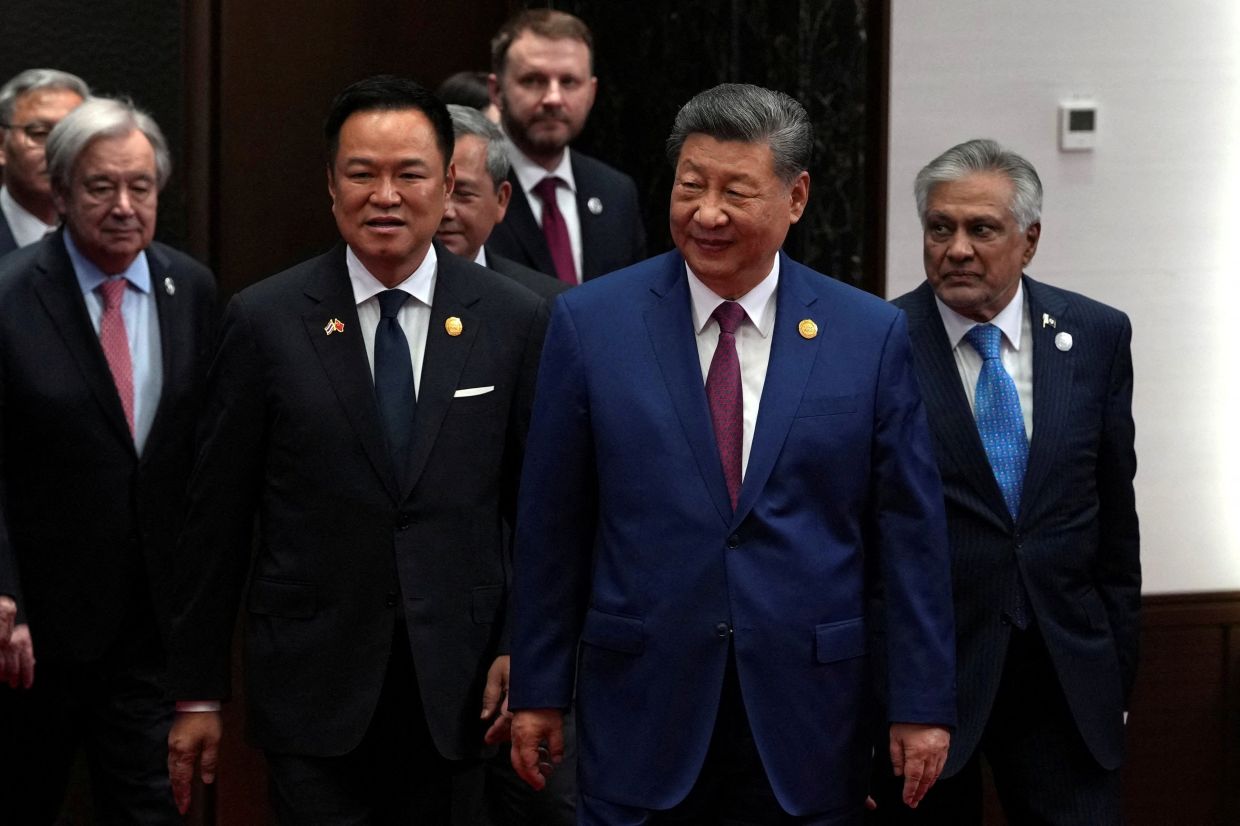
Thai Prime Minister Anutin Charnvirakul brought an unconventional flourish to high-level diplomacy this week when he performed a classic song for Chinese Premier Li Qiang during an official lunch in Beijing. The performance, documented in footage released by Anutin's office, showed the Thai leader serenading his counterpart with a rendition of a Teresa Teng hit—a choice that carried symbolic weight given the Taiwanese singer's iconic status across East and Southeast Asia. The gesture underscored how Anutin has made musical expression a defining element of his approach to international relations, blending formal state business with personal touches that humanise diplomatic encounters.
The Beijing performance represents only the latest in a sustained campaign of musical outreach by Thailand's leader. Earlier in July, Anutin met with Malaysian Prime Minister Anwar Ibrahim and the two performed together, with Anutin playing saxophone while his counterpart sang "My Way", the Frank Sinatra standard. The collaborative nature of that performance—where both leaders participated actively rather than one merely entertaining the other—suggested a deliberate strategy to create moments of apparent equality and shared cultural enjoyment. Such performances stand in marked contrast to the formal rigidity that typically characterises high-level diplomatic functions, where interactions tend toward scripted speeches and carefully choreographed photo opportunities.
Anutin's musical outreach has extended throughout Southeast Asia with considerable frequency. During a visit to Hanoi last month, he played a Vietnamese traditional instrument alongside local musicians in front of Prime Minister Le Minh Hung, demonstrating a willingness to engage with host-country cultural forms rather than simply showcasing Thai artistry. This pattern of cultural adaptation—choosing appropriate instruments and musical styles for each destination—suggests careful preparation and a genuine interest in cultural exchange rather than performances undertaken for mere novelty value. The approach has proven effective in generating positive media coverage and creating memorable moments that transcend the usual diplomatic formalities.
The timing of these performances reflects Anutin's recent consolidation of power within Thai politics. He assumed the position of Prime Minister in September 2025 before securing his mandate through February elections, a sequence that allowed him to establish his public image before facing electoral validation. His musical diplomacy appears designed in part to reinforce a persona that bridges Thailand's traditional hierarchical social structures with contemporary populism. By presenting himself as cultured, accomplished, and personable rather than austere or remote, Anutin has crafted a leadership image that appeals across generational divides and social classes.
Anutin's musical credentials extend well beyond diplomatic performances. He is an accomplished hobbyist jet pilot and proficient with both piano and Thai flute, suggesting genuine musical passion rather than political calculation alone. These skills have been deployed strategically in recent months, including a publicised performance with a Thai teenager who achieved viral fame through a rock performance on the international competition show America's Got Talent. Such collaborations with rising musical talent serve multiple purposes: they demonstrate Anutin's accessibility to younger generations, his support for Thai cultural expression, and his willingness to step outside traditional prime ministerial confines.
The philosophical underpinning of Anutin's approach appears rooted in a particular vision of Thai leadership that respects traditional social order while claiming affinity with ordinary citizens. His construction industry background might suggest a purely technocratic operator, yet his public presentation emphasises artistic sensitivity and cultural appreciation. This positioning resonates particularly well in Thailand's still-conservative social landscape, where respect for institutional hierarchy remains paramount even as modernisation pressures mount. By combining deference to formal state protocols with informal cultural engagement, Anutin navigates potentially conflicting expectations.
For regional observers, Anutin's musical diplomacy offers insight into contemporary Southeast Asian statecraft. Thailand, as a middle power seeking to maintain productive relationships with major powers including China while preserving autonomy within regional structures, benefits from diplomatic approaches that emphasise personal warmth and cultural affinity. Musical performances create informal channels of communication and goodwill that complement official policy discussions, potentially facilitating problem-solving on contentious issues. The strategy reflects a broader regional trend toward softer, more culturally-informed diplomatic practices that move beyond Cold War-era formality.
The choice of musical repertoire carries its own significance. Teresa Teng's prominence across Chinese-speaking and Southeast Asian communities makes her music an ideal bridge for cross-cultural understanding, while Frank Sinatra's international status signals cosmopolitan sophistication. These selections demonstrate strategic thinking about what resonates with particular audiences—a consideration that extends to Anutin's adoption of host-country instruments and musical styles when abroad. Such attention to cultural nuance suggests either excellent advisory support or genuine personal investment in understanding the nations he visits.
As Anutin consolidates his leadership domestically and internationally, his musical diplomacy may well become an established feature of Thai foreign policy under his administration. Whether this approach proves substantively consequential or remains primarily symbolic will depend on whether the goodwill generated through performances translates into concrete policy alignment. Nevertheless, in an era when traditional diplomatic channels often carry baggage from historical disputes and geopolitical competition, the introduction of cultural and artistic elements offers genuine potential for relationship-building across Southeast Asia.

