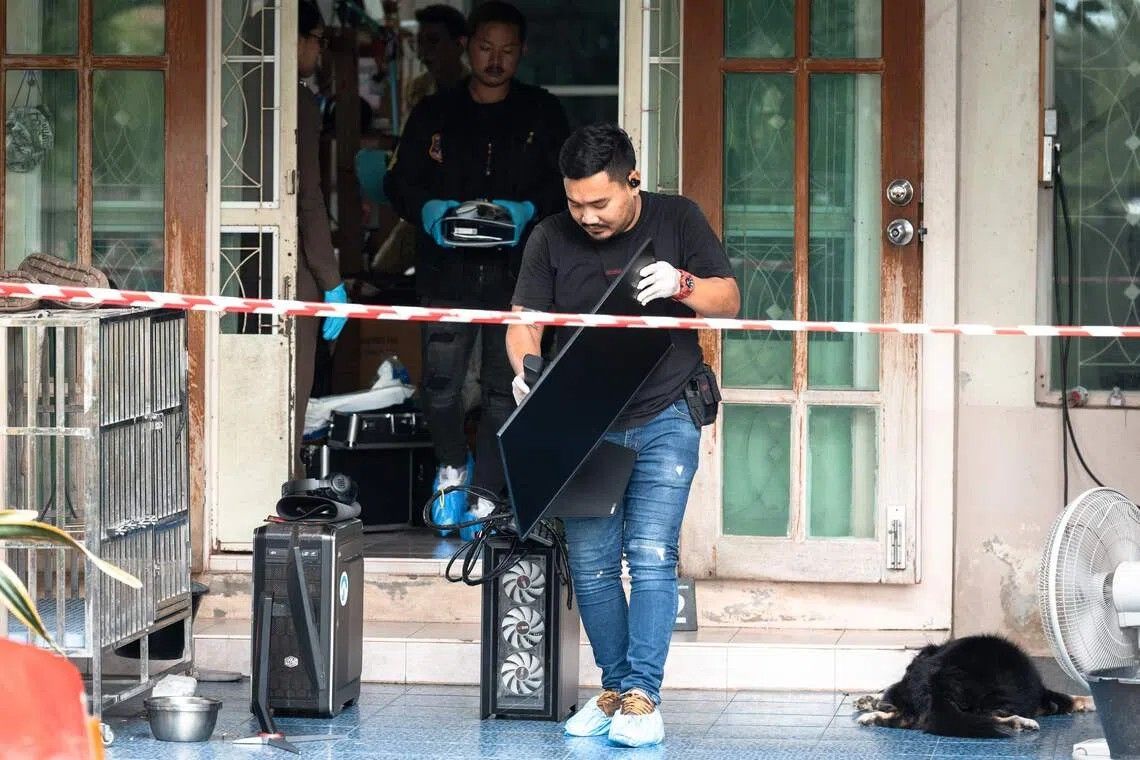
Thai law enforcement has launched an intensive digital forensics investigation into the online activity of a 14-year-old suspect involved in a shooting incident at Debsirin Nonthaburi School on August 7, with particular focus on his internet searches regarding mass shooting incidents in the United States. The examination of the teenager's computer records has revealed that around late July he conducted searches for information about US school shootings while also spending significant time engaged with video games featuring violent content. Though these digital discoveries have become central to the investigative narrative, police officials have been careful not to directly attribute causation between the online behaviour and the fatal attacks, instead framing these elements as part of a broader effort to construct a comprehensive understanding of events leading to the tragedy.
The investigation has uncovered a sequence of events suggesting the teenager was responsible not only for the school shooting but also for the deaths of his grandparents at their residence in Bang Khu Rat subdistrict, Bang Bua Thong district. Police believe he departed the family home after the killings occurred and subsequently made his way to Debsirin Nonthaburi School, where the shooting took place later that same morning. When officers and forensic teams accessed the property following the discovery of the grandparents' bodies, investigators found that the front entrance had been deliberately locked from the outside, a detail that has contributed to the timeline reconstruction efforts.
Wattana Yichin, the commissioner of Provincial Police Region 1, personally oversaw the examination of the house as the investigation proceeded. The presence of senior police leadership in this phase of the enquiry underscores the severity with which Thai authorities are treating the matter. The meticulous documentation of the scene and the sequence of events represents a critical component of the broader investigative framework that police are constructing.
Background information provided to investigators by the teenager's uncle has painted a portrait of a socially isolated youth living with his grandparents since early childhood. The relative described the boy as someone who invested considerable time in computer gaming activities and maintained a generally withdrawn demeanor from those around him. Notably, the uncle reported observing no obvious indicators of familial conflict or visible signs of psychological distress in the period before the incident occurred. This absence of readily apparent warning signs has complicated efforts to identify potential precipitating factors.
The firearm used in the shooting was legally registered to the teenager's grandfather, according to police documentation. This detail has raised questions about weapon security and supervision within the household, though authorities have not yet publicly elaborated on how a teenager gained access to the registered firearm or whether there were apparent lapses in storage protocols.
Investigators remain focused on constructing a comprehensive account of events and identifying any contributing factors that might explain the attacks. Police have explicitly noted that they have not established any causal link between the suspect's violent gaming habits or his online searches and his actions, instead viewing these elements as part of a larger investigative picture. The enquiry is examining multiple potential explanations, including whether the teenager experienced difficulties or conflicts at school that might have contributed to his state of mind.
Thananyaporn, the 60-year-old younger sister of the deceased grandfather and aunt of the student in question, has provided family context that complicates simplistic explanations of the incident. She described the teenager as someone who rarely ventured outside the home, with his grandfather typically providing transportation to and from school each day. His social world appeared extraordinarily circumscribed compared to peers, lacking the friendship networks and outdoor activities that characterize typical adolescent development. The boy's parents had separated, and his grandparents had assumed the primary caregiving role from his childhood, a circumstance that the aunt emphasised had been characterised by deep affection and commitment.
According to Thananyaporn's account, the household held considerable educational and professional standing. The grandmother was employed as a teacher, while the grandfather was a retired bank manager known for speaking gently to his grandson. The family structure presented an outwardly stable environment, and the aunt has firmly rejected suggestions that family dysfunction or domestic problems contributed to the tragedy. She characterised the boy as quiet and courteous in demeanor, someone whose personality and circumstances had never suggested to her that such violence could occur.
The case presents a troubling convergence of factors that investigators are attempting to disentangle: a socially isolated teenager with limited peer connections, extensive engagement with violent digital media, documented curiosity about real-world mass shooting incidents, and access to a legally registered firearm. The investigation illustrates the complexities facing law enforcement agencies across Southeast Asia as they grapple with cases involving adolescents and internet-facilitated behaviour. Thai authorities must balance their examination of the teenager's online activity against the broader biographical and social context of his life, recognising that single-factor explanations rarely account for such extreme acts of violence.
The incident has implications extending beyond Thailand, particularly for Malaysia and other regional nations where similar concerns about youth exposure to violent content and the psychological effects of social isolation have emerged in recent years. As countries across Southeast Asia develop policies and interventions around youth mental health, digital literacy, and firearm safety, the findings from this investigation may offer valuable insights into the warning signs and risk factors that law enforcement and educators should monitor.

