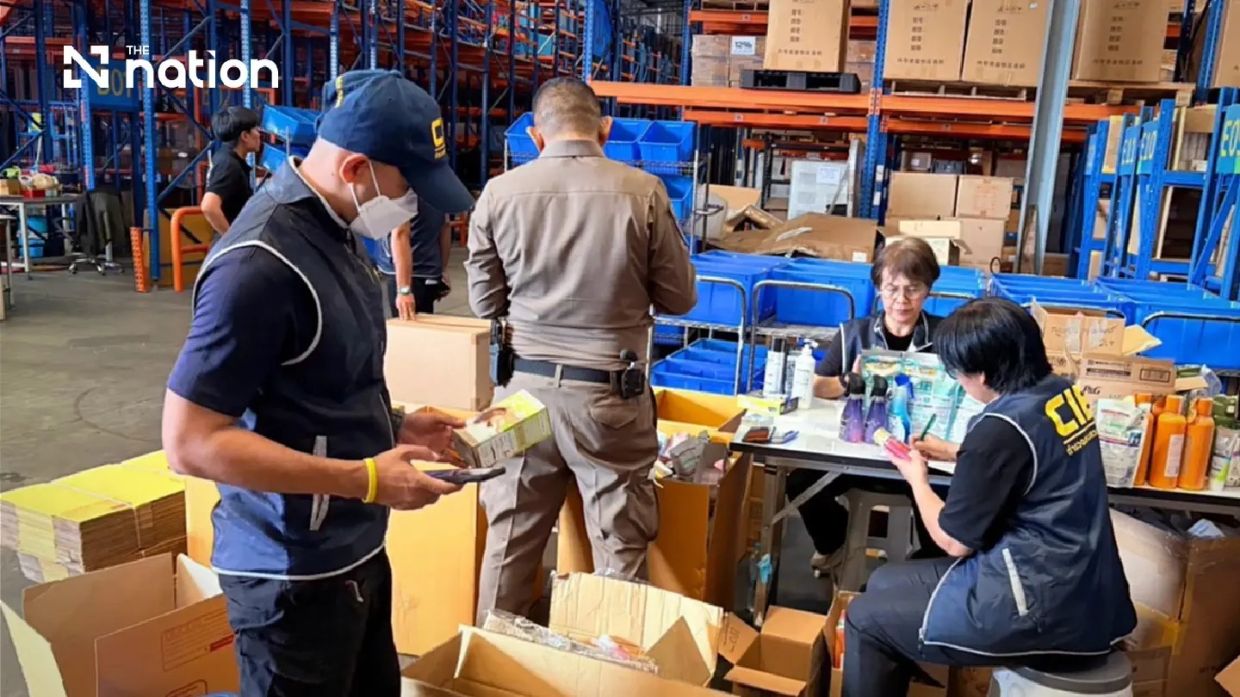
Thai authorities have uncovered a sprawling underground distribution network centred on a warehouse in Bang Phli district, Samut Prakan, that was supplying tens of thousands of unapproved Japanese consumer products to online retailers. The Consumer Protection Police Division, acting on orders from Pol Maj Gen Kongkrit Lertsittikul, conducted a major raid on Thursday, 13 August, that resulted in the seizure of 83,483 items classified across 116 distinct product categories. The confiscated goods—primarily cosmetics, dietary supplements, and medicinal preparations—carry an estimated street value exceeding 8.34 million baht and represent a significant breach of Thailand's consumer safety regulations.
The operation represents a calculated attempt to circumvent Thailand's mandatory import and labelling requirements for health and beauty products. Investigators determined that the entire shipment originated from Japan but never underwent the legally mandated safety assessments or received certification from Thai regulatory authorities. More critically, none of the products displayed Thai-language labelling as required by law, leaving consumers unable to make informed purchasing decisions or access critical usage information, dosage instructions, or ingredient disclosures. This deliberate omission constitutes a particularly egregious violation of consumer protection standards, as it deliberately obscured product information from end-users in the Thai market.
The warehouse itself had evolved from a simple storage facility into a sophisticated logistics hub servicing multiple online retailers. Over a period exceeding four years, the operation had steadily expanded its scope and complexity, processing between 200 and 300 items daily for packing and distribution. The business model was deceptively simple: retailers paid a modest packing fee of 10 to 12 baht per box to have their products consolidated, prepared, and readied for shipment to customers across various digital commerce platforms. This arrangement allowed participating online sellers to maintain plausible deniability regarding product authenticity or regulatory compliance, effectively distancing themselves from direct responsibility for the illegal goods passing through their channels.
For Malaysian readers, this enforcement action carries important implications regarding cross-border e-commerce and product safety. Many Southeast Asian consumers, including those in Malaysia, frequently purchase cosmetics and supplements from online platforms offering products sourced from Japan and other international markets. The Bangkok warehouse operation demonstrates how integrated regional supply chains can be exploited to distribute goods that have not met local regulatory standards. Similar distribution networks potentially operate in Malaysia and other ASEAN countries, posing comparable risks to unsuspecting consumers who may assume that products listed on legitimate e-commerce platforms have undergone proper quality vetting and regulatory approval.
The regulatory violations identified during the raid encompassed multiple layers of Thai law, reflecting the seriousness with which authorities view such breaches. Investigators documented offences under the Cosmetics Act, the Hazardous Substances Act, the Food Act, and the Drug Act—a comprehensive legal framework designed to protect public health. The breadth of applicable legislation underscores why importing cosmetics, supplements, and medicinal products without certification represents such a significant infraction. Each statute exists to ensure that specific categories of consumer products meet stringent safety, quality, and labelling standards before reaching the market. By bypassing these checks, the warehouse operation exposed Thai consumers to potential health risks ranging from allergic reactions to ineffective or contaminated supplements and medicines.
The enforcement action also highlights the vulnerability of e-commerce supply chains to regulatory capture and criminal exploitation. The warehouse operators had successfully maintained their illegal distribution network for more than four years, suggesting that oversight mechanisms either failed to detect the operation or lacked sufficient resources to intervene earlier. The investigation ultimately succeeded only after accumulating consumer complaints about products lacking Thai-language labels—a reactive rather than proactive approach to consumer protection. This pattern reflects a broader challenge confronting regulators across Southeast Asia, where the explosive growth of online retail has outpaced the capacity of traditional enforcement bodies to monitor and control product flows.
The products at the centre of this investigation encompassed a wide array of cosmetic and health-related items, all sourced from Japan. Japan has earned a reputation throughout Asia for producing high-quality beauty and wellness products, and this market perception likely aided the warehouse operation's commercial success. Consumers often perceive Japanese cosmetics and supplements as inherently superior to domestic alternatives, making them attractive to online shoppers across Thailand, Malaysia, and neighbouring countries. The warehouse operators exploited this preference by offering Japanese products at prices that would have been difficult to achieve through legitimate import channels, thereby undercutting licensed retailers while simultaneously avoiding regulatory compliance costs. The significant markup potential drove the operation's expansion and sustained its operation across multiple years.
The legal proceedings now underway against those involved will test the robustness of Thailand's consumer protection framework. The referral to Sub-Division 4 of the CPPD ensures that specialised investigators trained in product regulation and import compliance will oversee the prosecutions. Conviction under these multiple statutes could result in substantial penalties, including fines and potential imprisonment for those deemed responsible for orchestrating the distribution network. The severity of potential sentences may serve as a deterrent to similar operations, though the commercial incentives underlying illegal product distribution—substantial profit margins and relatively low detection risks—will likely continue motivating such schemes across the region.
For Malaysian consumers and regulators, the Thai warehouse raid provides a cautionary case study regarding the risks of unregulated online commerce. Malaysia's own regulatory bodies, including the Ministry of Health and the Malaysian Medical Device Authority, face comparable challenges in monitoring the flood of imported health and beauty products entering the country through e-commerce channels. The incident suggests that informal cooperation and intelligence-sharing between Southeast Asian regulatory authorities regarding suspicious product shipments and distribution networks could enhance collective enforcement effectiveness. Additionally, consumer awareness campaigns highlighting the importance of verifying product authenticity, checking for proper labelling, and purchasing from licensed retailers remain essential components of any comprehensive regulatory strategy.
The broader context suggests that this particular warehouse operation, while significant in scale, represents merely one node within a much larger network of illegal product distribution across Southeast Asia. The ease with which unapproved goods can transit through multiple countries, the sophisticated use of e-commerce platforms to reach consumers, and the relatively modest investment required to establish distribution infrastructure all point toward systematic vulnerabilities in current regulatory approaches. Addressing these challenges effectively will require enhanced cooperation among national authorities, stronger verification requirements for online retailers, and sustained investment in forensic investigation capabilities focused on supply chain integrity. Until such measures are implemented comprehensively, similar operations will likely continue operating across the region, exposing millions of consumers to products of uncertain safety and efficacy.

