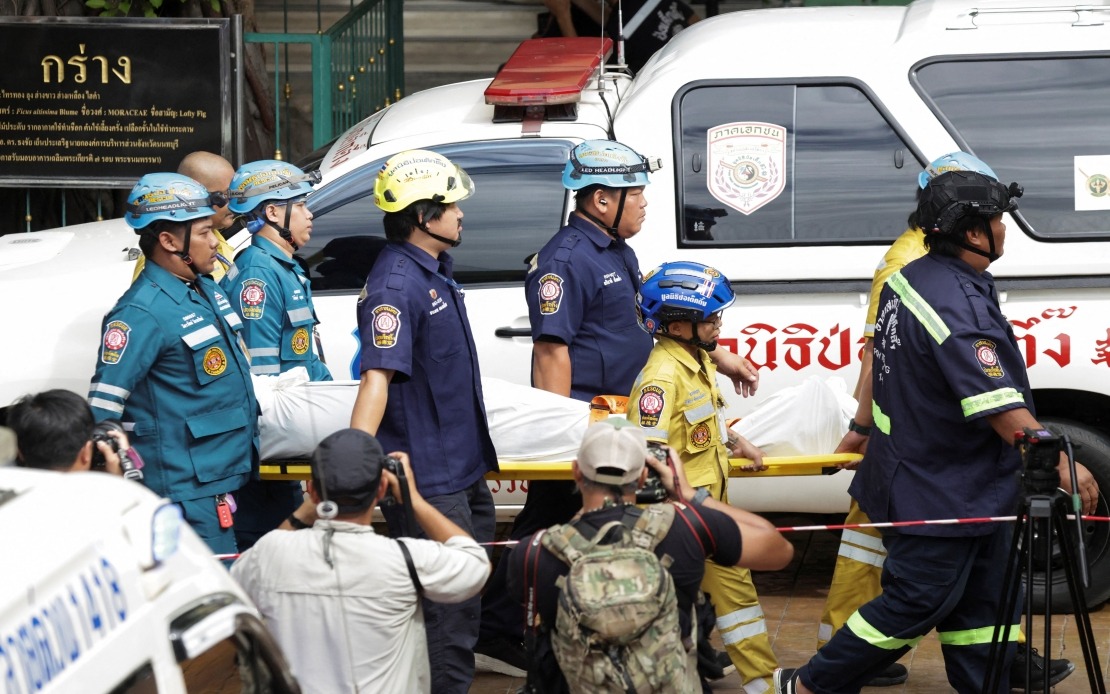
A student suspect accused of conducting a mass shooting at a school in Nonthaburi province on Friday is believed to have fatally shot his grandparents at their residence before carrying out the attack on the educational facility. The revelation emerged from preliminary police investigations following what authorities are describing as one of Thailand's deadliest recent school shooting incidents, raising fresh concerns about access to firearms and youth violence in the country.
Lieutenant General Trairong Piwpan, deputy inspector-general of the Royal Thai Police and official spokesperson, disclosed that the suspect had discharged 26 rounds before arriving at Debsirin Nonthaburi School around 10am on the morning of the incident. Subsequent examination of the suspect's residence in Bang Bua Thong district uncovered a tragic scene: the bodies of both his grandfather and grandmother lay inside the home, each bearing fatal gunshot wounds to the head.
The discovery of the slain grandparents fundamentally altered the scope of the tragedy, transforming an isolated school shooting into a broader family crisis. Police investigators theorized that the killings at the family home preceded the school attack, though they emphasised that the exact sequence of events and precise timing remained subjects of ongoing investigation. The family dimension of the violence adds psychological complexity to an already harrowing situation.
At the school itself, the shooting proved catastrophic in scope. Three educators and three students were killed, whilst 15 additional people sustained injuries during the assault. The confirmed death toll among victims reached six, with the suspected gunman also found dead at the school premises. Police have not publicly disclosed whether the suspect died by self-inflicted gunshot wound or in confrontation with law enforcement, a detail that typically emerges in subsequent investigation reports.
Investigators recovered a 9mm handgun at the scene and discovered 34 additional rounds of ammunition outside the magazine during their search of the suspect's home. The presence of a firearm and substantial ammunition stores at a private residence underscores ongoing debates within Thailand regarding domestic gun ownership regulations and secure storage requirements. Thailand maintains relatively strict firearms laws compared to some regional neighbours, yet incidents involving licensed weapons continue periodically.
Lieutenant General Trairong indicated that police are now engaged in the complex investigative work of determining motive and establishing a comprehensive timeline of the suspect's movements and actions leading up to the assault. Such investigations typically examine the individual's psychological state, recent events or stressors in his life, school relationships, family dynamics, and any previous indicators of violent behaviour or intent. The involvement of grandparents in the sequence of violence suggests potential family conflict or tension as a contributing factor.
The incident represents a significant tragedy for Thailand's education system and wider society, occurring within a context where school safety has become an increasingly prominent public concern. Schools throughout Southeast Asia have enhanced security protocols in recent years, though balancing campus security with maintaining welcoming learning environments presents ongoing challenges for administrators and policymakers.
For Malaysian observers, the incident carries particular relevance given regional connectivity and shared challenges surrounding youth welfare, mental health support systems, and community violence prevention. Thailand and Malaysia both grapple with ensuring adequate mental health services reach young people experiencing psychological distress, and both nations have experienced school-based violence incidents that sparked policy discussions about early intervention and threat assessment.
The incident also highlights questions about firearm access within the Southeast Asian region more broadly. Whilst Thailand maintains licensing systems for gun ownership, enforcement consistency and oversight mechanisms remain subjects of periodic scrutiny. The fact that a school-age individual accessed a 9mm handgun and ammunition raises immediate questions about how firearms were secured at the family residence and what safeguards existed to prevent unauthorised access by minors.
Authorities have indicated that establishing motive will be central to understanding how circumstances culminated in the dual tragedies of familial violence followed by school-based mass shooting. Understanding causal factors—whether the individual faced bullying, personal crises, untreated mental illness, family abuse, or other precipitating circumstances—remains crucial for developing effective prevention frameworks and supporting affected communities through recovery.
The broader implications for Thailand and the region involve renewed consideration of campus security enhancements, mental health screening and intervention programmes in schools, community-based threat assessment initiatives, and continued examination of firearms regulation effectiveness. Regional governments increasingly recognise that preventing such tragedies requires multifaceted approaches encompassing security infrastructure, psychological support systems, early warning mechanisms, and community engagement.

