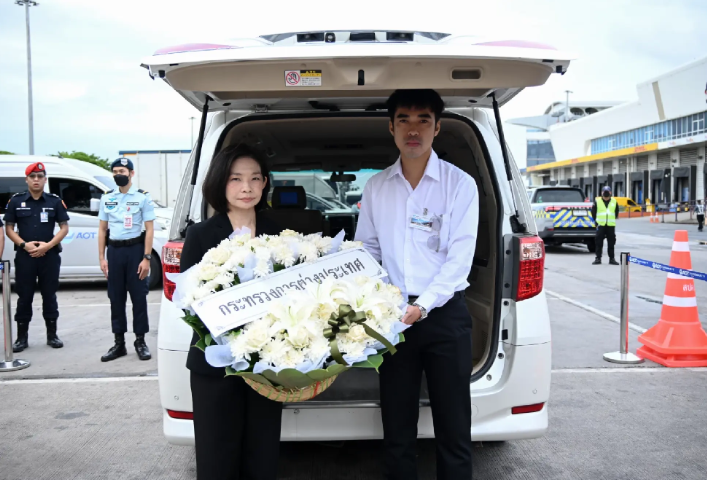
The Thai government has successfully arranged the return of travel vlogger Bavorntat Pengsuk, popularly known online as 'Hlun Solo', whose body arrived from Tbilisi following his unexpected death on 14 July 2026. The Ministry of Foreign Affairs coordinated the repatriation effort after the 27-year-old content creator died in the Georgian capital, deploying diplomatic resources to handle both the legal formalities and sensitive family circumstances surrounding his passing.
Deputy Prime Minister Sihasak Phuangketkeow, who also serves as Foreign Minister, assigned senior consular officials to manage the reception and processing of Bavorntat's remains upon his return to Thailand. Prathuangtip Sirivithes, acting director-general of the Department of Consular Affairs, took the lead in coordinating logistics and ensuring proper protocols were followed throughout the complex repatriation process. The Foreign Ministry's involvement underscores both the diplomatic nature of managing a citizen's death abroad and the necessity of coordinating across multiple jurisdictions when such incidents occur.
The Royal Thai Embassy in Ankara maintained continuous engagement with Bavorntat's family, Georgian authorities, and local officials from the moment news of his death was received. Thai diplomatic staff immediately deployed to Tbilisi to investigate the circumstances surrounding his passing and to shepherd the repatriation through Georgian bureaucratic channels. According to the Foreign Ministry spokesperson Jaithai Upakarnitikaset, these on-ground efforts proved essential, as embassy personnel encountered administrative delays that required intervention to expedite proceedings.
Bavorntat had cultivated a substantial following as a travel content creator, documenting his journeys across different countries through YouTube. His death represents a poignant loss within Thailand's growing digital creator community, where travel vlogging has become an increasingly popular content genre attracting millions of viewers seeking authentic glimpses of global destinations. The incident highlights the vulnerabilities that travel influencers face when operating far from their home countries, often navigating unfamiliar environments, healthcare systems, and legal structures.
Once the remains arrived in Thailand, Bavorntat's family arranged for comprehensive forensic examination to determine the precise cause of death. This thorough investigative step reflects both the family's desire to understand the circumstances and standard Thai medical protocols when a young person dies unexpectedly abroad. The examination will likely provide crucial clarity regarding whether his death resulted from natural causes, accident, or other factors that may have contributed to the tragedy.
Following completion of the forensic procedures, Bavorntat's body will be transported to his native Somdet district in Kalasin province for traditional funeral observances. Buddhist funeral rites will allow his family and community to pay proper respects according to Thai cultural and religious customs. The return to his provincial hometown carries particular significance, as it enables his extended family and childhood friends to participate in ceremonies that mark the conclusion of his earthly life and transition according to Buddhist beliefs.
The repatriation process demonstrates the intricate coordination required when Thai nationals die overseas. Multiple agencies—including the Foreign Ministry, embassies, consular services, and Georgian authorities—must collaborate seamlessly to navigate international protocols, legal requirements, and humanitarian considerations. In cases involving young, high-profile individuals like Bavorntat, media attention and family expectations further complicate an already sensitive process that demands both efficiency and dignity.
For Southeast Asia's burgeoning creator economy, Bavorntat's death serves as a sobering reminder of the occupational hazards inherent in travel content production. While the region's digital influencers enjoy unprecedented reach and commercial opportunity, they often work with minimal safety protocols or institutional support structures. Unlike traditional journalists or researchers who typically operate within organizational frameworks offering security guidance and insurance, independent creators frequently navigate challenging environments alone, occasionally in countries with language barriers and unfamiliar risk factors.
The incident also reflects broader patterns of Thai citizens working and traveling throughout the world in an era of globalized media and digital commerce. Thousands of Thai content creators, entrepreneurs, and workers now maintain international presence, creating networks of exposure and opportunity but also requiring robust consular services and diplomatic attention when crises occur. Thailand's Foreign Ministry and embassy system must continually adapt to support this expanding diaspora of digital workers and entrepreneurs operating across diverse international settings.

