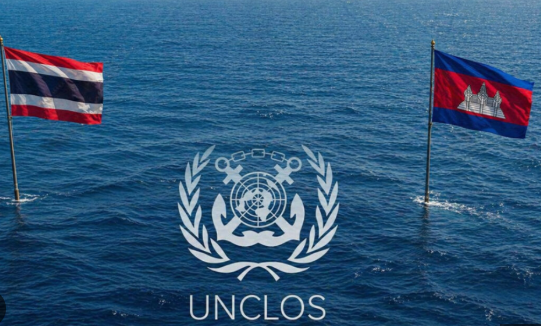
Thailand's decision to participate in a compulsory conciliation process initiated by Cambodia marks a significant development in the two nations' long-standing dispute over maritime boundaries in the Gulf of Thailand, though Bangkok has been careful to frame its acceptance within carefully defined parameters. The Thai Ministry of Foreign Affairs formally responded to Cambodia's notification on June 19, just over two weeks after receiving the initial request on June 2, signalling both swift engagement and measured deliberation on how to approach what promises to be a complex and potentially lengthy process under international maritime law.
The distinction Bangkok has drawn between conciliation and litigation is crucial to understanding Thailand's strategic position. By repeatedly emphasizing that the process involves neutral experts rather than judges making binding decisions, Thailand appears to be managing domestic expectations while preserving its negotiating flexibility. The government has appointed Deputy Prime Minister and Foreign Minister Sihasak Phuangketkeow as its official Agent in the proceedings, a high-level appointment that demonstrates the importance Thailand attaches to the matter, while also installing Songchai Chaipatiyut, ambassador to Kuwait and a former senior official at the Department of Treaties and Legal Affairs, as Deputy Agent to provide technical expertise throughout the conciliation process.
Thailand's choice of conciliators reveals a sophisticated understanding of how international maritime disputes are typically resolved. The appointment of Judge Albert J Hoffmann from South Africa and Judge Rudiger Wolfrum from Germany reflects Bangkok's effort to secure globally respected specialists in maritime law who can command credibility with both parties. These selections precede the more critical appointment of a fifth conciliator, who will chair the commission and hold significant influence over the process. The four appointed conciliators have 30 days from Thailand's formal response to select this crucial fifth member, a decision that could substantially shape the trajectory of proceedings over the anticipated 12-month timeline for producing recommendations.
The operational mechanics of conciliation under the 1982 United Nations Convention on the Law of the Sea differ markedly from formal litigation, a distinction that Thailand has seized upon to manage expectations about what this process can and cannot accomplish. Unlike a court case where judges apply law to reach binding judgments, conciliation commissions operate as neutral facilitators designed to help disputing parties understand each other's positions, identify common ground, and develop mutually acceptable solutions. This framework theoretically allows both countries to present their cases fully while maintaining control over whether to accept any recommendations that emerge, a feature that likely influenced Thailand's willingness to accept Cambodia's conciliation request.
Thailand has strategically narrowed the scope of conciliation to maritime delimitation alone, deliberately excluding Cambodia's apparent interest in provisional arrangements for joint development and equitable resource sharing. This boundary-drawing reflects deeper concerns about how far the process should extend into determining not just maritime lines but also commercial arrangements for energy resources. The Gulf of Thailand contains significant natural gas and hydrocarbon reserves, making resource-sharing arrangements potentially as valuable as the boundary determination itself. By insisting conciliation focus exclusively on delimitation, Thailand has attempted to preserve space for separate bilateral negotiations on resource management, though this position may complicate discussions if the two issues prove inseparable in practice.
The cancellation in May of the 2001 memorandum of understanding, colloquially known as MoU 44, set the stage for this conciliation process by removing the previous framework that had governed Thai-Cambodian maritime discussions for a quarter-century. Prime Minister Anutin Charnvirakul attributed the termination to lack of progress over 25 years rather than any acute conflict with Cambodia, framing the decision as a necessary adjustment rather than a rupture. However, this move also reflected growing Thai frustration with a stalled process and signalled Bangkok's readiness to pursue alternative mechanisms for resolving the dispute, even if those mechanisms were initiated by the other party.
For Malaysia and other Southeast Asian nations, Thailand's cautious approach to conciliation carries broader implications for how regional maritime disputes are managed. Thailand's emphasis on preserving bilateral negotiations alongside international conciliation suggests a regional preference for maintaining flexibility and control over dispute resolution outcomes rather than ceding authority to external mechanisms, even relatively informal ones like conciliation commissions. This posture echoes positions taken by other ASEAN states in their own maritime disputes, reflecting a broader regional commitment to managing sensitive maritime issues through combinations of diplomacy and carefully calibrated international processes.
The non-binding nature of the conciliation outcome, repeatedly stressed by Thai officials, theoretically protects Bangkok from unwanted outcomes but also limits what Cambodia can extract from the process. If the commission produces recommendations unfavourable to Thailand, Bangkok could reject them and propose alternative solutions without violating international law. Conversely, Cambodia accepted conciliation hoping that expert recommendations might move negotiations toward its preferred outcomes, yet faces similar constraints on implementing recommendations if Thailand declines to accept them. This mutual limitation creates incentives for both parties to negotiate seriously within the conciliation framework, as neither can unilaterally impose solutions.
Thailand's position that Unclos itself provides the essential common reference point for maritime boundary discussions reflects Bangkok's confidence in how international maritime law addresses delimitation issues. Both nations are parties to Unclos, meaning they operate within a shared legal framework even outside formal conciliation proceedings. This suggests Thailand views conciliation less as a venue for fundamentally reshaping the legal basis for negotiations and more as a structured process where expert mediators can help the countries apply established maritime law principles to their particular geographic circumstances. The government has signalled its intention to continue negotiations using Unclos as the foundation whether or not conciliation yields concrete progress.
The timeline for conciliation presents both opportunities and constraints for advancing negotiations. The anticipated 12-month period for producing a report assumes both parties cooperate and the commission functions efficiently, yet maritime boundary disputes often involve complex technical, legal, and political dimensions that can extend timelines unpredictably. For Thailand, the conciliation process offers a structured interval during which both countries can refine their positions, gather additional evidence, and prepare arguments without pressure from deadlines for final resolution. Cambodia, having initiated conciliation, may feel more pressure to demonstrate tangible progress, though this largely depends on how public attention evolves and whether either government faces domestic political pressure regarding maritime issues.
Beyond the immediate Thailand-Cambodia context, this conciliation process illuminates how Southeast Asian nations navigate between commitment to international law and preservation of sovereign discretion over sensitive maritime matters. Thailand's acceptance of compulsory conciliation demonstrates respect for Unclos procedures while the government's sustained emphasis on non-binding outcomes underscores determination to retain ultimate control over policy decisions. This balancing act will likely characterize how other regional maritime disputes proceed, as nations seek legitimacy from international processes while avoiding outcomes they consider contrary to national interests. The coming months will reveal whether structured conciliation can genuinely advance understanding between Bangkok and Phnom Penh or whether the deep complexities of their maritime relationship require sustained bilateral negotiation beyond what any formal process can accomplish.