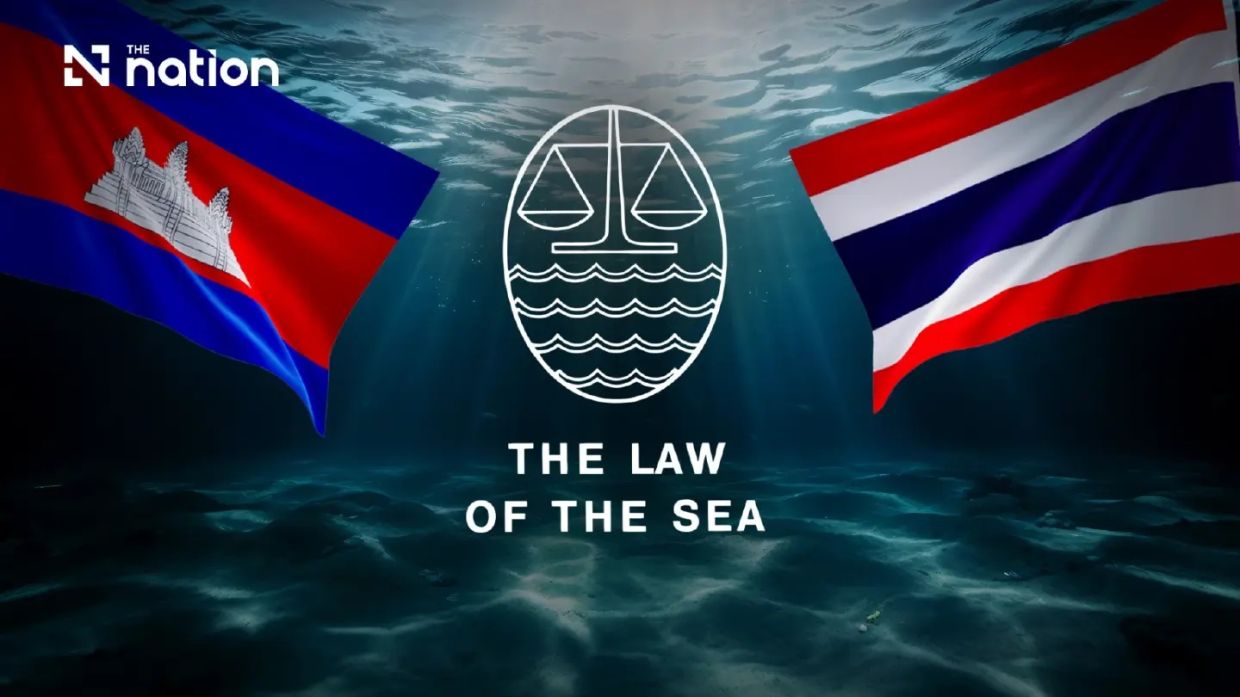
Thailand and Cambodia are advancing toward establishing a formal five-member conciliation commission under the United Nations Convention on the Law of the Sea to resolve their maritime boundary dispute in the Gulf of Thailand. However, the two Southeast Asian neighbours remain fundamentally divided on the scope of the process itself, with Cambodia pushing for talks to encompass joint development of offshore energy resources while Thailand insists the focus should be strictly on drawing maritime boundaries. This disagreement has created tension even as both nations work toward completing the commission's formation.
The mechanism for resolving their dispute centres on a conciliation process rather than binding arbitration or court proceedings. Each country has appointed two independent conciliators with substantial international legal credentials, and these four officials must now jointly select a neutral chairperson who will lead the commission's deliberations. Thailand has named German jurist Rüdiger Wolfrum and South African jurist Albert J. Hoffmann, both former presidents of the International Tribunal for the Law of the Sea, with Wolfrum serving from 2005 to 2008 and Hoffmann from 2020 to 2023. Cambodia has selected Danish diplomat Peter Taksøe-Jensen, who previously chaired the Unclos conciliation between Timor-Leste and Australia—a precedent that shaped the current process—and French academic Jean-Marc Thouvenin, an expert in international law.
The timeline for appointing the chairperson has already required adjustment. The original deadline of July 19 proved insufficient for the four conciliators to identify a mutually acceptable candidate, prompting both governments to agree to an extension until August 14. This delay, though procedurally routine, underscores the complexity of finding someone acceptable to both parties given their underlying differences over the commission's mandate. Once the chair is appointed, the fully constituted commission will convene its inaugural meeting to establish operating procedures and define its operational framework before beginning substantive discussions.
What distinguishes this conciliation from other maritime dispute mechanisms is its advisory rather than decisional character. The commission will not issue a legally binding judgment that either party must accept. Instead, it will examine the dispute, consult both countries, and submit recommendations intended to guide them toward a negotiated settlement. This non-binding nature means that even if the commission proposes a maritime boundary, both Thailand and Cambodia must still agree to any final arrangement. The process typically requires approximately twelve months, though the parties may extend the timeline if additional discussion proves necessary.
Thailand's position on the conciliation's scope is unambiguous and reflects its strategic priorities. Foreign Minister Sihasak Phuangketkeow has emphasised that the commission should initially concentrate exclusively on maritime delimitation and continental shelf delineation. Bangkok argues that questions about joint development zones or resource-sharing arrangements would be premature before the boundary itself is clearly established and the existence of genuine overlapping claims is confirmed. The Thai government has appointed Sihasak as its agent in the proceedings, with Ambassador Songchai Chaipatiyut serving as deputy agent, ensuring high-level oversight of negotiations. Thailand's stated position prioritises sovereignty, territorial integrity, and national interests throughout the process.
Cambodia has adopted a markedly different strategic approach, viewing the conciliation as a pathway toward addressing both maritime boundaries and the framework for developing and sharing offshore resources. This orientation reflects Cambodia's broader economic imperatives and energy security concerns. The disputed maritime area spans approximately 26,000 to 27,000 square kilometres and contains between 11 trillion and 12 trillion cubic feet of natural gas along with substantial oil deposits, with estimates suggesting potential resource values reaching approximately US$300 billion. For Cambodia, which currently depends heavily on hydropower and expanding solar capacity, additional fossil-fuel resources are viewed as essential to supporting longer-term industrial development and economic growth.
Cambodia's sense of urgency has intensified following global energy market disruptions stemming from regional tensions involving Iran and instability around the Strait of Hormuz. Minister of Mines and Energy Keo Rottanak has argued publicly that these crises have sharpened focus on energy security and created compelling reasons to resolve the Gulf of Thailand dispute expeditiously. He has warned that the window for attracting international investment in offshore exploration and development is narrowing considerably. Major energy companies understand that delays extend beyond what investors typically tolerate for long-term project commitments, meaning that resolving the boundary dispute quickly is essential to making the disputed area commercially viable. Exploration and development activities, even following an agreement, would themselves require several years before production could commence, further emphasizing the need for prompt action.
International energy companies have demonstrated conditional interest in the disputed area once maritime claims are resolved. When contacted by Reuters, TotalEnergies declined to confirm any specific investment plans, reflecting the prudent industry practice of waiting for definitive boundary settlement before committing resources. Nevertheless, the potential commercial scale is sufficient that major firms have signalled attention to the matter. For Cambodia, unlocking these resources through the conciliation process represents an opportunity to diversify its energy supply, reduce dependence on regional electricity imports, and generate substantial government revenues to fund development priorities.
Thailand's more cautious approach reflects different strategic calculations and institutional priorities. Bangkok emphasises that establishing clear maritime boundaries constitutes the essential foundation for any subsequent arrangements regarding resource sharing. The Thai government contends that discussing joint development frameworks before the boundary is definitively established could complicate negotiations by introducing resource-sharing variables into what should initially be a purely legal delimitation exercise. This position aligns with Thailand's broader diplomatic practice of addressing sovereignty questions before moving to cooperative resource arrangements. Foreign Minister Sihasak has specifically stated that joint development could be considered only after the legal and geographical situation becomes clear, signalling that Thai policymakers view boundary delimitation and resource questions as sequential rather than simultaneous matters.
The divergence between the two nations reflects differing assessments of how to structure negotiating sequences and manage competing interests. Cambodia views integrated discussion of boundaries and resource development as efficient and mutually beneficial, potentially offering Thailand incentives to compromise on boundary questions in exchange for participation in resource development opportunities. Thailand perceives boundary and resource discussions as separate matters that should be resolved in sequence to avoid entanglement and protect its sovereignty claims. This fundamental disagreement persists even as both governments advance the formal machinery of conciliation, suggesting that substantial negotiating work remains once the commission is fully constituted and begins substantive consultations.
For broader Southeast Asian maritime stability, the Thailand-Cambodia dispute exemplifies the complex intersection of sovereignty, resource competition, and regional energy security. The conciliation mechanism represents a constructive commitment to addressing maritime differences through established international procedures rather than confrontation. The precedent from the Timor-Leste-Australia conciliation, which culminated in a treaty establishing permanent maritime boundaries, provides evidence that the process can succeed. However, the current disagreement over whether resource development should feature in negotiations highlights the tension between boundary-focused legal approaches and development-oriented economic pragmatism that characterises contemporary maritime disputes across the region. How Thailand and Cambodia ultimately bridge this disagreement will likely influence how other Southeast Asian nations structure maritime negotiations and whether future disputes can accommodate simultaneous discussion of legal and economic issues.
Beyond the bilateral dimension, the dispute's resolution carries implications for regional energy markets and investment patterns. Southeast Asia faces substantial infrastructure and energy development needs across coming decades, making access to offshore resources consequential for multiple nations. If Thailand and Cambodia successfully establish a framework for joint resource development alongside boundary settlement, that model could potentially inform how other regional pairs address similar overlapping claims. Conversely, if the divergence over scope prevents agreement, the disputed area would remain commercially unavailable despite its substantial potential, representing a loss of development opportunity for both nations. The conciliation process, despite its non-binding character, therefore functions as more than a narrow legal mechanism—it represents a test of whether Southeast Asian governments can collectively address maritime complexity in ways that balance sovereignty protection with economic cooperation.

