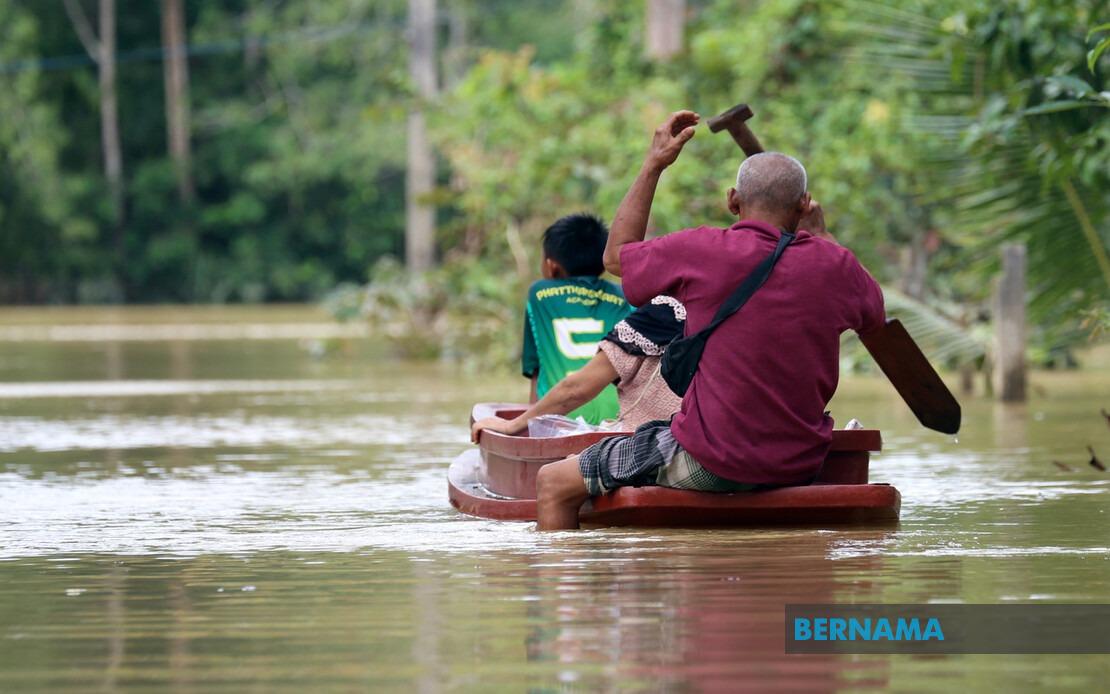
Thailand's government has activated a comprehensive restructuring of its disaster response framework, responding to mounting concerns about the convergence of multiple environmental hazards. The move reflects recognition that the country faces a complex threat landscape requiring coordinated, rapid intervention across multiple agencies and regions simultaneously.
The upgraded system centres on four newly established regional committees tasked with orchestrating unified responses to both acute flooding and creeping water scarcity. Deputy government spokeswoman Capt Patdarasm Thongsaluaykorn announced the enhanced preparedness measures, framing them as essential to protecting lives, property, and the livelihoods that depend on stable environmental conditions. The structural reorganisation seeks to eliminate bureaucratic delays that have historically impeded relief operations, replacing fragmented approaches with streamlined chains of command that empower field-level decision-making.
Currently, Thai authorities are maintaining active surveillance of 1,363 locations classified as flood-prone and an additional 444 areas susceptible to extended dry periods. This granular monitoring reflects a shift toward data-driven disaster management that allows officials to preempt crises rather than merely react to them. The scale of monitoring underscores how vulnerability to both hydrological extremes permeates Thailand's geography, from rural agricultural zones dependent on predictable rainfall patterns to urban centres exposed to flash flooding and overland drainage failures.
The four committees operate with expanded authority to direct government agencies within their operational zones, assess evolving conditions in real time, and maintain transparent communication channels with affected populations. This decentralised yet coordinated architecture recognises that disaster response effectiveness depends on localised knowledge and rapid adaptation. By empowering regional bodies rather than concentrating authority in Bangkok, the system aims to reduce communication lags and enable deployment of resources according to ground-level needs rather than standardised protocols.
Deputy Prime Minister Yodchanan Wongsawat chaired the inaugural session of the northern regional committee at the Department of Disaster Prevention and Mitigation, signalling high-level political commitment to the restructured approach. The presence of senior cabinet figures in operational meetings suggests that disaster management has been elevated beyond technical administration into the realm of core policy priorities. This elevation carries significance for resource allocation and inter-ministerial cooperation, historically challenging in Thai governance contexts.
The immediate catalyst for heightened readiness involves severe weather patterns affecting much of the country. Thailand's Meteorological Department has warned of intense rainfall, rapid-onset flooding, and riverine overflow concentrated in the northern, northeastern, and eastern regions. Maritime authorities have issued precautionary advisories restricting small vessel operations in the upper Andaman Sea from August 4 to 9 and the upper Gulf zone from August 6 to 9, reflecting concern about sudden squall development and dangerous sea conditions.
Beyond the short-term flooding hazard lies a more protracted challenge. Climate analysis suggests that a strong El Niño episode is forecast to intensify from October through the early months of 2027, a multi-month period encompassing Thailand's critical rainy season. Meteorological modelling indicates that this climatic event could suppress annual rainfall by at least ten percent across affected regions. While such a reduction may seem modest, its consequences for an agricultural economy dependent on monsoon precipitation could prove substantial.
For Thailand's rice sector—a cornerstone of both food security and export revenue—reduced rainfall during the growing season represents a direct threat to yields. The country ranks among the world's leading rice exporters, and production shortfalls cascade through regional and global commodity markets. Reduced crop output also diminishes farmer incomes in rural areas where agricultural employment dominates, potentially triggering broader economic effects. Beyond rice cultivation, other rain-dependent crops face similar jeopardy if the anticipated drying materialises.
Water supply security compounds the concern. Thailand's surface water reservoirs, irrigation systems, and groundwater reserves operate under assumptions of consistent rainfall patterns established over decades. A sustained ten-percent reduction in precipitation could strain supplies dedicated to municipal consumption, industrial processes, and agricultural irrigation. Urban centres relying on watershed systems may face pressure to implement conservation measures, while irrigation-dependent agricultural regions might confront water rationing that limits cultivation scope.
The dual threat of immediate flooding and subsequent prolonged dryness illustrates climate variability's increasing amplitude. Thailand must simultaneously prepare for both flood containment and drought mitigation—logistically and bureaucratically demanding challenges that often require contradictory resource deployments. Reservoirs maintained at low levels to reduce flood risk provide insufficient buffer against dry seasons, while high reservoir levels amplify inundation dangers during heavy rainfall events.
For regional observers including Malaysia and Southeast Asian nations, Thailand's disaster restructuring offers instructive lessons. The region shares similar climate vulnerabilities, with monsoonal patterns creating alternating flood and drought cycles. Thailand's emphasis on regionalised governance structures and integrated monitoring frameworks may provide replicable models for neighbouring countries developing their own resilience strategies. The explicit acknowledgement that environmental hazards require sustained, systematic response rather than ad-hoc crisis management reflects broader regional recognition that climate-related risks demand permanent institutional adaptation.
Thailand's preparedness measures also signal governmental priorities regarding risk communication. The mandate for committees to disseminate accurate public information acknowledges that disaster response effectiveness depends not only on operational capacity but on community awareness and cooperation. In an era of misinformation and fragmented information environments, authoritative communication from coordinated official bodies becomes essential for ensuring that public behaviour aligns with evacuation protocols and resource-preservation guidelines.
The coming months will test whether Thailand's restructured disaster apparatus delivers tangible improvements in response effectiveness. Success will be measured not only in lives saved during acute flooding events but in how well integrated systems manage the transition from emergency response to longer-term drought adaptation. The institutional frameworks established now establish precedent and capability that will shape Thailand's climate resilience trajectory across the coming decade.

