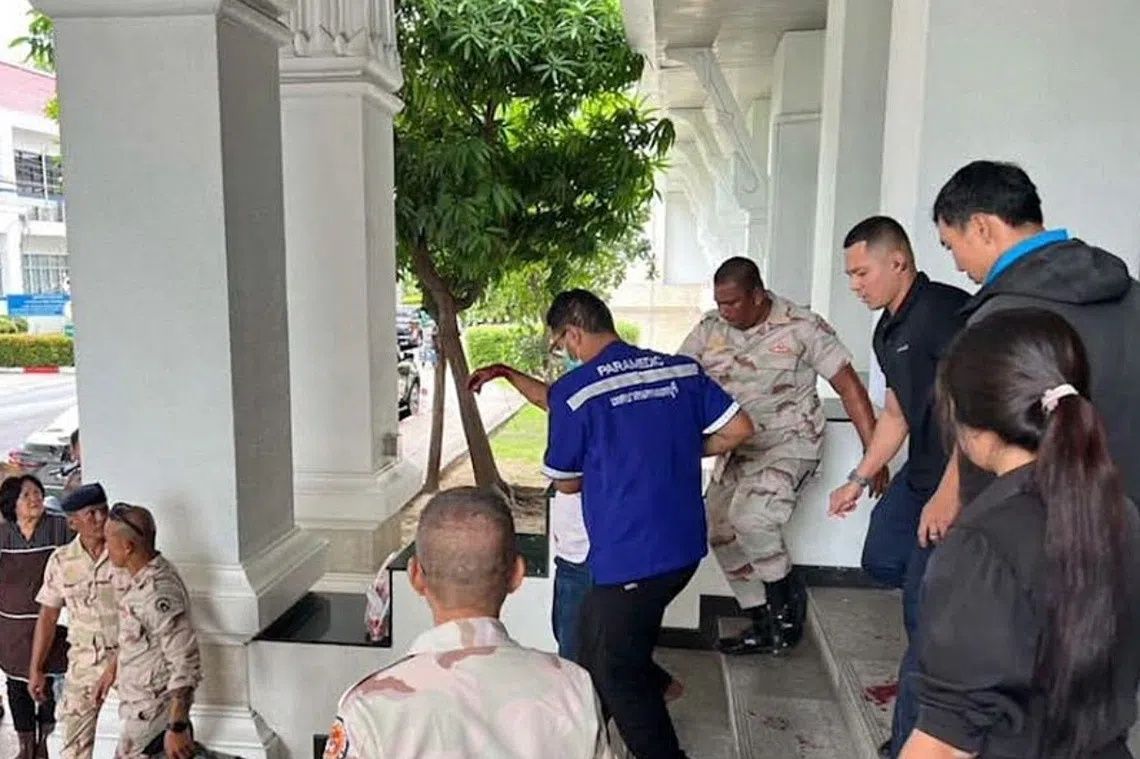
Thailand's security challenges have intensified dramatically following a shooting incident at a local government office on the outskirts of Bangkok on Monday, occurring in the immediate aftermath of the nation's deadliest mass shooting in nearly four years. Provincial police commander Major General Dejrapee Kongdee reported that the suspected gunman, a former lawmaker, opened fire at a senior provincial official and his driver before being arrested at the scene. Two individuals sustained injuries and were transported to medical facilities for treatment, according to authorities who responded quickly to contain the situation.
The timing of this latest incident has compounded national anxiety surrounding firearms access and public safety. Just three days earlier, on Friday, a 14-year-old boy carried out a devastating rampage at Debsirin Nonthaburi School, located in the same province. The teenager first shot his grandparents before entering the school premises and opening fire indiscriminately on students and staff. The attack left nine people dead and more than twenty others wounded, marking Thailand's most significant mass casualty shooting event since 2020. The young gunman subsequently took his own life at the scene, leaving the nation to grapple with the psychological and policy implications of the tragedy.
The school shooting has crystallised longstanding concerns about Thailand's firearm regulations and enforcement mechanisms. Prime Minister Anutin Charnvirakul has signalled his administration's commitment to implementing enhanced gun control measures in response to the Friday attack. These proposals emerge against a backdrop of incomplete regulatory frameworks that critics argue have permitted individuals with questionable judgment to acquire weapons. The successive nature of the two incidents—separated by mere days—has amplified political and public pressure on the government to act decisively on this issue.
Educational institutions across Thailand have implemented heightened security protocols as students returned to classrooms on Monday following the weekend shutdown. Many schools have installed or activated metal detectors at entrances, while staff have begun conducting thorough screening procedures for all individuals entering campus grounds. These visible security measures reflect the deep anxiety permeating Thailand's education sector and represent a significant adjustment to the daily school environment that families now navigate.
The two incidents reveal troubling patterns that resonate across Southeast Asia's broader security landscape. Thailand has experienced periodic spikes in gun violence linked to both criminal enterprises and isolated incidents involving individuals with access to firearms. While the nation's overall homicide rate remains lower than certain regional neighbours, the concentrated nature of these school and government office attacks has shaken public confidence in institutional protection systems. The fact that a teenager could access firearms powerful enough to inflict mass casualties has prompted soul-searching among policymakers about oversight mechanisms governing weapon distribution.
The profile of the perpetrators in these two cases presents different but equally concerning dimensions. The school shooter's youth suggests inadequate parental supervision or mental health intervention systems that failed to identify warning signs before the attack occurred. Conversely, the involvement of a former lawmaker in the government office shooting underscores how political figures may retain access to weapons despite legal prohibitions or ethical concerns. This pattern suggests that comprehensive gun control reform must address multiple pathways through which weapons enter civilian hands.
For Malaysia and other neighbouring nations, Thailand's security challenges offer instructive lessons regarding the importance of robust firearms licensing, psychological screening, and storage regulations. Malaysia's own gun licensing framework, while more restrictive than Thailand's, continues to face scrutiny regarding enforcement and loopholes. Regional experts have noted that firearms legislation must evolve alongside societal changes, demographic pressures, and emerging mental health crises that may trigger violence. The Thai incidents underscore how isolated regulatory reforms prove insufficient without accompanying investments in mental health services and community intervention programmes.
The economic and social dimensions of these attacks extend beyond immediate casualty figures. Schools and government offices function as foundational institutions for public trust in state capacity and national stability. When citizens cannot feel secure in these settings, broader confidence in governance systems erodes. Families reconsidering school choices, civil servants experiencing heightened anxiety, and traumatised survivors represent hidden costs that ripple through Thai society for years following such events. International investors and tourists, already navigating Thailand's political complexities, may factor elevated security concerns into their decisions regarding long-term engagement with the kingdom.
Thailand's legislative pathway forward will likely involve balancing competing interests between public safety advocates and those defending traditional rights to firearm ownership. The country's significant rural population, where hunting and self-defence weapons play established cultural roles, may resist blanket prohibitions. However, the concentrated casualties from these two incidents provide political momentum for stricter urban regulations and enhanced background checks. Prime Minister Anutin's stated intention suggests potential movement toward licensing systems requiring regular renewal, mandatory safety courses, and psychological evaluation components.
Regional cooperation on gun trafficking and illegal weapons proliferation represents another dimension requiring attention. Southeast Asia's porous borders and complex supply chains have historically enabled weapons to flow across jurisdictions, complicating national-level regulatory efforts. Thailand's government may need to coordinate with neighbouring Cambodia, Laos, and Myanmar regarding firearm interdiction and information-sharing protocols. Such initiatives could serve as models for ASEAN-wide frameworks addressing transnational aspects of armed violence.
The human toll of these incidents extends to perpetrator families and broader communities affected by association or proximity. In Thailand's interconnected social fabric, where reputation and family honour hold significant weight, relatives of those responsible for mass violence face profound social ostracism. This secondary trauma within communities warrants compassionate support systems alongside security-focused policy responses. Balancing accountability with rehabilitation opportunities remains an ongoing challenge for Thai society.

