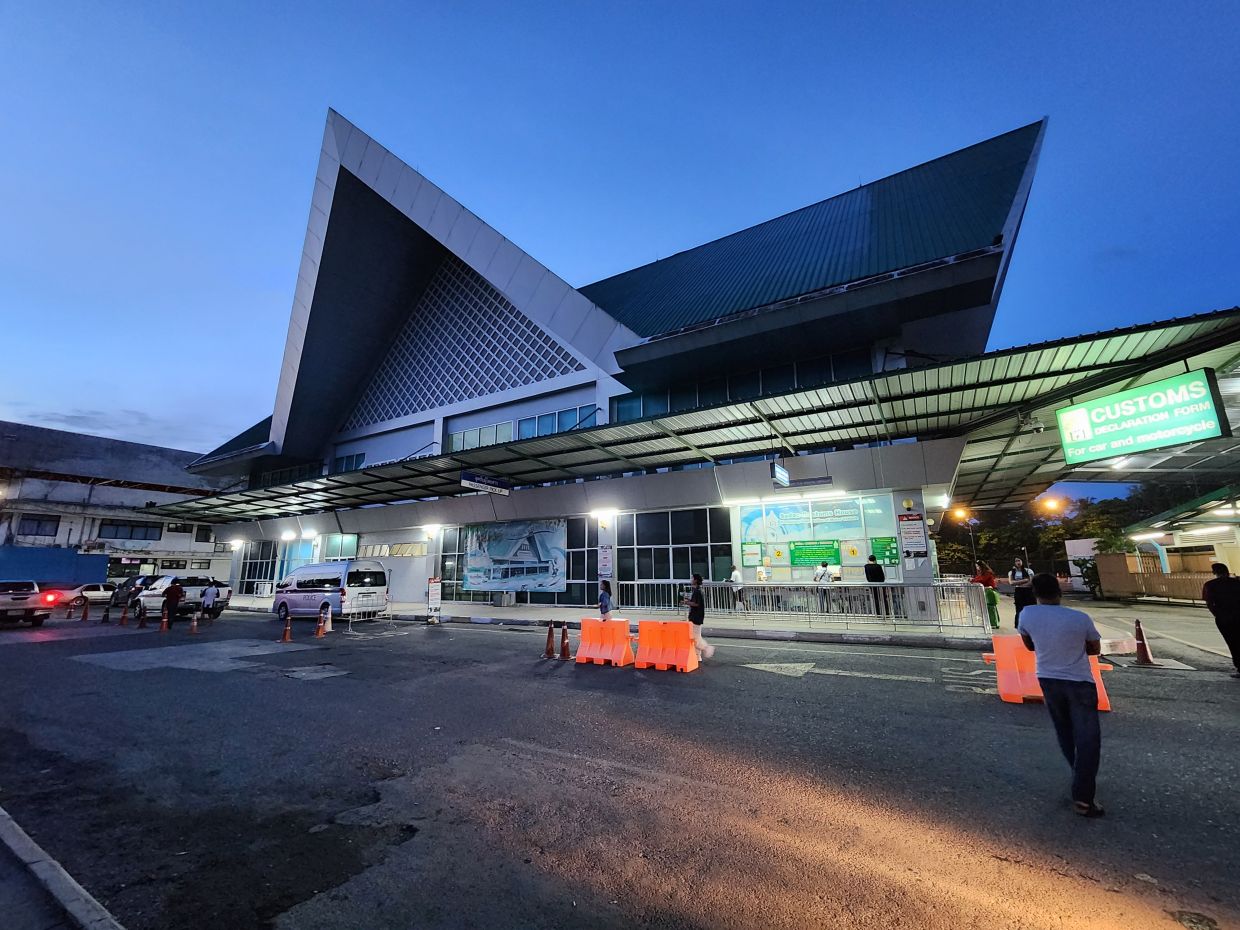
Thailand has taken a significant step towards deepening economic integration with Malaysia by formally establishing a new permanent land border checkpoint at Sadao, with the decision approved by the Thai cabinet on Tuesday and slated to commence operations on July 11. The strategic initiative reflects both countries' commitment to streamlining cross-border movement and facilitating commercial exchange, marking a notable development in Thailand's engagement with its southern neighbour at a time when regional logistics networks are undergoing substantial transformation.
The relocated checkpoint, positioned between boundary markers 23/9 and 23/10, represents a deliberate shift from the previous crossing point at markers 22-23, indicating that Thai authorities have carefully selected a more optimal geographical location to enhance traffic flow and reduce congestion. Operating hours from 05:00 to 23:00 daily establish a consistent framework that allows businesses and travellers to plan their movements with predictability, addressing a long-standing challenge in cross-border commerce where operational inconsistency had previously deterred time-sensitive shipments and tourism activities.
Government spokesperson Ratchada Thanadirek outlined a comprehensive implementation strategy that extends well beyond merely opening new gates. Thai authorities have mandated that construction agencies prioritise the completion of connecting road infrastructure on the Thai side, simultaneously tackling existing traffic bottlenecks that have historically impeded the smooth passage of goods and people. The arrangement of dedicated shuttle services represents an innovative approach to managing passenger movement, while Songkhla province's oversight role underscores how the Thai government is decentralising management responsibility to provincial authorities with direct stakes in border-region prosperity.
Crucially, the Thai government recognises that physical infrastructure alone cannot unlock the full potential of improved border crossing. Ratchada emphasised that multiple agencies have received explicit instructions to conduct extensive public information campaigns targeting three critical constituencies: the private sector, business operators, and local residents. This three-pronged communication strategy addresses different information needs—entrepreneurs require clarity on customs procedures and logistics advantages, while communities living near the border must understand how traffic management will affect their daily lives and local economies.
The government's commitment to transparency regarding immigration channels and customs procedures reflects lessons learned from previous border infrastructure upgrades across Southeast Asia, where inadequate communication often led to confusion, delays, and underutilisation of new facilities. By proactively educating stakeholders about government facilitation measures before the checkpoint opens, Thai authorities are attempting to avoid a common pitfall where new infrastructure fails to deliver anticipated benefits due to user uncertainty or procedural confusion.
The timing of this border initiative gains additional significance when viewed alongside Thai Prime Minister Anutin Charnvirakul's forthcoming official visit to Malaysia scheduled for July 9-10, occurring just before the Sadao checkpoint becomes operational. This synchronisation reflects deliberate diplomatic choreography, with the visit serving as a high-level political anchoring point for the broader infrastructure initiative. Prime Minister Anutin will travel at the invitation of Malaysian counterpart Anwar Ibrahim, positioning the border crossing opening as part of a comprehensive bilateral engagement framework rather than an isolated technical matter.
The draft joint statement prepared for discussion during Anutin's visit encompasses substantially broader cooperation ambitions than border facilitation alone. By encompassing border development, connectivity, security cooperation against transnational crime, and economic partnership, the statement reflects both nations' understanding that modern bilateral relations must address interconnected challenges across multiple dimensions. For Malaysia and Thailand, transnational crime represents a genuine shared threat, as porous borders have historically enabled drug trafficking, human smuggling, and organised crime networks that destabilise both countries.
The explicit emphasis on food and energy security within the bilateral economic partnership framework reveals how Thailand and Malaysia are positioning their relationship to address regional and global supply chain vulnerabilities that have intensified since the COVID-19 pandemic and exacerbated by geopolitical tensions. Both countries possess complementary agricultural and energy resources—Thailand's rice and cassava production aligns with Malaysia's palm oil and petrochemical expertise—making coordinated supply chain management mutually advantageous, particularly as regional economies navigate uncertainty in global commodity markets.
For Malaysian policymakers and business stakeholders, the Sadao checkpoint represents an opportunity to tap into enhanced connectivity with southern Thailand, potentially redirecting some commercial traffic flows through the Sadao route rather than congested alternatives like the Bukit Kayu Hitam crossing. Malaysian logistics operators and manufacturers could gain efficiency improvements and cost reductions by leveraging the new crossing's extended operating hours and streamlined procedures, especially for time-sensitive exports destined for Thai industrial hubs or ASEAN markets beyond.
The checkpoint development also carries implications for regional tourism recovery trajectories. As Southeast Asian nations progressively normalised cross-border travel after pandemic disruptions, improved land border infrastructure becomes increasingly valuable for travellers exploring the Thailand-Malaysia tourism circuit. Families and tourists can now more conveniently visit attractions in both countries without enduring the protracted delays that historically characterised the Sadao crossing experience, potentially stimulating tourism spending in border communities on both sides.
However, the success of this initiative ultimately depends on implementation consistency and interagency coordination on both the Thai and Malaysian sides. Border crossings function effectively only when customs, immigration, and police authorities at both checkpoints maintain standardised procedures and information-sharing protocols. Any discrepancy in how Thai and Malaysian officials interpret customs regulations or process documentation could rapidly undermine the efficiency gains that the new checkpoint infrastructure theoretically enables.
The broader significance of this development lies in how it exemplifies a tangible regional infrastructure investment that responds to legitimate cross-border economic needs rather than pursuing grandiose megaproject ambitions disconnected from actual commercial demand. Within Southeast Asia's complex patchwork of bilateral relationships and competing infrastructure visions, a functional border crossing represents genuine, deliverable progress that businesses and travellers can immediately utilise, making it a meaningful contribution to regional integration.

